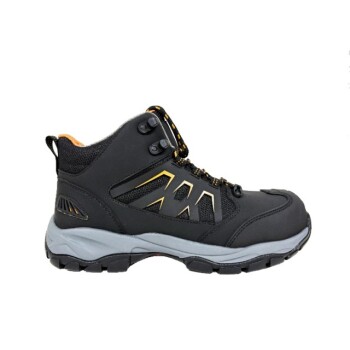
A reinforced safe toe tip serves a dual purpose: it acts as a critical shield against physical hazards and a structural backbone for the shoe itself. By integrating specialized strengthening materials into the forefoot, this feature protects the wearer from crushing injuries caused by impacts or compression while simultaneously maintaining the shoe's shape against daily wear.
While primarily designed for safety in demanding environments, the reinforced toe tip is essential for maintaining footwear geometry. It prevents the forefoot area from collapsing under stress, ensuring the shoe remains functional and comfortable over a longer service life.
The Mechanics of Protection
Shielding Against External Forces
The primary function of a reinforced toe tip is to create a hardened barrier around the toes. In demanding environments, this design protects the foot from significant external impacts, such as falling objects.
Resisting Compression
Beyond sudden impacts, the reinforcement is engineered to withstand steady compression forces. This ensures that heavy loads resting on the foot do not crush the toe box, preventing serious injury.
Enhancing Structural Longevity
Preventing Upper Collapse
Footwear often fails when the materials in the toe box soften and lose their shape. A reinforced tip provides a rigid internal structure that prevents the upper material from collapsing over time.
Maintaining Forefoot Integrity
By holding the shape of the toe box, the reinforcement protects the integrity of the entire forefoot. This structural support ensures the shoe fits correctly throughout its lifespan, rather than becoming loose or deformed.
Extending Service Life
Because the shoe resists deformation and structural failure, the overall service life of the footwear is significantly extended. The reinforcement ensures the shoe remains viable for use long after a non-reinforced counterpart would have degraded.
Understanding the Trade-offs
Rigidity vs. Flexibility
The integration of strengthening materials inherently increases rigidity. While this is necessary for protection, it can reduce the natural flexibility of the forefoot, potentially altering how the foot flexes during walking.
Weight Considerations
Adding reinforced structures requires additional or denser materials. This often results in a heavier shoe compared to non-reinforced options, which can contribute to wearer fatigue over long periods.
Making the Right Choice for Your Goal
When selecting footwear with reinforced toe tips, consider your primary environmental hazards:
- If your primary focus is Maximum Safety: Prioritize designs explicitly rated for high impact and compression to ensure the strengthening materials can withstand your specific work environment hazards.
- If your primary focus is Durability: Look for reinforcements integrated seamlessly into the upper to prevent cosmetic and structural collapse during long-term wear.
A reinforced toe tip is an investment in both the safety of your feet and the lifespan of your gear.
Summary Table:
| Feature | Primary Function | Impact on Durability |
|---|---|---|
| Hardened Barrier | Shields against falling objects | Protects upper materials from punctures |
| Compression Resistance | Prevents crushing under heavy loads | Maintains toe box geometry under stress |
| Internal Support | Prevents forefoot collapse | Stops material sagging and deformation |
| Rigid Structure | Ensures consistent fit | Increases service life in harsh environments |
Partner with 3515 for High-Performance Footwear Solutions
As a large-scale manufacturer serving distributors and brand owners, 3515 offers comprehensive production capabilities for all footwear types, anchored by our flagship Safety Shoes series. Our extensive portfolio covers work and tactical boots, outdoor shoes, training shoes, and sneakers, as well as Dress & Formal shoes to meet diverse bulk requirements.
Whether you need reinforced safety features for industrial environments or durable construction for tactical use, we provide the manufacturing scale and expertise to bring your designs to life. Contact us today to discuss your bulk production needs and discover how our commitment to quality can strengthen your brand's footwear lineup.
References
- Hapsoro Agung Jatmiko, Danov Setiyo Nugroho. mplementing Kansei Engineering and Quality Function Deployment Method in Designing Shoes : Case Study at Rejowinangun Original Leather. DOI: 10.31940/logic.v22i1.70-80
This article is also based on technical information from 3515 Knowledge Base .
Related Products
- Durable Steel Toe Safety Boots Wholesale & Custom Manufacturing
- Advanced KPU Athletic Safety Shoe with Steel Toe Cap Anti-Slip Rotary Lacing System
- Wholesale Mesh Steel Toe Safety Shoes with Dial Closure Factory Production
- Premium Wheat Nubuck Safety Shoes for Bulk Distribution
- Wholesale Anti-Smash & Puncture-Proof Safety Shoes Custom Manufacturing for Brands
People Also Ask
- Why are industrial safety boots with steel toes necessary for machine operators? Essential Foot Protection for Safety
- Why is it mandatory to wear safety shoes with steel toe protection during metal loading? Prevent Crushing Injuries
- What are the main materials used in steel toe safety shoes? A Guide to Protective Footwear Construction
- What are the characteristics of steel toe safety boots? Maximum Protection, Key Trade-offs
- Is it true that steel toes can cause toes to get cut off? Debunking the Dangerous Myth