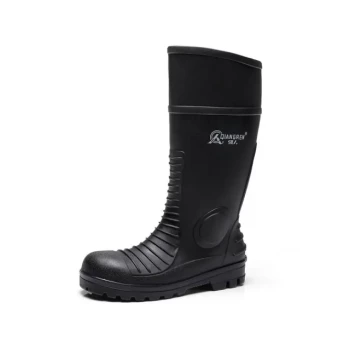
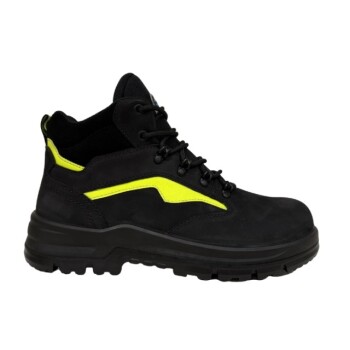
Work boots act as a significant thermal insulator that directly accelerates physiological heat stress. While they are non-negotiable for physical safety, they increase the overall insulation of a laborer's clothing ensemble and actively prevent heat from escaping the lower limbs. This restriction leads to an accumulation of metabolic heat, which correlates directly with a faster rise in core body temperature.
Footwear is a critical, yet often underestimated, variable in heat stress management. Because work boots restrict heat dissipation from the lower extremities, they function as a thermal barrier that measurably increases the rate at which a worker's core body temperature rises.
The Mechanisms of Heat Accumulation
Increasing Overall Insulation
Work boots are not separate from the body's thermal ecosystem; they are an integral part of the clothing system. When worn, they significantly increase the overall insulation of the laborer's attire.
This added insulation acts as a barrier between the worker and the environment. In high-temperature settings, this prevents the efficient exchange of air and moisture required for cooling.
Restricting Heat Dissipation
The human body relies on the extremities to release excess heat. Work boots effectively seal off the lower limbs, restricting heat dissipation from this critical surface area.
When this pathway is blocked, the body loses a primary avenue for thermoregulation. The heat that would normally radiate from the feet and ankles is instead trapped against the skin.
The Physiological Consequences
Metabolic Heat Buildup
Labor involves physical exertion, which generates metabolic heat. Under normal conditions, this heat is released into the environment to maintain homeostasis.
Because footwear increases insulation, it causes this metabolic heat to accumulate rather than dissipate. The energy generated by the muscles is retained within the protective gear, compounding the thermal load.
Rising Core Temperature
The impact of this trapped heat is systemic, not local. There is a direct correlation between the heat accumulation caused by footwear and the rate of increase in core body temperature.
As the boots trap heat, the body's core temperature climbs more rapidly than it would with lighter footwear. This acceleration must be accounted for to prevent heat-related illness.
Understanding the Trade-offs: Safety vs. Thermoregulation
The Essential Nature of PPE
Despite the thermal burden, work boots serve as essential Personal Protective Equipment (PPE). They provide necessary defense against punctures, varying terrain, and heavy objects.
This creates a physiological trade-off: the equipment required for physical safety inevitably contributes to thermal risk. This burden cannot be eliminated, only managed.
The Risk of Calculation Errors
A common pitfall in safety planning is ignoring the specific contribution of footwear. If a laborer's total heat stress is calculated without factoring in the insulation of boots, the risk profile will be inaccurate.
Ignoring this variable leads to underestimating how quickly a worker will reach dangerous core temperatures. Accurate safety protocols must treat footwear as a heat source, not just a protective shell.
Making the Right Choice for Your Goal
To effectively manage heat stress, you must view footwear as a component of the thermal environment.
- If your primary focus is accurate risk assessment: You must explicitly include the insulation value of footwear in your total heat stress calculations to predict core temperature rise accurately.
- If your primary focus is worker safety policy: You should adjust work-rest cycles to accommodate the faster accumulation of metabolic heat caused by heavy boots.
Recognizing that protective footwear imposes a specific physiological load is the key to preventing heat stress in high-temperature environments.
Summary Table:
| Factor | Impact on Heat Load | Physiological Consequence |
|---|---|---|
| Clothing Insulation | Increases overall thermal resistance | Prevents efficient air/moisture exchange |
| Heat Dissipation | Restricts radiation from lower limbs | Traps heat against the skin surface |
| Metabolic Heat | Accelerates heat accumulation | Compounds systemic thermal load |
| Core Temperature | Direct positive correlation | Faster rise toward heat-related illness limits |
Optimize Worker Safety with 3515 High-Performance Footwear
As a large-scale manufacturer serving global distributors and brand owners, 3515 understands the critical balance between physical protection and thermoregulation. Our comprehensive production capabilities allow us to engineer footwear that addresses the physiological heat load of laborers without compromising safety.
Whether you need our flagship Safety Shoes series or specialized tactical boots, outdoor shoes, or training sneakers, we provide bulk solutions designed for diverse climates. Partner with us to provide your customers with footwear that manages metabolic heat buildup while delivering superior durability.
Ready to upgrade your inventory with scientifically designed work boots? Contact us today to discuss your bulk requirements!
References
- Érica Chavez Santos, John C. Flunker. The effect of the participatory heat education and awareness tools (HEAT) intervention on agricultural worker physiological heat strain: results from a parallel, comparison, group randomized study. DOI: 10.1186/s12889-022-14144-2
This article is also based on technical information from 3515 Knowledge Base .
Related Products
- Durable Leather Work Boots for Wholesale & Custom Manufacturing
- Durable Leather Work Boots for Wholesale & Custom OEM Manufacturing
- Durable Leather Work Boots Wholesale Manufacturer & Custom Factory
- Durable Leather Moc Toe Work Boots for Wholesale & Custom Manufacturing
- Wholesale Leather Work Boots with Customizable Wedge Sole for Brands
People Also Ask
- What is the difference between full-grain and top-grain leather? Premium Material Guide for Boot Manufacturers
- What are the common workplace hazards that can be mitigated with the right work boots? Protect Your Workforce
- What are the common foot issues workers face due to uncomfortable work boots? Prevent Pain & Deformities
- What are the advantages of leather versus synthetic work boots? A Guide to Choosing the Right Material
- What are the key components of modern work boots? Engineered for Ultimate Durability and Comfort