
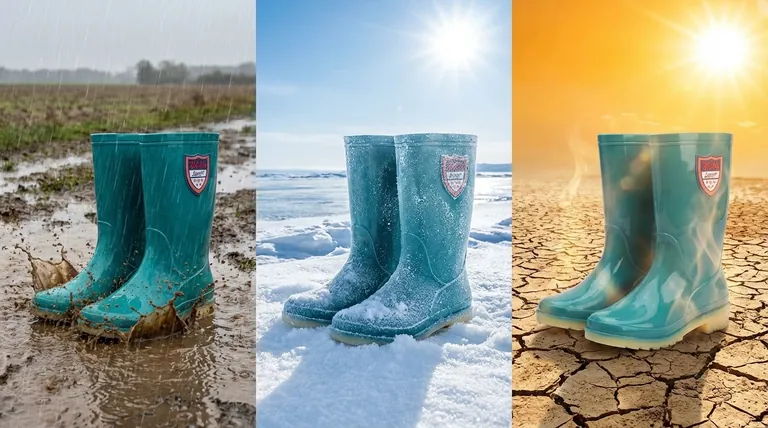
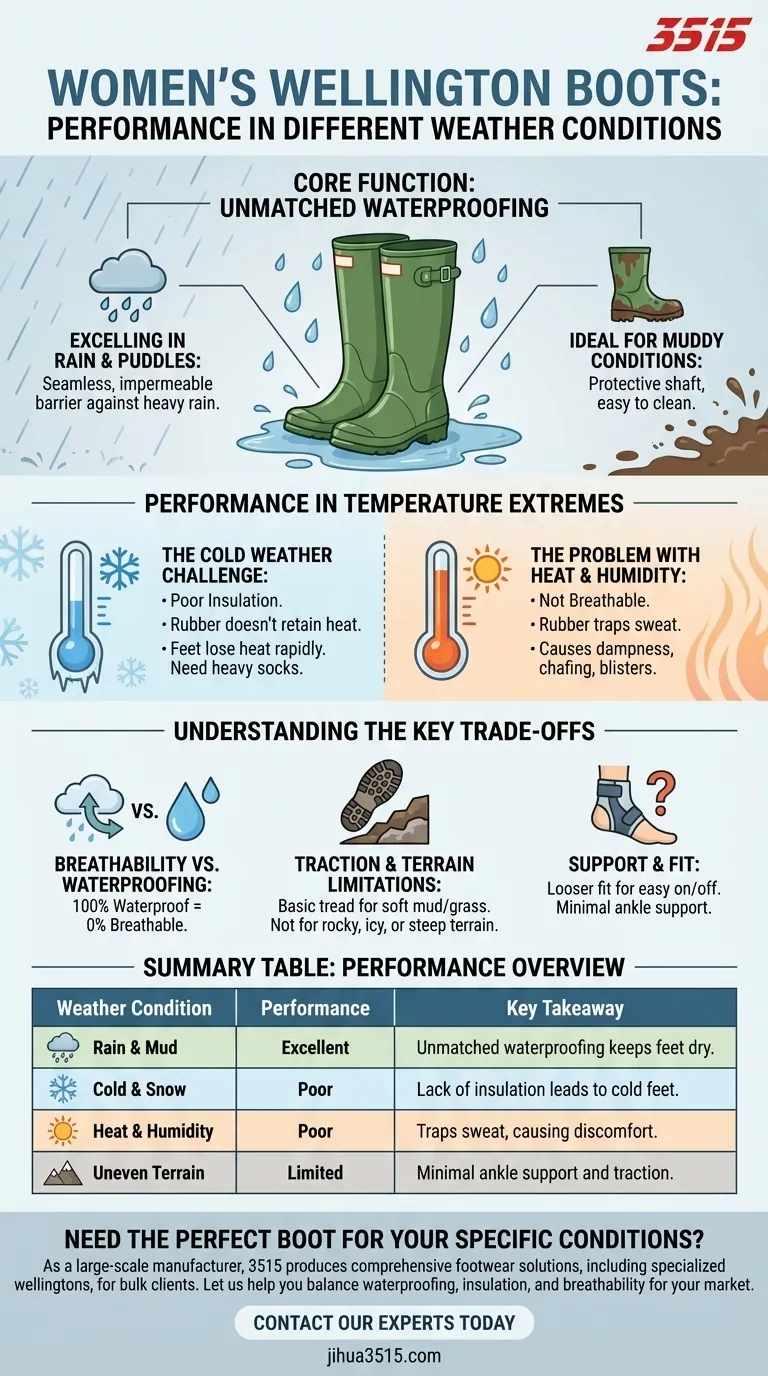
At their core, women's wellington boots are exceptionally effective in wet and muddy conditions due to their seamless, waterproof rubber construction. They are designed primarily to keep your feet dry from external moisture. However, their performance varies significantly in extreme temperatures because they typically lack both insulation for cold and breathability for heat.
Wellington boots are a specialized tool, not an all-weather solution. They offer unparalleled waterproofing for rain and mud, but this single-minded focus creates significant trade-offs in comfort and safety during cold, snowy, or hot weather.
The Core Function: Unmatched Waterproofing
The classic wellington boot is designed with one primary goal: to create an impermeable barrier against water. This singular focus defines its strengths.
Excelling in Rain and Puddles
Wellington boots are made from materials like natural rubber or PVC. Their construction is often seamless, which eliminates the stitched points where water could potentially enter on other types of footwear.
This makes them the definitive choice for heavy rain, standing water, and generally wet environments.
The Ideal Choice for Muddy Conditions
Beyond rain, wellies are perfectly suited for mud. Their tall, protective shaft keeps mud and splashes off your legs, and the smooth rubber surface is exceptionally easy to hose down and clean.
This is why they remain a staple for gardening, farming, and outdoor festivals.
Performance in Temperature Extremes
The very feature that makes wellingtons perfectly waterproof—non-porous rubber—is also their greatest liability when it comes to temperature regulation.
The Cold Weather Challenge
Standard wellingtons contain no insulation. Rubber is not a thermal conductor, meaning it won't draw heat from your feet quickly, but it also does nothing to retain it.
In cold or snowy weather, the rubber shell will become cold, and without an insulating layer, your feet will lose heat rapidly. While heavy wool socks can help, they are often not enough for prolonged exposure to freezing temperatures.
The Problem with Heat and Humidity
Wellington boots are not breathable. Unlike boots with advanced membranes that allow water vapor (sweat) to escape, rubber traps all moisture inside.
On a hot, humid day, your feet will sweat. This perspiration has nowhere to go, leading to damp, uncomfortable conditions inside the boot that can cause chafing and blisters.
Understanding the Key Trade-offs
Choosing a wellington boot means accepting a set of compromises. Understanding these is key to using them effectively and knowing when to choose a different type of boot.
Breathability vs. Waterproofing
This is the central trade-off. The 100% waterproof nature of a wellington boot means it is 0% breathable. In contrast, high-end hiking or tactical boots use a membrane that allows sweat to escape while blocking larger water molecules from entering.
Traction and Terrain Limitations
While wellies have tread, it is typically designed for soft surfaces like mud or grass. It is not engineered for the diverse and challenging grip required on rocky trails, icy sidewalks, or steep, wet inclines.
For these conditions, a dedicated hiking boot with a specialized, high-traction outsole is a much safer option.
Support and Fit
Wellingtons are designed for a looser fit to be pulled on and off easily. This design offers minimal ankle support, making them unsuitable for long walks or navigating uneven terrain where a twisted ankle is a risk.
Making the Right Choice for Your Needs
To get the best performance, match your footwear to the specific conditions and activity.
- If your primary focus is keeping dry in rainy, muddy, or garden environments: A classic wellington boot is the perfect, uncomplicated solution.
- If your primary focus is warmth in snow and freezing temperatures: You need a dedicated winter boot with a built-in insulation rating.
- If your primary focus is walking or hiking on varied terrain: A waterproof hiking boot offers superior traction, ankle support, and breathability.
- If your primary focus is comfort in hot, humid weather: Look for lightweight, breathable footwear designed to manage moisture from the inside out.
Ultimately, understanding a wellington boot's limitations is the key to appreciating its specific and valuable strengths.
Summary Table:
| Weather Condition | Performance | Key Takeaway |
|---|---|---|
| Rain & Mud | Excellent | Unmatched waterproofing keeps feet dry in wet environments. |
| Cold & Snow | Poor | Lack of insulation can lead to cold feet without thick socks. |
| Heat & Humidity | Poor | Non-breathable rubber traps sweat, causing discomfort. |
| Uneven Terrain | Limited | Looser fit and basic tread offer minimal ankle support and traction. |
Need the Perfect Boot for Your Specific Conditions?
As a large-scale manufacturer, 3515 produces a comprehensive range of footwear for distributors, brand owners, and bulk clients. Our production capabilities encompass all types of shoes and boots, including specialized wellingtons for various climates and activities.
Let us help you find or create the ideal boot that balances waterproofing, insulation, and breathability for your target market. Contact our experts today to discuss your needs!
Visual Guide
Related Products
- Durable Waterproof Rain Boots | Custom Manufacturer for Wholesale & Brands
- Wholesale Women's Leather Derby Shoes Custom Factory Production
- Wholesale Classic Leather Lace-Up Ankle Boots for Brand Manufacturing
- Durable Goodyear Welt Leather Work Boots for Wholesale & Private Label
- Durable Moc-Toe Wedge Work Boots | Wholesale Manufacturing for Brands
People Also Ask
- What are the main materials for waterproof rain boots? Choose the Right Material for Durability & Comfort
- What is the overall recommendation for choosing rain boot materials? A Guide to Rubber vs. PVC
- How does boot height affect waterproofing? Choose the Right Height for Ultimate Protection
- Why are rain boots more flexible and comfortable than snow boots? The Key Differences Explained
- What are the best types of shoes for different gardening conditions? Find Your Perfect Match.



















