
Fundamentally, the difference between a Western fashion boot and a traditional cowboy boot is its core purpose. A traditional boot is a functional tool designed specifically for horseback riding, with every feature optimized for the stirrup. In contrast, a Western fashion boot uses that iconic silhouette as a canvas for style, prioritizing aesthetic elements like exotic materials, bold colors, and intricate designs over pure, rugged function.
While they share a silhouette, the design of a Western boot is a direct reflection of its intended job. A traditional cowboy boot is a tool for a rider, a work boot is for stability on the ground, and a fashion boot is a statement piece. Understanding this distinction is key to choosing the right pair.
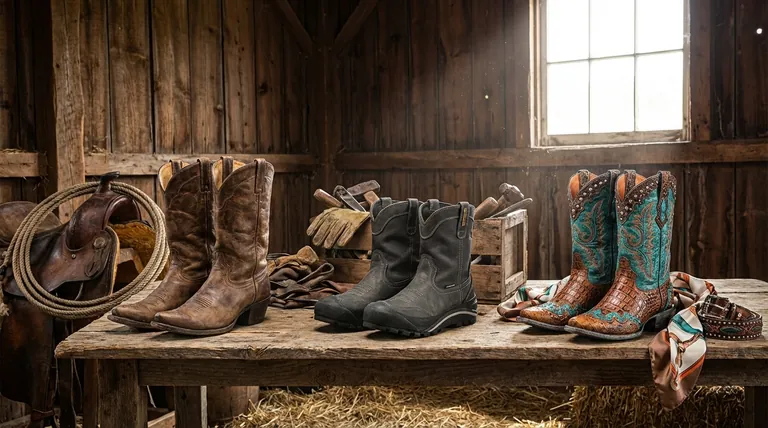
The Core Design Philosophy: Function vs. Form
At the highest level, Western boots are not a single category but a family of footwear with a shared heritage. The original design was a piece of specialized equipment for ranchers and horsemen. Modern variations have adapted this original blueprint for different environments and purposes.
The Traditional Cowboy Boot (For Riding)
The classic cowboy boot is built for the saddle. Its features are a direct response to the demands of riding a horse.
The goal is safety and efficiency in the stirrup. Every element serves this primary function, from the heel that prevents slipping to the sole that allows for a quick exit.
The Western Work Boot (For Labor)
This style, including "roper" or "rancher" boots, adapts the Western look for all-day wear on the ground.
It borrows the durability of a cowboy boot but modifies key features for stability, traction, and comfort during manual labor, walking on varied terrain, or standing for long periods.
The Western Fashion Boot (For Style)
Fashion boots take the visual language of the cowboy boot and amplify it for aesthetic impact.
The primary goal here is expression and visual appeal. Functionality, especially for riding or work, is a secondary consideration to unique designs, materials, and decorative elements.
Deconstructing the Key Differences
The purpose of each boot type is directly reflected in its specific components. By examining these parts, you can immediately identify a boot's intended use.
The Heel: For the Stirrup vs. For the Ground
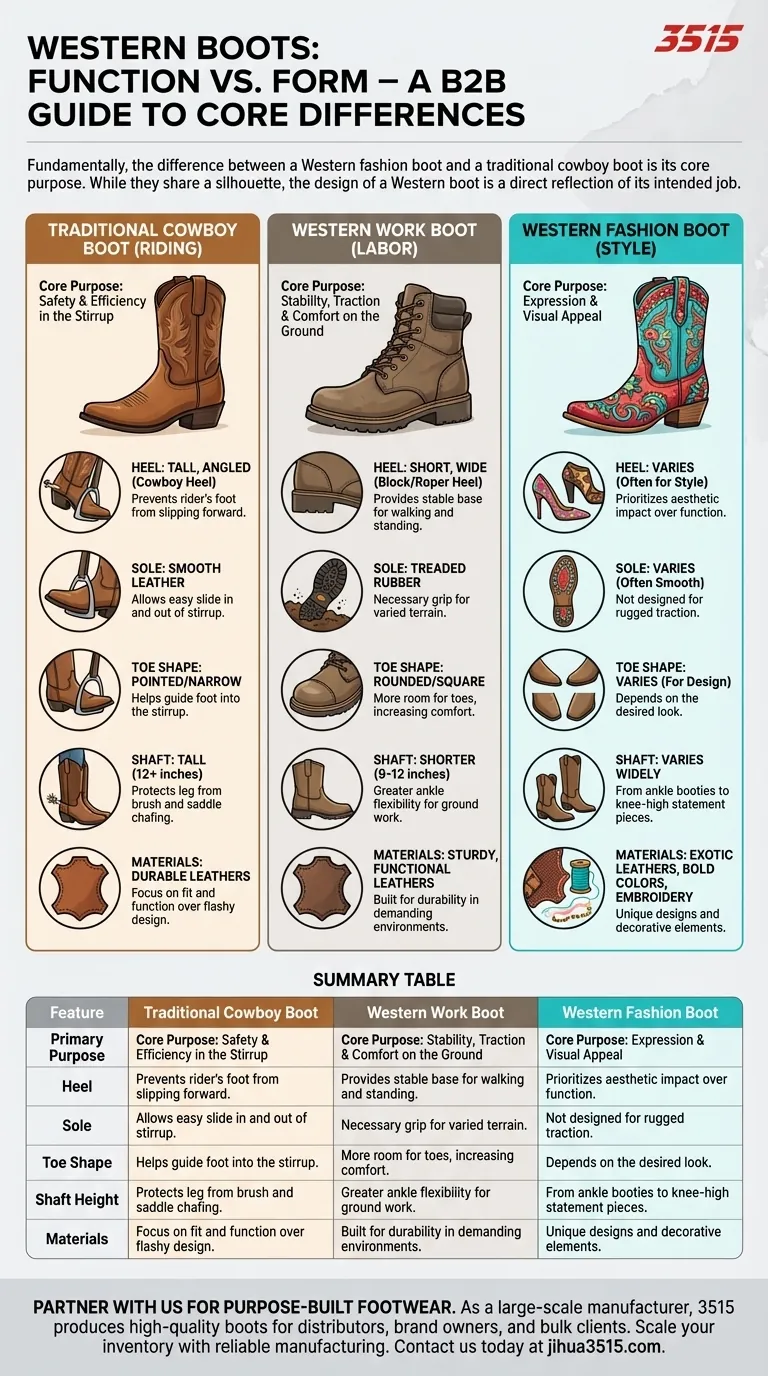
A traditional riding boot has a tall, angled "cowboy" heel, typically over 1.5 inches. This distinct shape is designed to hook onto the stirrup, preventing the rider's foot from dangerously slipping forward.
Western work and fashion boots feature a shorter, wider, and flatter "block" or "roper" heel. This provides a more stable base for walking and standing, reducing strain.
The Sole: Sliding vs. Gripping
Traditional boots feature a smooth leather sole. This is critical for safety, as it allows the rider's foot to easily slide in and out of the stirrup.
Work boots, however, use a treaded rubber outsole. This provides necessary grip and traction on dirt, mud, or pavement, which would be unsafe in a stirrup but is essential for working on foot.
The Toe Shape: Stirrup Entry vs. All-Day Comfort
The classic cowboy boot often has a pointed or narrow toe. This design helps a rider easily guide their foot into the stirrup.
Work boots typically have rounded or square toe boxes. This provides more room for the toes to spread, increasing comfort for long hours of standing and walking. Fashion boots can feature any toe shape, depending on the desired style.
The Shaft: Rider Protection vs. Practicality
A traditional riding boot has a tall shaft, often 12 inches or more, to protect the rider's leg from brush, thorns, and chafing against the saddle.
Work boots often have a shorter shaft (9-12 inches) for greater ankle flexibility and comfort when not on horseback. Fashion boots vary wildly, from ankle-high booties to knee-high statement pieces.
Materials and Aesthetics: Durability vs. Expression
While all well-made boots are durable, their materials signal their purpose. Work and traditional boots use sturdy leathers, focusing on fit and function over flashy design.
Fashion boots are all about aesthetics. They often feature exotic leathers, bold colors, intricate embroidery, and decorative elements like bedazzling to create a unique and eye-catching look.
Understanding the Trade-offs
Choosing the wrong boot for the job can lead to discomfort or poor performance. It's crucial to recognize the inherent limitations of each design.
Wearing Traditional Boots for Walking
The smooth sole and angled heel of a true riding boot are not ideal for extensive walking, especially on hard surfaces. They offer limited traction and can cause foot fatigue.
Expecting Fashion Boots to Be Workhorses
The fine materials and decorative stitching on a fashion boot are not designed for the rigors of a worksite or ranch. They can be easily damaged, and they lack the functional features needed for safety and comfort.
The Hybrid Boot Compromise
Many modern boots blend features, such as a traditional-looking boot with a rubber sole. These can be excellent all-around choices but may not be specialized enough for dedicated riding or heavy-duty work.
Making the Right Choice for Your Needs
Your ideal boot depends entirely on its primary role. Focus on the single most important thing you need your boots to do.
- If your primary focus is horseback riding: You need a traditional cowboy boot with a tall shaft, an angled heel, and a smooth leather sole for safety and function in the stirrup.
- If your primary focus is all-day work on your feet: Look for a Western work boot (like a roper) with a shorter, wider heel, a rubber-treaded sole, and a broader toe box for stability and comfort.
- If your primary focus is style and making a statement: A Western fashion boot offers unlimited creativity in materials, color, and design, allowing you to prioritize aesthetics for any occasion.
By choosing a boot whose design aligns with your purpose, you ensure both satisfaction and performance.
Summary Table:
| Feature | Traditional Cowboy Boot (Riding) | Western Work Boot (Labor) | Western Fashion Boot (Style) |
|---|---|---|---|
| Primary Purpose | Safety & efficiency in the stirrup | Stability & comfort on the ground | Aesthetic expression |
| Heel | Tall, angled (cowboy heel) | Short, wide (block/roper heel) | Varies, often for style |
| Sole | Smooth leather | Treaded rubber | Varies, often smooth |
| Toe Shape | Pointed/narrow | Rounded/square | Varies for design |
| Shaft Height | Tall (12+ inches) | Shorter (9-12 inches) | Varies widely |
| Materials | Durable leathers | Sturdy, functional leathers | Exotic leathers, bold colors, embroidery |
Need the Perfect Boot for Your Business?
As a large-scale manufacturer, 3515 produces a comprehensive range of footwear for distributors, brand owners, and bulk clients. Whether you need durable traditional cowboy boots for riders, comfortable work boots for laborers, or stylish fashion boots for retail, our production capabilities encompass all types of shoes and boots.
Partner with us to:
- Access high-quality, purpose-built footwear tailored to your market.
- Leverage our expertise in materials and design for superior performance and style.
- Scale your inventory with reliable, bulk manufacturing solutions.
Contact us today to discuss your specific needs and elevate your footwear offerings: Get in Touch
Visual Guide
Related Products
- Durable Moc-Toe Wedge Work Boots | Wholesale Manufacturing for Brands
- Durable Goodyear Welt Leather Work Boots for Wholesale & Private Label
- Premium Wholesale Tactical Style Safety Shoes Boots with Quick Lacing
- High-Traction Suede Tactical Boots Wholesale & Custom Manufacturing
- Durable Leather Tactical Boots Wholesale & Custom Manufacturing for Brands
People Also Ask
- How can you achieve a Classic Workwear Vibe with moc toe boots? Build a Rugged, Authentic Style
- What types of outfits can moc toe boots be worn with? Versatile Style Guide
- How did moc toe boots originate? A Legacy of Workwear Durability and Style
- How can moc toe boots be styled for casual wear? Master Rugged & Modern Looks
- What distinguishes moc toe boots? The Ultimate Guide to Unmatched Comfort & Style

















