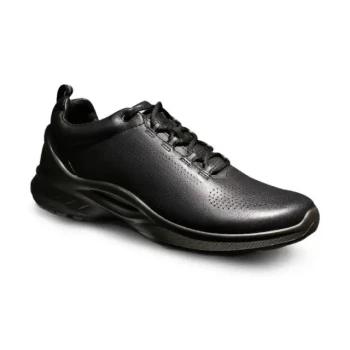
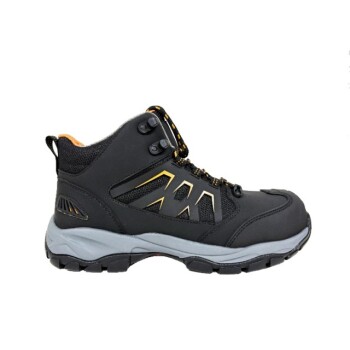
The sole structure of toe spring shoes serves as a critical mechanical aid for stability. Specifically, the upward curve at the front of the sole aligns with the forefoot's natural rolling motion to facilitate smoother transitions. On complex terrain, this geometry significantly reduces the resistance encountered during the push-off phase, preventing the foot from catching on obstacles and minimizing the risk of falls.
While flat soles require the foot to actively flex to clear the ground, toe spring shoes pre-load this curvature. This design reduces forefoot pressure and ensures the toe clears uneven surfaces like grass or gravel without snagging.
The Biomechanics of Protection
Aligning with Natural Motion
The primary function of the toe spring is to mimic the natural rolling motion of the foot.
Rather than forcing the foot to flex deeply against a flat sole, the shoe's upward curve guides the foot through the gait cycle. This creates a rocker effect that maintains momentum without requiring excessive muscular effort from the wearer.
Reducing Resistance at Toe-Off
When walking on complex terrain, the "toe-off" phase—where the foot pushes off the ground—is the most vulnerable moment for tripping.
The geometric structure of the toe spring effectively reduces resistance during this phase. By lifting the toe box off the ground, the shoe allows the wearer to complete the stride more easily, even when the footing is loose or irregular.
Safety Implications on Uneven Surfaces
Preventing Obstacle Engagement
On surfaces such as grass or gravel, the ground is rarely perfectly flat. Small irregularities can easily catch the front of a standard shoe.
Toe spring shoes assist the wearer by physically elevating the leading edge of the shoe. This clearance ensures that the foot glides over small obstacles rather than striking them, directly reducing the risk of falls.
Lowering Forefoot Pressure
Navigating complex terrain often requires more force to stabilize the body.
The source material indicates that toe spring designs lower the pressure on the forefoot. By distributing the load more efficiently during the rolling motion, the shoe protects the foot from the localized stress that often occurs when hiking or walking on unpaved surfaces.
Understanding the Trade-offs
Passive vs. Active Engagement
While the protective benefits are clear, it is important to understand the mechanical trade-off.
Because the shoe assists with the toe-off motion, the intrinsic muscles of the foot may do less work compared to walking barefoot or in flat shoes. This reduced resistance is excellent for preventing fatigue and trips, but it alters the natural engagement of the foot's arch and toes.
Making the Right Choice for Your Terrain
To select the correct footwear, you must evaluate the specific risks of your environment.
- If your primary focus is obstacle avoidance: Prioritize a defined toe spring to ensure your foot clears irregularities on grass, gravel, or trails.
- If your primary focus is endurance: Utilize the pressure-reducing capabilities of the toe spring to minimize forefoot fatigue during long walks.
The right sole geometry transforms the shoe from a passive covering into an active tool for safe and efficient mobility.
Summary Table:
| Feature | Protective Benefit | Impact on Walking Performance |
|---|---|---|
| Upward Curve | Mimics natural rolling motion | Reduces muscular effort and fatigue |
| Toe Clearance | Prevents snagging on obstacles | Minimizes the risk of falls on grass/gravel |
| Rocker Geometry | Lowers forefoot pressure | Protects against localized stress on uneven ground |
| Mechanical Aid | Facilitates smoother transitions | Ensures momentum on loose or irregular footing |
Elevate Your Product Line with Advanced Footwear Solutions
As a large-scale manufacturer serving distributors and brand owners, 3515 offers comprehensive production capabilities for all footwear types, anchored by our flagship Safety Shoes series. Our expert sole engineering ensures maximum protection for workers and outdoor enthusiasts alike. Our extensive portfolio covers work and tactical boots, outdoor shoes, training shoes, and sneakers, as well as Dress & Formal shoes to meet diverse bulk requirements.
Ready to enhance your inventory with high-performance footwear? Contact us today to discuss your manufacturing needs and see how our expertise can add value to your brand.
References
- Miao Tian, Shu Yuan. Kinematic Strategies for Sustainable Well-Being in Aging Adults Influenced by Footwear and Ground Surface. DOI: 10.3390/healthcare10122468
This article is also based on technical information from 3515 Knowledge Base .
Related Products
- Wholesale Safety Footwear Manufacturer for Bulk & Custom OEM Orders
- Durable Steel Toe Safety Boots Wholesale & Custom Manufacturing
- Premium Suede Sport Safety Shoes for Wholesale & Bulk Orders
- Wholesale Mesh Steel Toe Safety Shoes with Dial Closure Factory Production
- Premium Lightweight Safety Shoes for Wholesale & Bulk Orders
People Also Ask
- What type of safety shoe is recommended for workers exposed to heavy machinery? Steel Toe Boots for Ultimate Protection
- Why are industrial safety boots with steel toes necessary for machine operators? Essential Foot Protection for Safety
- Why are steel toes popular in safety footwear? The Ultimate Guide to Heavy-Duty Protection
- What are the recommended uses for steel toe safety shoes? Essential Protection for High-Risk Industries
- Is the myth about steel toe shoes cutting off toes true? Debunking the Safety Footwear Myth