
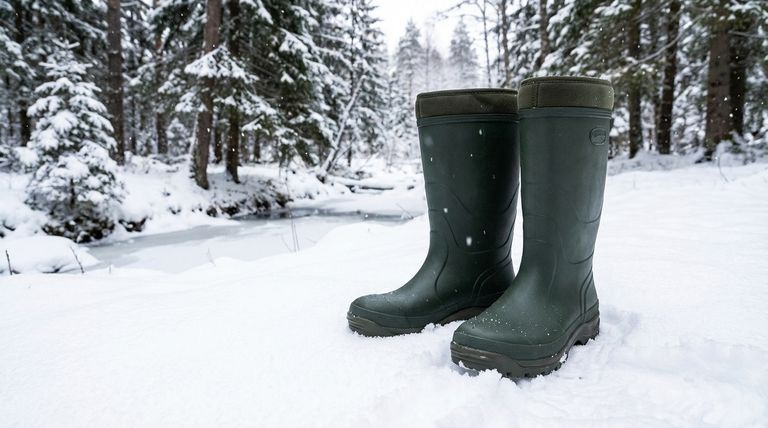
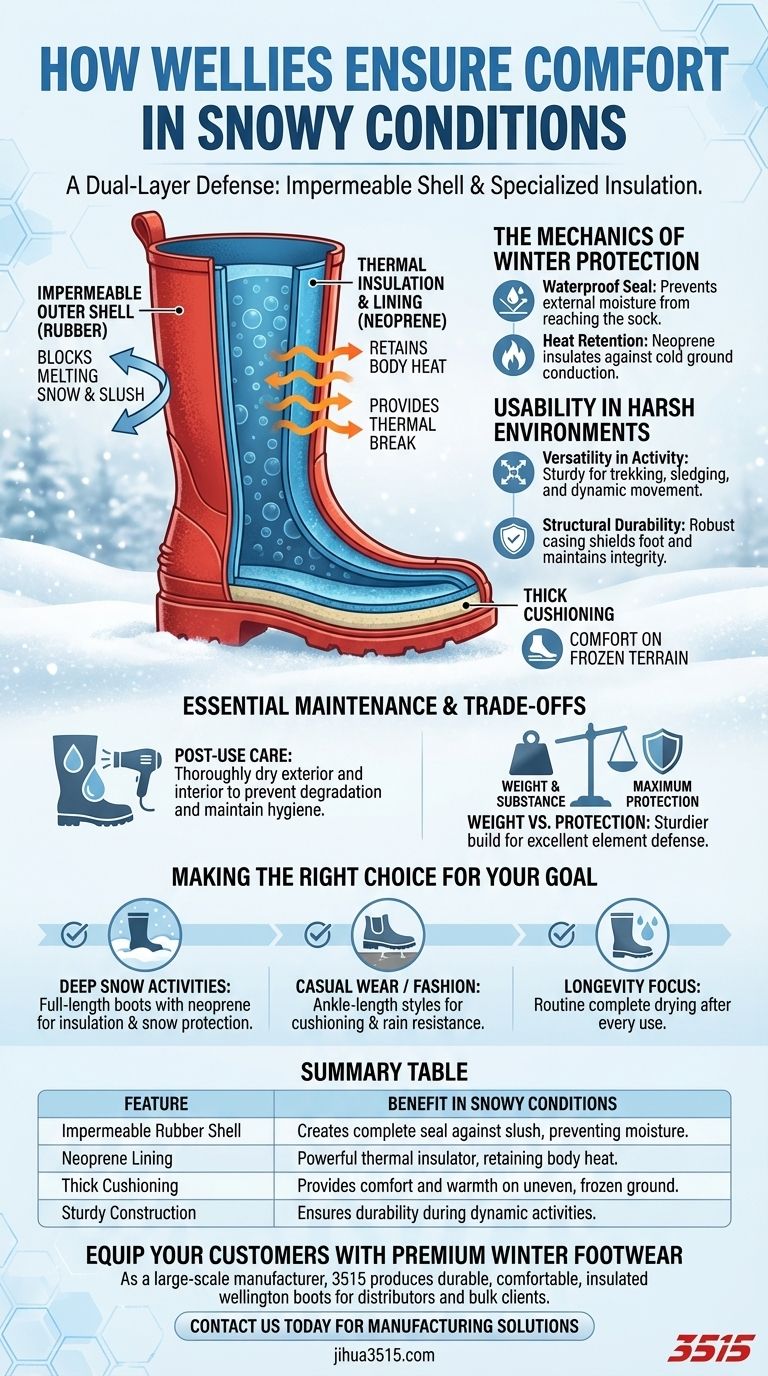
Wellies ensure comfort in snowy conditions by combining an impermeable outer shell with specialized internal insulation. This dual-layer construction prevents melting snow from penetrating the boot while simultaneously trapping body heat to maintain a stable internal temperature.
The core effectiveness of a wellington boot in snow lies not just in its waterproof rubber skin, but in the quality of its internal lining, such as neoprene, which provides the critical thermal break between your foot and the freezing ground.
The Mechanics of Winter Protection
The Impermeable Outer Shell
The primary line of defense in a Wellington boot is the rubber outer layer. Unlike water-resistant fabrics that may eventually soak through, this material is fully waterproof.
This creates a seal against slush and melting snow. It ensures that external moisture never reaches the sock, which is the first step in preventing heat loss.
Thermal Insulation and Lining
To combat the cold conduction of the ground, modern wellies often utilize neoprene lining. This material serves as a powerful insulator, retaining warmth generated by the body.
In addition to insulation, these boots feature thick cushioning materials inside. This padding not only improves warmth but also provides essential comfort for the foot sole during treks on uneven, frozen terrain.
Usability in Harsh Environments
Versatility in Activity
Wellies are engineered to handle a variety of dynamic movements, from trekking to active play like sledging or snowball fights. The construction is designed to remain sturdy under stress.
Whether for men or women, the design focuses on keeping the foot warm and dry regardless of the activity level. This versatility makes them a reliable tool for navigating winter storms.
Structural Durability
These boots are built to be sturdy and robust. They provide a protective casing that shields the foot and ankle from physical elements while maintaining structural integrity in cold temperatures.
For women specifically, designs often balance this rugged capability with aesthetic considerations. Options range from full-length protection to shorter ankle styles, using rain-resistant materials to handle the season's demands.
Essential Maintenance and Trade-offs
The Importance of Post-Use Care
While wellies are durable, their longevity depends on proper maintenance. It is critical to dry them off thoroughly after exposure to snow and moisture.
Failing to remove moisture from the exterior and interior can degrade the materials over time. Proper drying ensures the boot remains hygienic and structurally sound for future use.
Weight vs. Protection
The materials required for waterproof protection and thick cushioning add substance to the boot. While this provides excellent protection against the elements, it results in a sturdier, potentially heavier piece of footwear compared to light trainers.
Making the Right Choice for Your Goal
To maximize comfort and utility in the snow, consider how you intend to use your boots.
- If your primary focus is deep snow activities: Prioritize full-length boots with neoprene lining to maximize thermal insulation and keep snow out of the boot shaft.
- If your primary focus is casual wear or fashion: Look for ankle-length styles that offer cushioning and rain resistance without the bulk of a full-height boot.
- If your primary focus is longevity: Commit to a routine of drying the boots completely after every use to preserve the rubber and lining condition.
By selecting the right insulation grade and maintaining the waterproof seal, you turn a simple rubber boot into a sophisticated tool for winter survival.
Summary Table:
| Feature | Benefit in Snowy Conditions |
|---|---|
| Impermeable Rubber Shell | Creates a complete seal against slush and melting snow, preventing moisture penetration. |
| Neoprene Lining | Acts as a powerful thermal insulator, retaining body heat to keep feet warm. |
| Thick Cushioning | Provides comfort and warmth for the foot sole on uneven, frozen terrain. |
| Sturdy Construction | Ensures durability and protection during dynamic activities like trekking or sledging. |
Ready to equip your customers with premium winter footwear?
As a large-scale manufacturer, 3515 produces a comprehensive range of durable, comfortable wellington boots for distributors, brand owners, and bulk clients. Our production capabilities ensure high-quality, insulated boots perfect for snowy conditions, helping you meet market demand with reliable products.
Contact us today to discuss your footwear needs and explore how we can support your business with superior manufacturing solutions.
Visual Guide
Related Products
- Durable Waterproof Rain Boots | Custom Manufacturer for Wholesale & Brands
- Durable Goodyear Welt Leather Work Boots for Wholesale & Private Label
- Wholesale Durable Leather Work Boots | 8-Inch Goodyear Welt Manufacturer
- Premium Wholesale Tactical Style Safety Shoes Boots with Quick Lacing
- Durable High-Ankle Tactical Boots Wholesale Manufacturer for Custom & Bulk Orders
People Also Ask
- What are the main materials for waterproof rain boots? Choose the Right Material for Durability & Comfort
- What is the overall recommendation for choosing rain boot materials? A Guide to Rubber vs. PVC
- How does boot height affect waterproofing? Choose the Right Height for Ultimate Protection
- Why are rain boots more flexible and comfortable than snow boots? The Key Differences Explained
- What are the best types of shoes for different gardening conditions? Find Your Perfect Match.



















