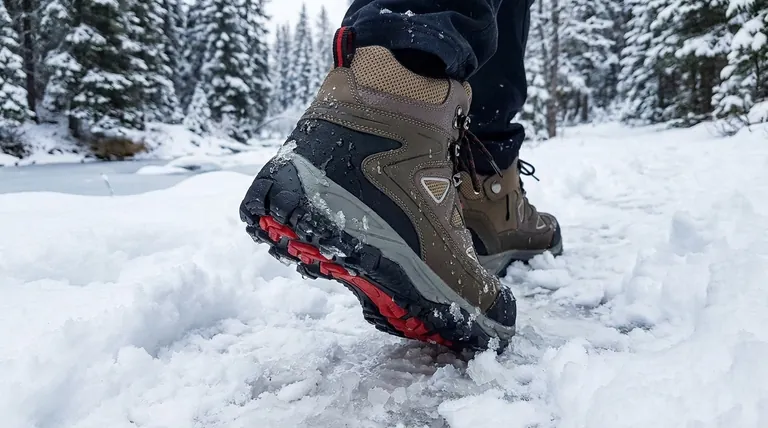
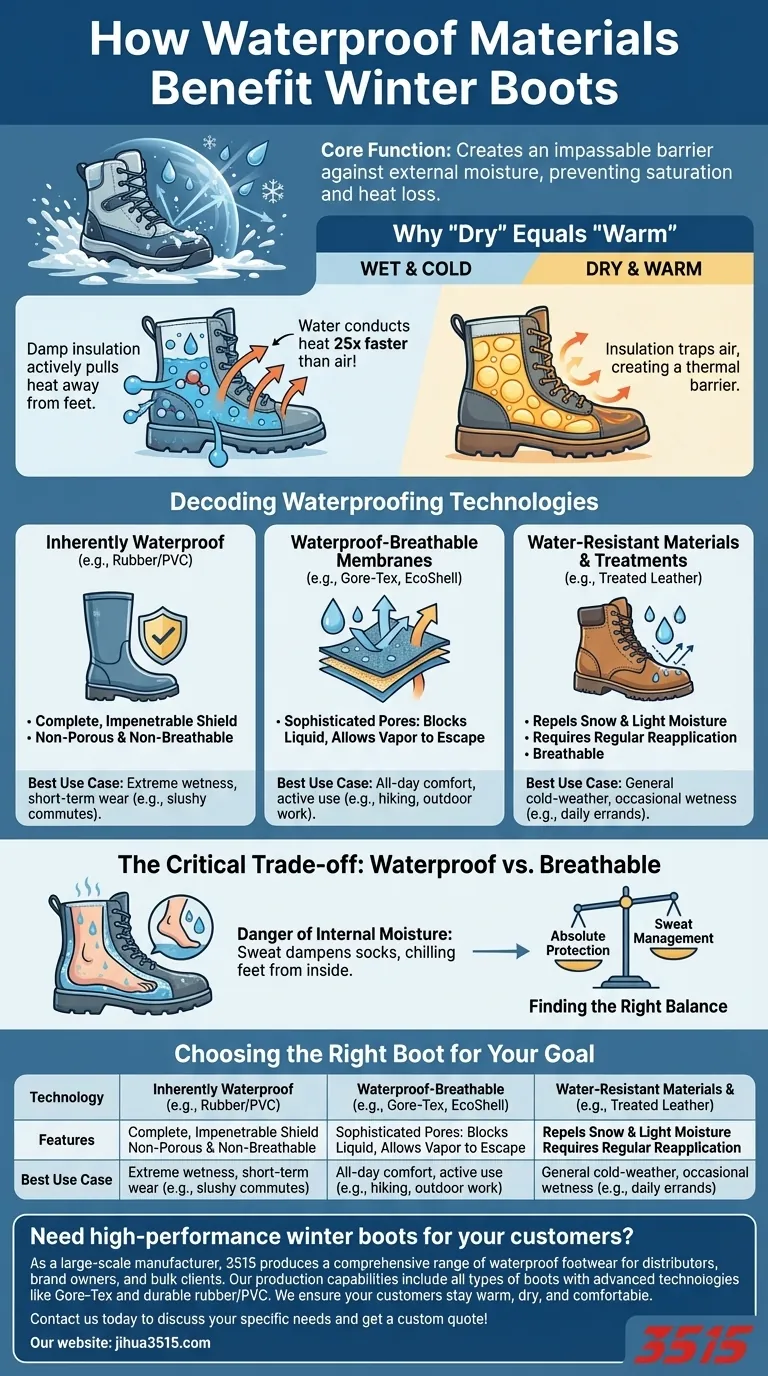
The primary benefit of waterproof materials in winter boots is their ability to create an impassable barrier against external moisture. This core function prevents snow, slush, and water from saturating the boot's interior, which is the single most important factor in keeping your feet warm, comfortable, and protected from the cold.
In winter, water is the enemy of warmth. Waterproofing isn't just a comfort feature; it's the fundamental technology that prevents moisture from robbing your feet of heat, ensuring both your comfort and safety in harsh conditions.
Why "Dry" Equals "Warm"
Many people focus on the thickness of a boot's insulation, but that insulation becomes nearly useless if it gets wet. Understanding the relationship between water and heat loss is key to appreciating the role of waterproofing.
The Science of Cold Feet
Water is an incredibly efficient conductor of heat, transferring it away from your body about 25 times faster than air. When your socks and the insulation inside your boots get damp, they stop trapping warm air and start actively pulling heat from your feet.
This is why even in temperatures above freezing, wet feet can become dangerously cold very quickly.
Protecting Your Insulation
Insulation works by trapping thousands of tiny pockets of air, which is a poor conductor of heat. This trapped air creates a thermal barrier between your foot and the cold outside.
When water seeps into the boot, it displaces this air, completely compromising the insulation's ability to keep you warm. Effective waterproofing is what protects this critical layer.
Decoding Waterproofing Technologies
The term "waterproof" can refer to several different materials and methods, each with its own strengths. Knowing the difference helps you choose the right boot for your specific needs.
Inherently Waterproof Materials
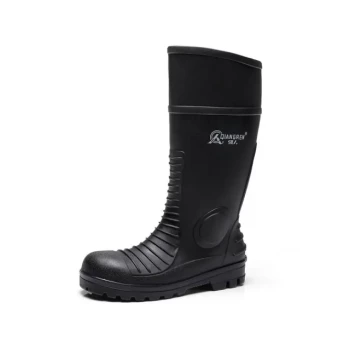
Materials like rubber and PVC are non-porous, meaning they offer a complete, impenetrable shield against water. They are perfect for standing in slush or puddles.
However, because they don't allow any air or moisture to pass through, they are not breathable.
Waterproof-Breathable Membranes
This is the most advanced form of waterproofing, found in materials like Gore-Tex or other branded "EcoShell" equivalents. These are sophisticated membranes with pores that are too small for liquid water droplets to pass through, but large enough for smaller water vapor molecules (sweat) to escape.
This technology keeps external moisture out while allowing internal moisture to vent, which is crucial for all-day comfort and active use.
Water-Resistant Materials and Treatments
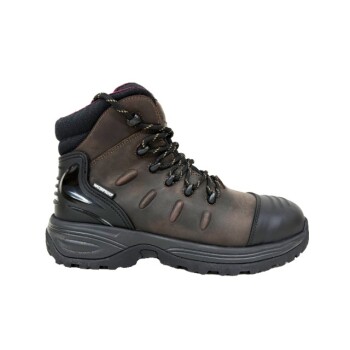
Materials like leather can be highly water-resistant, especially when properly treated with oils or waxes. While they can repel snow and light moisture effectively, they can eventually become saturated during prolonged exposure to wet conditions.
Topical treatments, such as waterproofing sprays, can add a layer of protection to both leather and synthetic fabric boots but require regular reapplication to remain effective.
The Critical Trade-off: Waterproof vs. Breathable
True effectiveness in a winter boot comes from managing moisture from both the outside and the inside. An impermeable barrier can sometimes create a new problem.
The Danger of Internal Moisture
Your feet sweat, even in cold weather. If you are wearing a completely sealed, non-breathable boot (like a simple rubber boot) for an extended period, that sweat has nowhere to go.
The moisture builds up, dampens your socks, and begins to chill your feet from the inside—the very problem you were trying to avoid.
Finding the Right Balance
For short-term wear in extremely wet conditions, a fully waterproof rubber boot is ideal. You get absolute protection, and you're likely to take them off before internal sweat becomes an issue.
For longer wear or more active pursuits like winter hiking, a boot with a waterproof-breathable membrane is non-negotiable. It provides the necessary balance to keep you dry from both snow and sweat.
Making the Right Choice for Your Goal
Selecting the right boot depends entirely on how you plan to use it. Match the technology to your activity for the best results.
- If your primary focus is extreme wetness and short-term wear (e.g., slushy commutes): A fully sealed rubber or PVC boot offers the most reliable, impenetrable protection.
- If your primary focus is all-day comfort and active use (e.g., hiking, working outdoors): A boot with a waterproof-breathable membrane like Gore-Tex is essential for managing sweat and maintaining long-term warmth.
- If your primary focus is general cold-weather use with occasional wetness (e.g., running errands): High-quality, treated leather boots provide an excellent balance of water resistance, durability, and breathability.
Ultimately, choosing the correct waterproof technology ensures your winter boots perform as an integrated system to keep you warm, not just dry.
Summary Table:
| Waterproofing Technology | Key Features | Best Use Case |
|---|---|---|
| Rubber/PVC | Completely impermeable, non-breathable | Extreme wetness, short-term wear (e.g., slushy commutes) |
| Waterproof-Breathable Membrane (e.g., Gore-Tex) | Blocks external water, allows sweat vapor to escape | All-day comfort, active use (e.g., hiking, outdoor work) |
| Treated Leather | Highly water-resistant, breathable, durable | General cold-weather use with occasional wetness (e.g., daily errands) |
Need high-performance winter boots for your customers?
As a large-scale manufacturer, 3515 produces a comprehensive range of waterproof footwear for distributors, brand owners, and bulk clients. Our production capabilities include all types of boots with advanced waterproofing technologies like Gore-Tex and durable rubber/PVC constructions. We ensure your customers stay warm, dry, and comfortable in any winter condition.
Contact us today to discuss your specific needs and get a custom quote!
Visual Guide
Related Products
- Durable Waterproof Rain Boots | Custom Manufacturer for Wholesale & Brands
- Factory Direct Wholesale Rain Boots Durable Waterproof & Fully Customizable
- Wholesale Premium Waterproof Nubuck Safety Shoes Boots
- Wholesale Waterproof Tactical Boots Custom Suede & High-Traction Soles
- Premium Waterproof Nubuck Safety Boots for Wholesale
People Also Ask
- What are the main materials for waterproof rain boots? Choose the Right Material for Durability & Comfort
- What is the overall recommendation for choosing rain boot materials? A Guide to Rubber vs. PVC
- How does boot height affect waterproofing? Choose the Right Height for Ultimate Protection
- Why are rain boots more flexible and comfortable than snow boots? The Key Differences Explained
- What are the best types of shoes for different gardening conditions? Find Your Perfect Match.