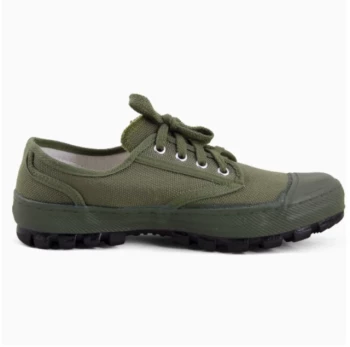
Visual-guidance requirements impact safety footwear indirectly but critically through the operational environment. While Agricultural All-Terrain Vehicles utilize CCD/CMOS cameras for precision tasks like harvesting and crop row recognition, human supervisors are required to work alongside them. Because these visual systems operate in wet or lubricated fields, the slip-resistance standards for Professional Work Shoes are elevated to ensure the stability of the operator monitoring the automated machinery.
The precision of machine vision systems demands human supervision in hazardous terrain. Therefore, the presence of automated agricultural technology necessitates high-coefficient slip-resistant outsoles to prevent falls on the diverse, slippery surfaces where these machines operate.
The Intersection of Automation and Human Safety
The Role of Visual Guidance Systems
Modern Agricultural All-Terrain Vehicles rely on advanced visual sensors. Specifically, they utilize CCD or CMOS cameras to perform high-precision tasks.
These tasks typically include automated crop row recognition and specific harvesting operations. The machine's ability to "see" allows it to navigate complex field layouts autonomously.
The Necessity of Human Supervision
Despite the sophistication of these visual-guidance systems, the workflow is not entirely unmanned. Human operators are required to supervise the machinery to ensure proper function and safety.
This places the human directly in the path of the machine's operation. The operator must move synchronously with the automated vehicle to maintain effective oversight.
Environmental Factors Driving Standards
Navigating Wet and Lubricated Terrain
The environments where vision-guided farming occurs are rarely dry or stable. Operators must frequently traverse wet or lubricated agricultural environments.
These conditions are inherent to farming, involving irrigation, morning dew, mud, or chemical applications. The ground conditions create a significant hazard for anyone walking near heavy machinery.
The Requirement for High-Coefficient Outsoles
To mitigate the risks associated with these surfaces, standard footwear is insufficient. Professional Work Shoes for this sector must feature high-coefficient slip-resistant outsoles.
This specific standard is dictated by the need for maximum friction against the ground. It ensures that the operator maintains stability and safety while focusing on the automated equipment rather than their footing.
Understanding the Operational Risks
The Consequence of Instability
The proximity to automated machinery heightens the stakes of a slip or fall. If an operator loses stability near an ATV performing precision harvesting, the risk of injury increases significantly.
Limitations of Machine Awareness
While visual-guidance systems are excellent at recognizing crops, they may not immediately detect a fallen operator in low-visibility conditions. Reliable footwear acts as a primary preventative measure against accidents in these diverse and often slippery zones.
Selecting the Right Gear for Automated Environments
When equipping personnel for the supervision of vision-guided agricultural machinery, standards must align with environmental realities.
- If your primary focus is operator safety: Prioritize footwear with high-coefficient slip-resistant outsoles specifically tested for wet and lubricated substrates.
- If your primary focus is operational efficiency: Select gear that guarantees stability, allowing supervisors to monitor precision camera systems without distraction or fatigue from navigating slippery terrain.
The successful deployment of automated agricultural technology relies as much on the stability of the human operator as it does on the precision of the machine's sensors.
Summary Table:
| Factor | Visual-Guidance Context | Footwear Requirement |
|---|---|---|
| Environment | Wet, lubricated fields, mud, and irrigation | High-coefficient slip-resistant outsoles |
| Human Role | Machinery supervision and proximity monitoring | Superior stability and traction |
| Risk Level | High stakes near heavy automated equipment | SRC/ISO level slip prevention |
| System Support | CCD/CMOS camera-based row recognition | Support for synchronized movement |
Secure Your Operational Success with 3515 Performance Footwear
As a large-scale manufacturer serving distributors and brand owners, 3515 offers comprehensive production capabilities for all footwear types, anchored by our flagship Safety Shoes series. Whether you are managing the risks of automated agricultural environments or heavy industrial zones, our high-coefficient slip-resistant outsoles provide the stability your operators need to focus on performance without the fear of falls.
Our extensive portfolio covers work and tactical boots, outdoor shoes, training shoes, and sneakers, as well as Dress & Formal shoes to meet diverse bulk requirements. Partner with 3515 to gain access to world-class manufacturing, rigorous safety testing, and reliable supply chains.
Contact us today to discuss your bulk production needs and custom safety requirements!
References
- Hamed Etezadi, Sulaymon Eshkabilov. A Comprehensive Overview of Control Algorithms, Sensors, Actuators, and Communication Tools of Autonomous All-Terrain Vehicles in Agriculture. DOI: 10.3390/agriculture14020163
This article is also based on technical information from 3515 Knowledge Base .
Related Products
- Wholesale Comfortable Business Casual Shoes Custom Manufacturing
- Durable Canvas Work Shoes with Rubber Lug Sole | Wholesale Manufacturer
- Durable Goodyear Welt Leather Work Boots for Wholesale & Private Label
- Durable Leather Work Boots for Wholesale & Custom Manufacturing
- Durable Leather Work Boots for Wholesale & Custom OEM Manufacturing
People Also Ask
- What are the key characteristics of business casual shoes? Achieve Polished Versatility for Your Wardrobe
- What should be considered when selecting shoes for a casual business setting? Achieve the Perfect Balance of Style and Comfort
- Which types of shoes should be avoided with business casual attire? Maintain a Polished Professional Image
- What is the recommended approach to trying on business casual shoes? Ensure a Perfect Fit for Your Workday
- What are some types of business casual shoes? Build a Versatile & Professional Footwear Wardrobe