
The right boots are a direct enhancer of a firefighter's performance, providing the critical foundation for agility, stability, and sure-footedness in unpredictable and hazardous environments. This specialized footwear enables safer, more efficient movement, which directly reduces the risk of injury and allows for a more rapid and effective response when seconds count.
A firefighter's boot is not merely protective equipment; it is a high-performance tool that serves as the primary interface between the operator and their unstable environment. The right boot translates directly to enhanced operational capability and personal safety.
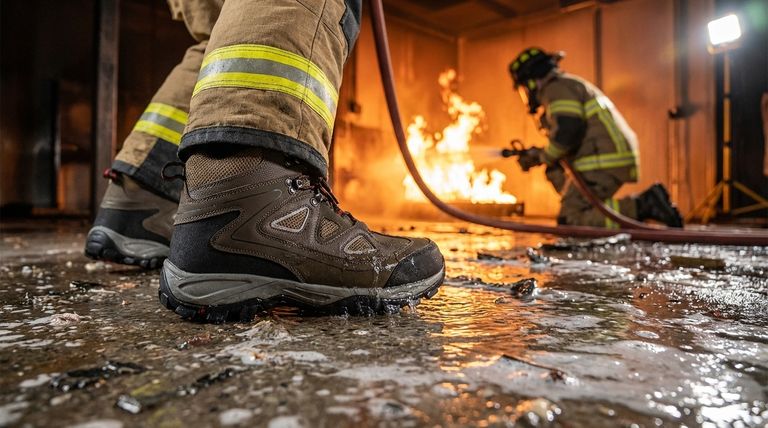
The Foundation: Stability and Support
A firefighter is constantly operating on compromised surfaces. The boot's ability to create a stable base is paramount for nearly every task performed on the fireground.
Preventing Slips with Superior Traction
Surfaces are predictably slick, covered in water, foam, oil, or ice. A boot's outsole, with its specialized tread pattern and material compound, is engineered to grip these surfaces, preventing slips and falls that can be catastrophic while carrying equipment or a victim.
The Role of Ankle Support
Moving across debris, climbing ladders, or bracing against the force of a fire hose requires significant ankle stability. Well-constructed boots provide structural support that helps prevent twists and sprains, allowing a firefighter to confidently plant their feet and apply force.
Maintaining a Base on Unstable Ground
From collapsed floors to steep, rubble-strewn embankments, the ground is rarely level or solid. A rigid, supportive boot structure distributes the firefighter's weight, creating a more reliable platform and reducing the fatigue that comes from constantly fighting for balance.
Enabling Rapid Response Through Agility
While stability is crucial, a boot must not be an anchor. Performance demands the ability to move quickly and nimbly through chaotic scenes.
The Impact of Boot Weight
Every ounce on the feet matters. Modern materials allow for boots that meet stringent safety standards without excessive weight, reducing the energy required to lift the feet with every step. This conserves stamina over long incidents.
How Flexibility Aids Movement
Firefighting is not just walking; it's crawling, climbing, and contorting through tight spaces. A boot must have engineered flex points that allow the foot to move naturally, enhancing speed and reducing the feeling of being restricted.
The Critical Importance of Proper Fit
An improperly fitting boot is a direct impediment to performance. Chafing, blisters, and foot fatigue can become dangerous distractions. A secure, well-fitted boot feels like an extension of the body, allowing the firefighter to focus entirely on the task at hand.
Understanding the Trade-offs
Choosing the right boot involves balancing competing demands. There is no single "best" boot, only the best boot for a specific role and environment.
Protection vs. Agility
A boot with more layers of thermal protection and a thicker, more puncture-resistant sole will inherently be stiffer and heavier. This enhances safety in extreme structural fires but may reduce the agility needed for technical rescue or wildland firefighting.
Durability vs. Weight
The most durable materials, such as thick leather and heavy-duty rubber, add weight. Lighter, synthetic materials may offer greater comfort and reduce fatigue but might have a shorter service life under punishing conditions.
Making the Right Choice for Your Mission
Your operational needs should be the primary driver of your selection.
- If your primary focus is structural firefighting: Prioritize maximum thermal protection, puncture resistance, and a stable, supportive platform.
- If your primary focus is technical rescue or extrication: Emphasize a balance of protection with enhanced flexibility, a lighter weight, and a superior fit for agility in tight spaces.
- If your primary focus is wildland firefighting: Select for durability, ankle support for uneven terrain, and a lighter weight to reduce fatigue during long hours on the move.
Ultimately, your boots are the foundation upon which every action you take is built.
Summary Table:
| Performance Factor | Key Benefit |
|---|---|
| Stability & Support | Prevents slips, provides ankle support, and creates a reliable base on unstable ground. |
| Agility & Speed | Reduces weight, offers flexibility, and ensures a proper fit for rapid, nimble movement. |
| Protection | Balances thermal and puncture resistance with mobility based on the specific mission. |
Equip your team with the foundation for peak performance. As a large-scale manufacturer, 3515 produces a comprehensive range of high-performance safety footwear for distributors, brand owners, and bulk clients. Our production capabilities encompass all types of specialized boots, including those designed for the demanding needs of firefighters. Let us help you source durable, agile, and protective boots that enhance operational capability and safety.
Contact 3515 today to discuss your specific requirements and receive a quote.
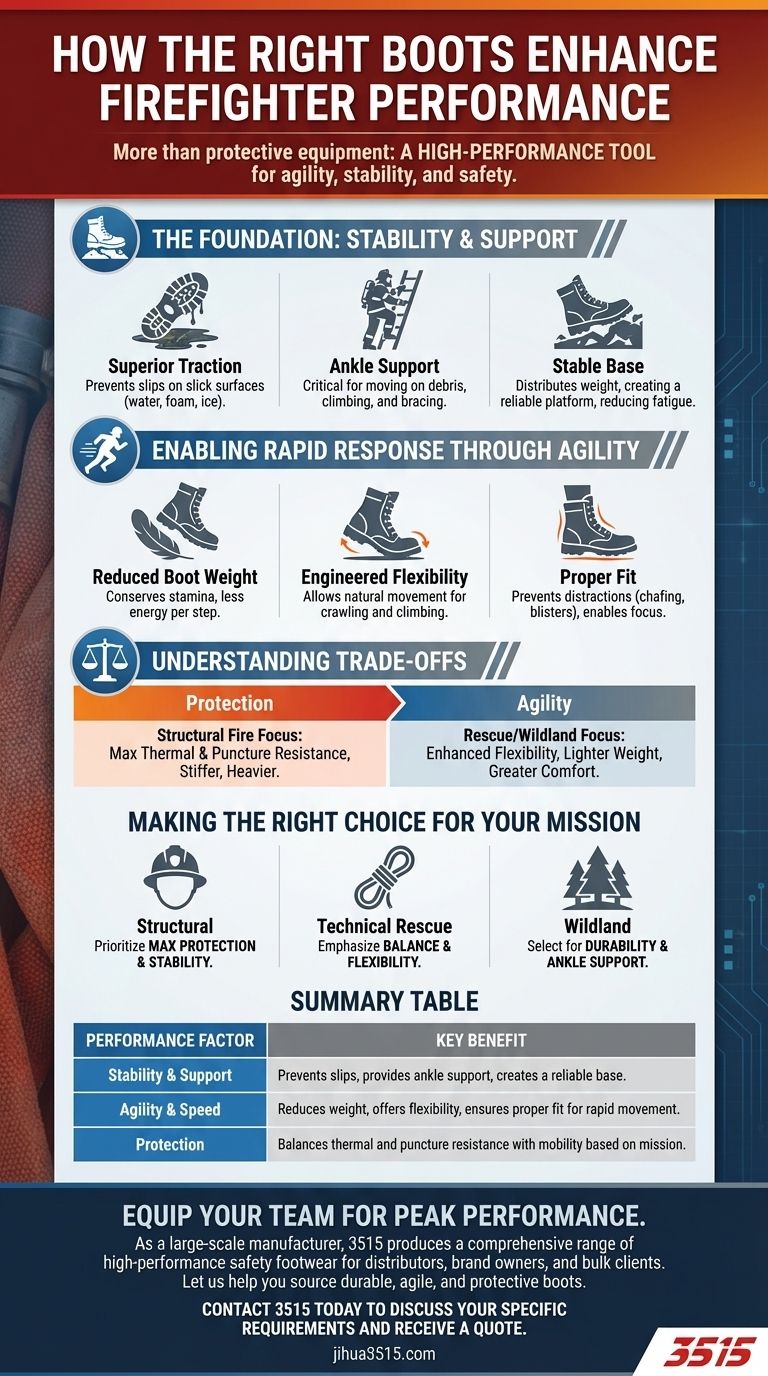
Visual Guide
Related Products
- High Performance Fire-Retardant Waterproof Safety Boots
- Premium Flame-Retardant Waterproof Safety Boots and Shoes
- Durable Military Combat Boots with Water Drainage for Wholesale & OEM
- Wholesale Lightweight Tactical Boots Custom Manufacturer for Desert & Combat Use
- High-Traction Suede Tactical Boots Wholesale & Custom Manufacturing
People Also Ask
- Why are waterproof safety boots recommended for certain work environments? Essential Protection for Wet & Hazardous Jobs
- What roles do 3D vision systems and industrial robots play in the manufacturing of fire safety boots? Smart Automation
- What is the difference between waterproof, water-resistant, and water-repellent boots? Choose the Right Protection for Your Feet
- What is the advantage of one-piece construction in waterproof boots? Unbeatable Seamless Protection
- How should you maintain waterproof boots? A Simple 3-Step Guide to Long-Lasting Performance



















