
At its core, the dial and cover closure system on these winter cycling shoes improves functionality by providing precise, easily managed adjustments and crucial protection from the elements. This combination is essential for maintaining comfort, warmth, and blood flow in cold and unpredictable conditions.
The challenge of winter cycling isn't just staying warm, but managing your gear with gloved hands and adapting to changing conditions. A modern dial closure system directly addresses this by making fit adjustments effortless while a protective cover shields the mechanism from ice and water.
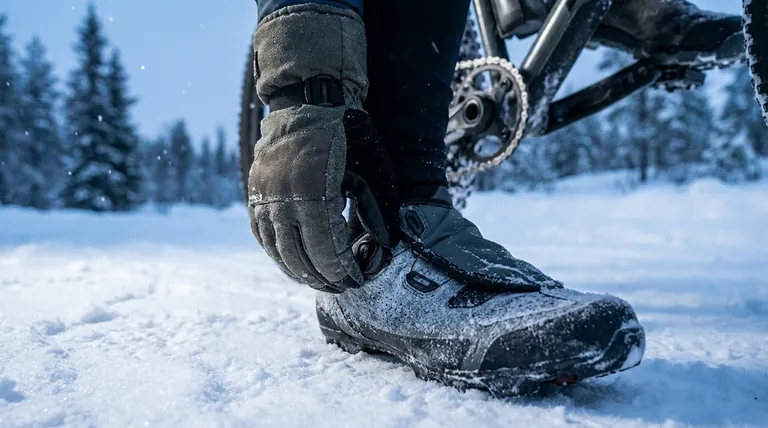
The Unique Challenges of Winter Footwear
Before evaluating a closure system, we must understand the specific problems winter cyclists face. The effectiveness of a shoe is defined by how well it solves these core issues.
The Problem of Gloved Hands
Operating small buckles, straps, or laces is extremely difficult while wearing thick winter gloves. Any system that requires fine motor skills becomes a significant point of friction on a cold ride.
The Need for Dynamic Fit
Your feet can swell or feel different as a ride progresses. A shoe that is slightly too tight can severely restrict blood flow, which is the primary way your body keeps your feet warm. Cold feet are not just uncomfortable; they are a safety risk.
Defense Against the Elements
Snow, ice, and freezing rain can easily jam or disable a closure mechanism. A system exposed to the elements is a system that is vulnerable to failure when you need it most.
How a Dial and Cover System Excels
This best-in-class system is not a single feature but a combination of two components working together to solve winter-specific problems.
Micro-Adjustability for Circulation
The dial allows for tiny, incremental adjustments to the shoe's tightness. This precision lets you secure your foot for power transfer without creating pressure points that would otherwise restrict circulation and lead to cold, numb toes.
Effortless, One-Handed Use
The large, tactile dial is designed to be easily gripped and turned even with bulky gloves. This allows for quick, on-the-fly adjustments without having to stop and expose your hands to the cold.
Even Pressure Distribution
Unlike traditional straps that create high-pressure spots, the wire lace used in dial systems tightens evenly across the top of the foot. This "wrapping" effect is key to achieving a snug fit that doesn't compromise blood flow.
The Critical Role of the Cover
The cover is a crucial element for winter functionality. It acts as a gaiter, shielding the dial mechanism from ice, snow, and water spray, ensuring it remains operational in the worst conditions. It also adds a valuable layer of windproofing and insulation.
Understanding the Trade-offs
While highly effective, no system is perfect. Being a trusted advisor means acknowledging the potential downsides.
Field Serviceability
A broken shoelace is easy to replace on the road. A catastrophic failure of a mechanical dial system, while rare, can be impossible to fix without a specific repair kit, potentially ending your ride.
Cost and Complexity
Dial systems are advanced mechanisms and are typically featured on more premium and expensive footwear. They have more moving parts than simple laces or Velcro straps.
Making the Right Choice for Your Goal
Your ideal closure system depends entirely on your riding priorities.
- If your primary focus is convenience and performance in harsh conditions: A dial system with a protective cover is the superior choice for its ease of use with gloves and precise fit.
- If your primary focus is ultimate reliability and field repairability: High-quality laces, while less convenient, offer a simple and bombproof solution that can be fixed anywhere.
- If your primary focus is minimizing cost: Velcro or ratchet systems can be effective, but you must accept their limitations in adjustability and performance when wet or icy.
Ultimately, the right closure system transforms your winter shoe from a simple covering into a high-performance tool for warmth and safety.
Summary Table:
| Feature | Benefit for Winter Cycling |
|---|---|
| Dial Closure | Provides micro-adjustability for perfect fit, ensuring blood flow and warmth. |
| Protective Cover | Shields the mechanism from snow and ice, ensuring reliability in harsh conditions. |
| One-Handed Operation | Enables easy adjustments while wearing bulky winter gloves. |
| Even Pressure Distribution | Wraps the foot snugly without pressure points that restrict circulation. |
Ready to equip your brand with high-performance winter cycling footwear?
As a large-scale manufacturer, 3515 produces a comprehensive range of footwear for distributors, brand owners, and bulk clients. Our production capabilities encompass all types of shoes and boots, including advanced models featuring the precise dial and cover closure systems detailed in this article. We can help you bring reliable, functional, and market-leading winter cycling shoes to your customers.
Contact our expert team today to discuss your manufacturing needs and how we can add value to your product line.
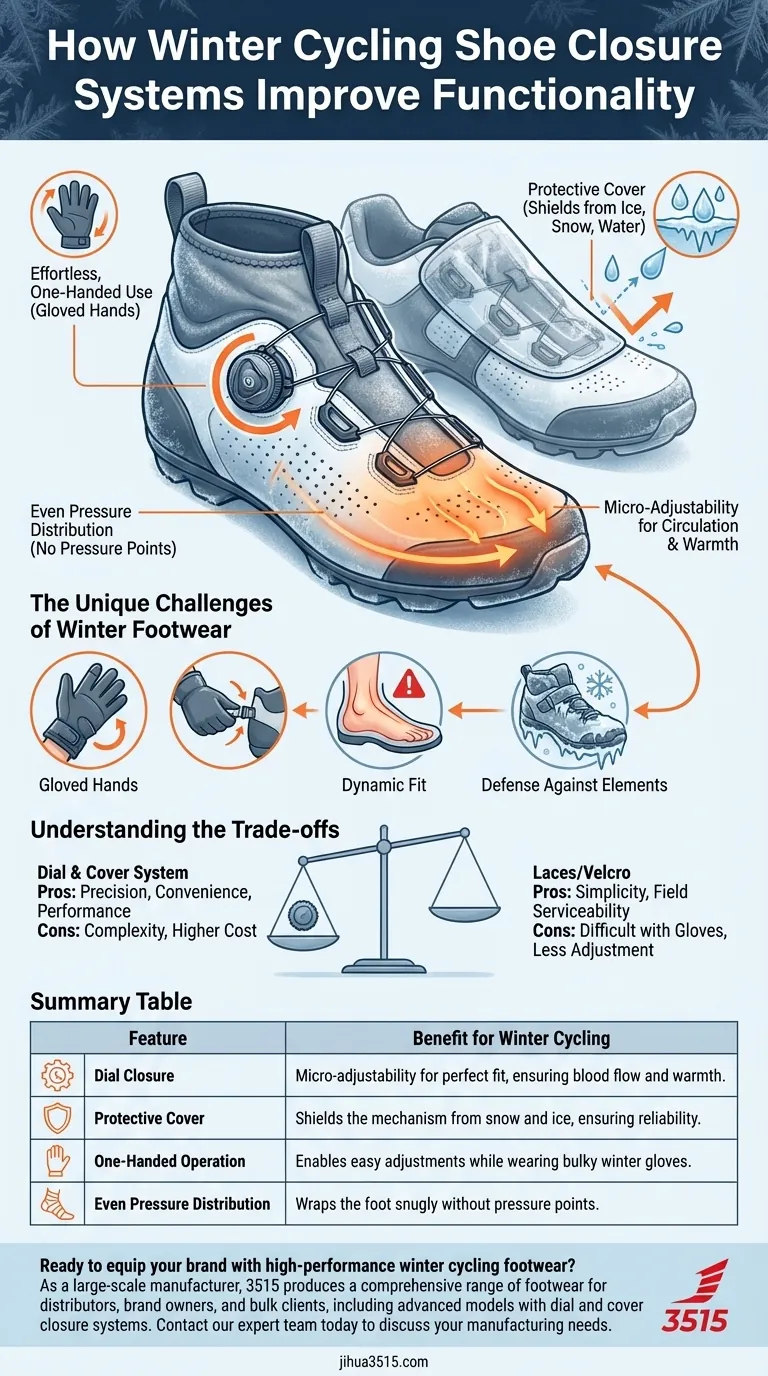
Visual Guide
Related Products
- Wholesale Modern Comfort Shoes with Dial Closure for Private Label & Bulk Orders
- Wholesale Smart Casual Sneakers with Dial Closure | Factory Direct Manufacturing
- Wholesale Modern Business Shoes with Dial Closure System for Bulk Orders
- Wholesale Training Shoes with Dial Lacing System Custom OEM Manufacturing
- Wholesale Lightweight Tactical Boots with Dial Closure OEM & Bulk Orders
People Also Ask
- Why is comfort important when selecting shoes? The Key to Long-Term Health and Performance
- Why is maximum comfort important in shoes? Prevent Pain & Long-Term Injury
- What factors should be considered when buying shoes for comfort? Get the Perfect Fit for All-Day Wear
- What kind of shoes do businessmen wear? Master the Dress Code for Professional Success
- What are the essential business shoes every man should own? Build a Professional Wardrobe Foundation














