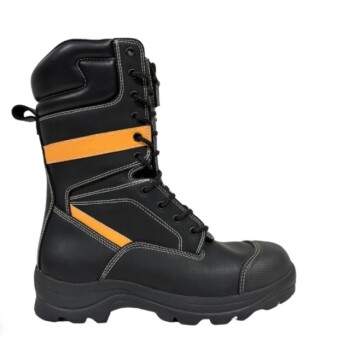
At their core, structural firefighting boots protect against debris and sharp objects through an engineered system of three key components: puncture-resistant plates in the thick soles, reinforced safety toe caps, and durable, high-coverage upper materials. These elements work in concert to shield the foot from impact, compression, and piercing hazards common at a fire scene.
Firefighting boot protection is not about a single feature, but a comprehensive design philosophy. It treats the boot as a complete barrier, defending against hazards from below (sharp objects), the front (impact), and the sides (abrasions and punctures) simultaneously.
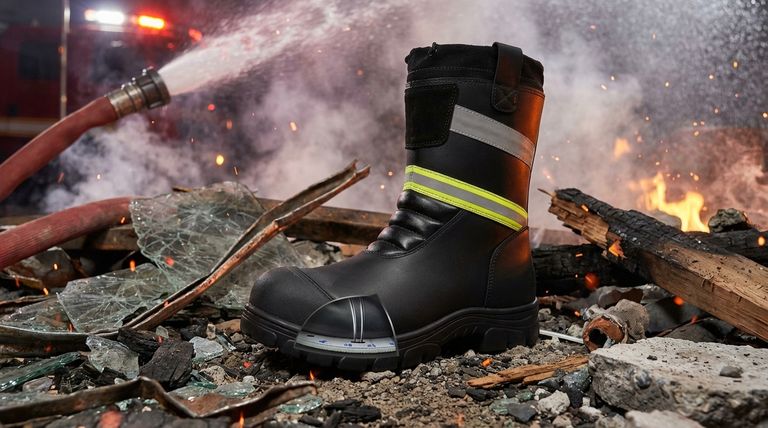
The Core Components of Physical Protection
To operate safely, firefighters need absolute confidence in their footing. The boot's construction is a direct response to the physical dangers of a fire ground, from collapsed materials to hidden ground-level hazards.
The Puncture-Resistant Sole
The most immediate threat often comes from what's underfoot. The thick soles of these boots serve as the first line of defense against nails, glass, and twisted metal.
Many high-quality boots incorporate a puncture-resistant plate, often made of steel or a composite fabric, embedded within the sole to stop sharp objects from penetrating through to the foot. Compounds like Vibram are also used to enhance durability and grip.
The Reinforced Toe Cap
Falling debris is a constant risk. To counter this, boots are equipped with hard toe caps, typically made of steel or a lighter composite material.
This feature is designed to withstand significant impact and compression forces, protecting the toes from being crushed by heavy objects like falling timber or equipment.
Durable Upper Materials
Protection isn't limited to the sole and toe. The main body, or "upper," of the boot is constructed from materials like full-hide bull leather for maximum durability.
This thick, resilient material resists cuts, abrasions, and punctures from debris that might strike the side, top, or ankle area of the foot.
High Shaft for Comprehensive Coverage
Structural firefighting boots are typically 14 inches high, extending well up the calf. This height provides crucial protection for the ankle and shin, areas that are vulnerable to burns and impacts from debris.
Beyond Puncture: A System for Stability
True protection is not just about blocking objects; it's also about preventing slips, trips, and falls. Debris creates an unstable and unpredictable environment.
Slip-Resistant Outsoles
Fire scenes are notoriously slippery due to water, foam, and oil. The boot's outsole is designed with aggressive tread patterns to provide maximum traction and grip on wet and uneven surfaces. This stability is critical when navigating through rubble.
Shank Support for Uneven Terrain
A rigid shank is built into the mid-section of the sole. While designed to provide support for climbing ladders, it also creates a stable platform under the arch of the foot. This reduces foot fatigue and prevents twists or sprains when walking on unstable debris fields.
Understanding the Trade-offs
The immense protection offered by structural firefighting boots comes with inherent compromises. Understanding these limitations is key to appreciating their specialized design.
Weight and Flexibility
The heavy-duty materials, including steel toes and shanks, add significant weight. This robust construction also reduces the boot's overall flexibility, which can make extended walking or running more strenuous than in a standard work boot.
Heat and Breathability
The same materials that provide excellent thermal protection also trap heat and moisture. While climate control systems are often incorporated, these boots are not designed for breathability, which can lead to discomfort during prolonged wear in non-hazardous conditions.
The Importance of a Proper Fit
An ill-fitting boot can negate many of its protective benefits. A boot that is too loose can fail to support the ankle, while one that is too tight can cause blisters and fatigue, creating a dangerous distraction during a critical operation.
Making the Right Choice for Your Hazard
The design of a firefighting boot is a direct answer to the dangers it will face.
- If your primary focus is collapse sites with sharp ground debris: Prioritize a boot with a certified puncture-resistant sole plate and robust, thick outsoles.
- If your primary focus is navigating unstable, heavy debris: Ensure the boot has a high-quality reinforced toe cap and a strong shank for impact protection and stability.
- If your primary focus is all-around durability and coverage: Look for full-grain leather construction and a high shaft (14-16 inches) to protect against abrasions and impacts to the lower leg.
Ultimately, these protective elements work together to give firefighters the stability and security needed to focus entirely on their life-saving mission.
Summary Table:
| Protective Component | Function | Key Feature |
|---|---|---|
| Puncture-Resistant Sole | Stops sharp objects from penetrating the foot | Steel or composite plate embedded in thick sole |
| Reinforced Toe Cap | Protects toes from impact and compression | Steel or composite material |
| Durable Upper Material | Resists cuts, abrasions, and punctures | Full-hide bull leather construction |
| High Shaft (14 inches) | Shields ankle and shin from debris and burns | Extended coverage for lower leg protection |
| Slip-Resistant Outsole | Provides traction on wet, uneven surfaces | Aggressive tread patterns for stability |
| Shank Support | Reduces foot fatigue and prevents twists on debris | Rigid midsole support for arch stability |
As a large-scale manufacturer, 3515 produces a comprehensive range of structural firefighting boots for distributors, brand owners, and bulk clients. Our boots are engineered with puncture-resistant soles, steel toe caps, and durable leather uppers to ensure maximum protection against debris and sharp objects. We offer customized solutions tailored to your specific hazard environments. Contact us today to discuss your requirements and benefit from our expert manufacturing capabilities!
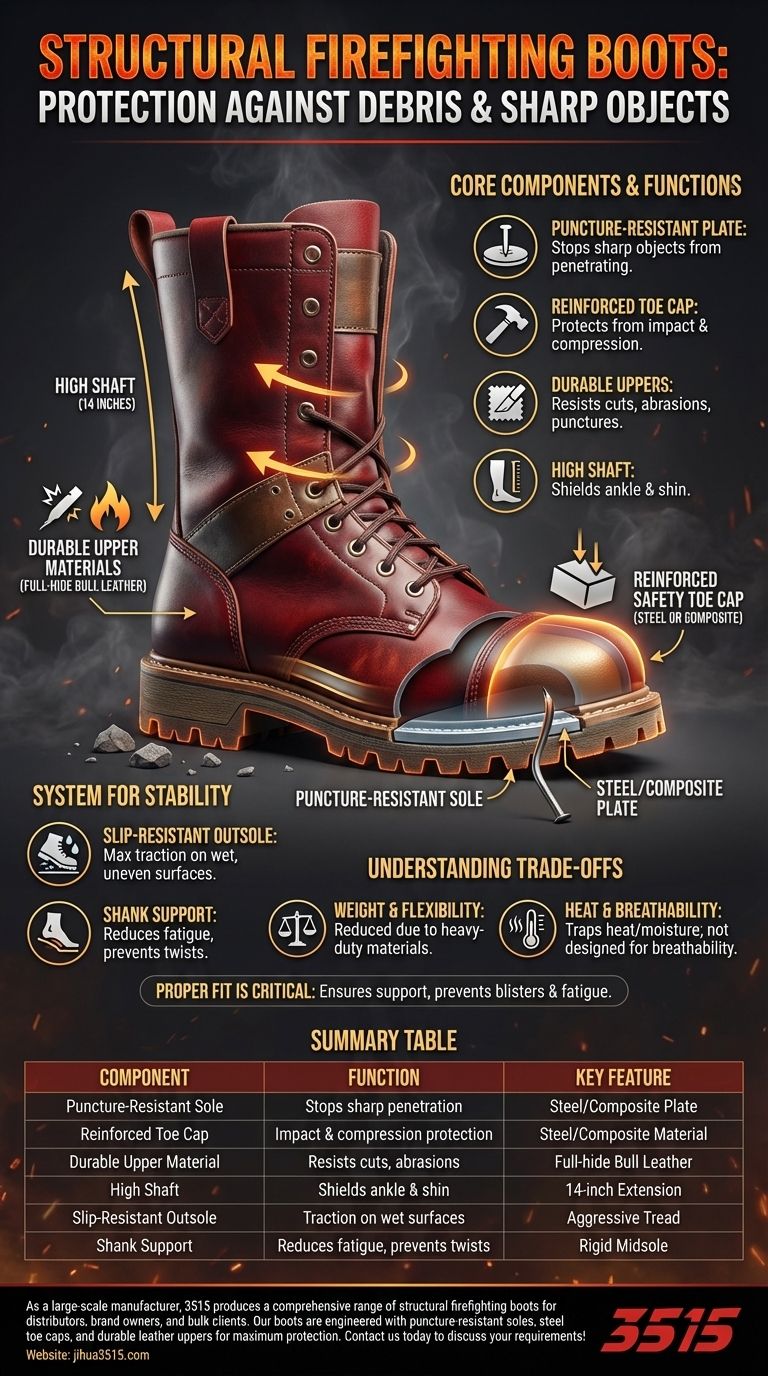
Visual Guide
Related Products
- High Performance Fire-Retardant Waterproof Safety Boots
- Premium Flame-Retardant Waterproof Safety Boots and Shoes
- High-Traction Suede Tactical Boots Wholesale & Custom Manufacturing
- Wholesale Lightweight Tactical Boots Custom Manufacturer for Desert & Combat Use
- Durable Leather Tactical Boots Wholesale & Custom Manufacturing for Brands
People Also Ask
- Why are waterproof safety boots recommended for certain work environments? Essential Protection for Wet & Hazardous Jobs
- What roles do 3D vision systems and industrial robots play in the manufacturing of fire safety boots? Smart Automation
- What materials make waterproof boots durable? The Ultimate Guide to Long-Lasting Footwear
- What is the difference between waterproof, water-resistant, and water-repellent boots? Choose the Right Protection for Your Feet
- What is the difference between waterproof and water-resistant boots? Choose the Right Footwear for Any Condition