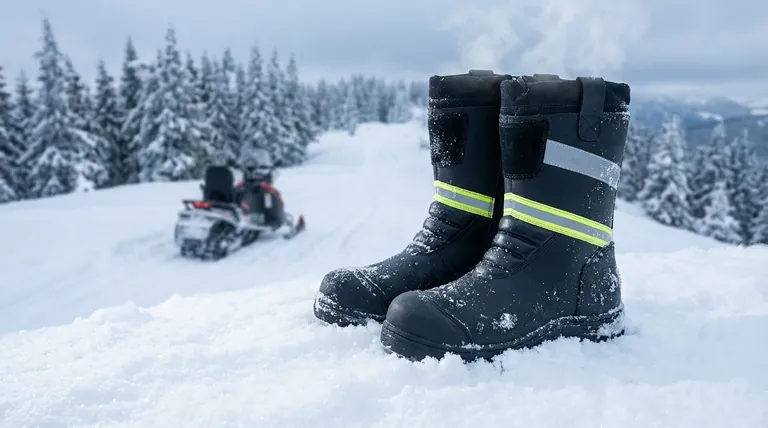
The key to comfort in snowmobile boots lies in a carefully engineered system that manages both external and internal moisture while retaining heat. They achieve this through a combination of three critical features: a waterproof outer barrier, a high-performance insulation layer, and a breathable membrane that allows sweat to escape.
A high-quality snowmobile boot is more than just a warm covering; it is a technical system designed to keep your feet completely dry from both snow and sweat, while providing the structural support needed to prevent fatigue on long rides.
The Science of Staying Warm and Dry
True comfort in freezing temperatures is entirely dependent on keeping your feet dry. A wet foot loses heat exponentially faster than a dry one. Snowmobile boots use a multi-pronged approach to solve this fundamental challenge.
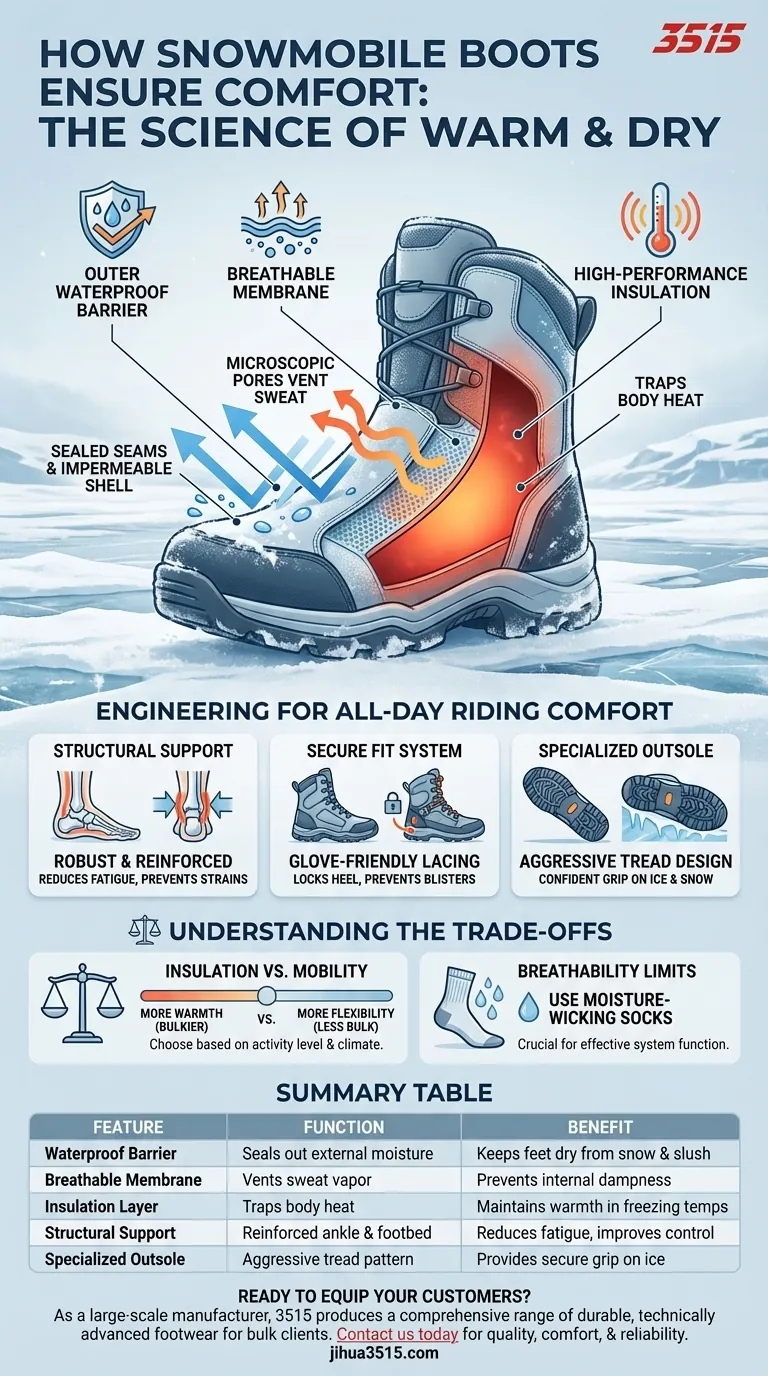
The Waterproof Barrier
The first line of defense is a completely waterproof outer construction. This ensures that melting snow, slush, and water cannot penetrate the boot from the outside.
This is achieved using materials and construction techniques, such as sealed seams, that create an impermeable shell, keeping your feet protected from the elements.
The Role of Breathability
While keeping external water out is critical, managing the moisture your feet produce is just as important. An active foot can sweat significantly, even in the cold.
Modern snowmobile boots incorporate breathable membranes. These materials have microscopic pores large enough to let water vapor (sweat) escape but small enough to block larger liquid water molecules from entering. This prevents the "clammy" feeling that leads to cold feet.
Insulation: The Key to Warmth
Insulation is what traps your body's natural heat, creating a warm microclimate inside the boot. The amount and type of insulation determine the boot's temperature rating.
For extremely cold conditions, boots with higher levels of insulation are essential to prevent heat loss and protect against frostbite.
Engineering for All-Day Riding Comfort
Beyond warmth and dryness, the physical design of the boot plays a massive role in rider comfort and safety, especially during long or aggressive rides.
Structural Support to Reduce Fatigue
Snowmobiling requires constant small adjustments and control inputs from your feet and ankles. Boots are built with a robust, reinforced structure to provide stability.
This enhanced support minimizes foot fatigue and reduces the risk of strains or sprains by preventing unnatural flexing and movement.
Secure Fit and Lacing Systems
A boot that is too loose allows your foot to slide, causing friction and blisters. A secure fit is paramount for both comfort and control.
Specialized lacing systems, often designed to be used with gloves, allow you to create a snug, customized fit that locks your heel in place and prevents unwanted movement inside the boot.
Specialized Outsoles for Grip
The outsole of a snowmobile boot is engineered for traction on slippery surfaces. The tread designs are often aggressive, much like a winter tire.
This provides a confident grip on ice and packed snow when you are off the machine, which is a critical safety and comfort feature.
Understanding the Trade-offs
No single boot is perfect for every condition. Understanding the inherent compromises in boot design is key to choosing the right gear.
Insulation vs. Mobility
Higher insulation ratings mean a warmer boot, but this almost always comes with increased bulk and stiffness. This can slightly reduce the rider's "feel" for the machine.
Riders in less extreme climates or those who are more active may prefer a boot with less insulation to gain more flexibility and control.
The Limits of Breathability
While breathable membranes are highly effective, they have limits. In very intense, high-exertion scenarios, you may produce sweat faster than the membrane can vent it.
Choosing socks made of moisture-wicking material (like wool or synthetics) instead of cotton is crucial to help the boot's breathable system function effectively.
How to Apply This to Your Project
Selecting the right boot requires matching its features to your specific riding conditions and style.
- If your primary focus is casual trail riding in moderate cold: A standard insulated, waterproof boot with good support will provide excellent all-around comfort.
- If your primary focus is riding in extreme cold (below -20°C / -4°F): Prioritize a taller boot with a high insulation rating to ensure maximum warmth and protection.
- If your primary focus is active or aggressive riding: Look for a boot that balances robust ankle support and protection with a slightly more flexible design for better machine control.
Ultimately, the right snowmobile boot empowers you to focus on the ride, not on your feet.
Summary Table:
| Feature | Function | Benefit |
|---|---|---|
| Waterproof Barrier | Seals out external moisture | Keeps feet dry from snow and slush |
| Breathable Membrane | Vents sweat vapor | Prevents internal dampness and clamminess |
| Insulation Layer | Traps body heat | Maintains warmth in freezing temperatures |
| Structural Support | Reinforced ankle and footbed | Reduces fatigue and improves control |
| Specialized Outsole | Aggressive tread pattern | Provides secure grip on ice and snow |
Ready to equip your customers with high-performance snowmobile boots?
As a large-scale manufacturer, 3515 produces a comprehensive range of durable and technically advanced footwear for distributors, brand owners, and bulk clients. Our production capabilities encompass all types of insulated and waterproof boots, designed to meet the demands of any riding condition.
Contact us today to discuss your specific needs and discover how we can deliver quality, comfort, and reliability for your product line.
Visual Guide
Related Products
- Durable Spiked Camouflage Boots Wholesale & Factory Production
- Wholesale Waterproof Tactical Boots Custom Suede & High-Traction Soles
- Wholesale High-Traction Camo Boots - Custom Manufacturer for Brands
- Wholesale Lightweight Tactical Boots Custom Manufacturer for Desert & Combat Use
- Factory Direct Wholesale Rain Boots Durable Waterproof & Fully Customizable
People Also Ask
- How does boot height affect waterproofing? Choose the Right Height for Ultimate Protection
- What are the best types of shoes for different gardening conditions? Find Your Perfect Match.
- What role does camouflage play in hunting boots? It's More Than Just a Pattern
- What should you look for to ensure boots are fully waterproof? The Essential 2-Part System
- How does boot construction affect waterproofing? The Science Behind Truly Dry Feet