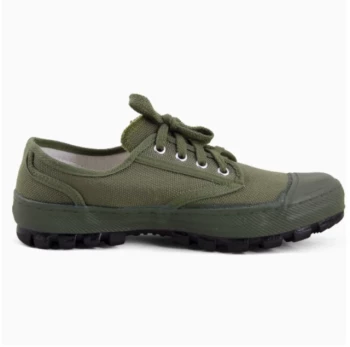
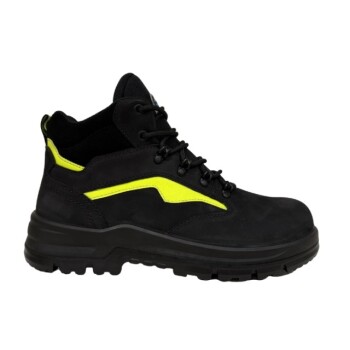
For work boots, rubber outsoles provide superior flexibility and the highest level of slip resistance on varied surfaces, while polyurethane (PU) outsoles offer unmatched durability, light weight, and resistance to abrasion and chemicals. The ideal choice depends entirely on the specific hazards and surfaces of your work environment.
The core decision between rubber and polyurethane is a trade-off between grip and longevity. Rubber prioritizes tenacious grip in unpredictable conditions, whereas polyurethane is engineered for maximum durability against chemical exposure and abrasive surfaces.
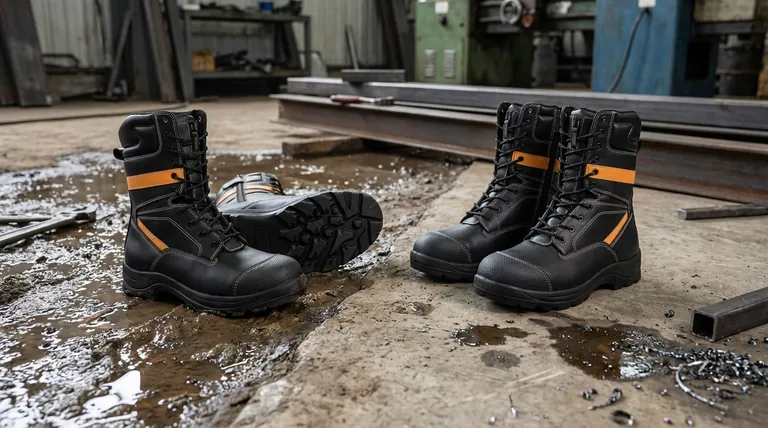
The Core Properties of Each Material
To select the right outsole, you must first understand the inherent characteristics of each material. They are engineered with different strengths for different tasks.
Rubber: The Flexible Grip Specialist
Rubber is the traditional choice for boot outsoles, valued for its exceptional grip. Its high coefficient of friction makes it highly effective at preventing slips on wet, uneven, or slick surfaces.
This material is also naturally flexible, allowing your foot to move and articulate more freely. This is a significant advantage when working on natural or unpredictable terrain that requires constant adjustment.
Polyurethane (PU): The Durable Workhorse
Polyurethane is a modern polymer known for being incredibly tough and long-lasting. It is significantly more resistant to abrasion than rubber, making it ideal for work on concrete, gravel, and other rough surfaces.
PU is also lighter than rubber and offers excellent shock absorption, reducing fatigue during long shifts on hard floors. Furthermore, it has a strong resistance to degradation from oils, solvents, and other chemicals.
A Head-to-Head Comparison for Work Environments
Matching the outsole material to your primary work environment is the most critical step in choosing the right boot.
Slip & Oil Resistance
Rubber generally offers the best all-around slip resistance, especially on water or sloped surfaces. It is the gold standard for grip.
Polyurethane provides good slip resistance but its key advantage is resistance to oil and chemicals. In environments like auto shops or processing plants, PU will not degrade and lose its integrity, maintaining a consistent, safe surface.
Durability & Abrasion
Polyurethane is the clear winner for durability. Its resistance to cuts, splits, and abrasion means it will outlast rubber when subjected to constant friction on hard surfaces like concrete or asphalt.
Rubber is durable but will wear down faster under high-abrasion conditions. It is better suited for outdoor environments with softer ground like dirt and mud.
Weight & Comfort
Polyurethane is a lighter material, which reduces the overall weight of the boot. This can significantly decrease foot and leg fatigue by the end of the day.
The superior shock-absorbing properties of PU also contribute directly to comfort, cushioning impact on hard, unforgiving surfaces like a factory floor. While rubber's flexibility adds a different type of comfort, PU excels at mitigating impact.
Understanding the Trade-offs
No material is perfect. Acknowledging the limitations of each is essential for making a decision that prioritizes your safety and comfort.
The Limitation of Rubber
The primary trade-off for rubber's excellent grip is its lower resistance to chemicals and oils, which can cause the material to break down over time. It is also a denser, heavier material compared to polyurethane.
The Limitation of Polyurethane
While highly durable, some PU formulations may offer less grip than specialized rubber compounds on icy or extremely slick, wet surfaces. Its toughness can also mean it is less flexible than rubber, particularly in very cold temperatures.
Making the Right Choice for Your Job
Your daily tasks and environment are the only factors that matter. Use these guidelines to determine your best fit.
- If your primary focus is maximum slip resistance on varied terrain (roofing, landscaping, trail work): Choose a rubber outsole for its superior grip and flexibility.
- If your primary focus is longevity and safety in workshops, factories, or construction sites (mechanics, machinists, concrete workers): Choose a polyurethane outsole for its durability and resistance to chemicals and abrasion.
Ultimately, understanding the material under your feet is the foundation for a safe and productive workday.
Summary Table:
| Feature | Rubber Outsole | Polyurethane (PU) Outsole |
|---|---|---|
| Best For | Slip resistance, varied terrain | Durability, abrasive surfaces, chemicals |
| Slip Resistance | Superior on wet/uneven surfaces | Good, excels in oil/chemical resistance |
| Durability | Good, but wears faster on concrete | Excellent, highly abrasion-resistant |
| Weight & Comfort | Heavier, flexible | Lighter, superior shock absorption |
| Key Limitation | Less resistant to oils/chemicals | May offer less grip on ice/extreme wet surfaces |
Need the Perfect Work Boot for Your Team?
As a large-scale manufacturer, 3515 produces a comprehensive range of footwear for distributors, brand owners, and bulk clients. Our production capabilities encompass all types of shoes and boots, including specialized outsoles tailored to your specific industry hazards. We can help you source or develop the ideal work boot that balances safety, durability, and comfort for your workforce.
Contact our experts today to discuss your requirements and get a quote.
Visual Guide

Related Products
- Wholesale Leather Work Boots with Customizable Wedge Sole for Brands
- Durable Moc Toe Wedge Sole Work Boots for Wholesale and Private Label
- Wholesale Leather Ankle Boots with Lug Soles for Custom Brand Manufacturing
- Durable Leather Moc Toe Work Boots for Wholesale & Custom Manufacturing
- Durable Moc-Toe Wedge Work Boots | Wholesale Manufacturing for Brands
People Also Ask
- What is the difference between full-grain and top-grain leather? Premium Material Guide for Boot Manufacturers
- What are the advantages of leather as an upper material for work boots? Unmatched Durability & Custom Comfort
- How can leather work boots be protected from environmental elements? A 3-Step Guide to Lasting Durability
- What is the complete process for deep cleaning leather work boots? A Step-by-Step Guide to Preserve Your Investment
- What are the key qualities of leather for work boots? Superior Durability, Breathability & Custom Fit