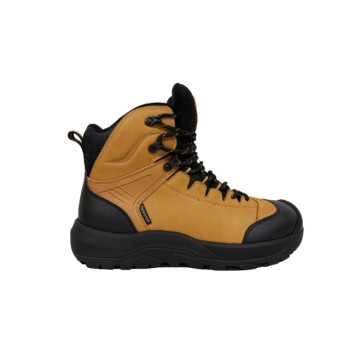
The choice between road and MTB cleat systems in winter footwear dictates the balance between high-output performance and cold-weather safety. Road-style systems utilize a three-bolt pattern prioritized for power transfer, while MTB-style systems feature a two-bolt metal cleat recessed into the outsole. For the winter cyclist, this distinction fundamentally alters the shoe's walkability and its interaction with the bicycle frame in slippery conditions.
Core Takeaway: While road-style systems maximize power for performance-oriented riders, MTB-style recessed systems are the industry standard for winter safety and utility, provided the manufacturer accounts for geometry challenges like toe overlap.
Engineering for Traction: The MTB Recessed System
Enhanced Walkability on Winter Terrain
The defining feature of MTB-style footwear is the recessed cleat design, where the two-bolt metal cleat is tucked within the tread of the outsole. This allows the rubber lugs to make direct contact with the ground, providing essential mechanical grip on wet, icy, or snowy surfaces. For distributors, this makes MTB-style winter shoes the primary choice for commuters and adventure cyclists who must navigate off-bike transitions safely.
Durability of Metal Cleat Interfaces
MTB systems utilize small metal cleats that are significantly more resistant to wear from salt, grit, and ice than plastic road equivalents. This durability ensures a consistent clip-in feel throughout a harsh winter season, reducing the frequency of replacement parts. Our manufacturing processes prioritize high-grade materials to ensure these interfaces remain secure under heavy torque in freezing temperatures.
Performance Optimization: The Road-Style Three-Bolt System
Maximizing Power Transfer
Road-style winter boots utilize the three-bolt interface, which offers a larger surface area for the cleat-to-pedal contact point. This design is engineered for riders who prioritize lateral stability and power efficiency, even during low-temperature training sessions. By distributing pressure across a wider portion of the sole, it minimizes the "hot spots" that can sometimes contribute to poor circulation in cold weather.
Aerodynamic and Sole Stiffness Profiles
Road-style outsoles are typically thinner and stiffer, as they do not require the bulky tread patterns found on MTB shoes. This allows for a more aerodynamic profile, which is a key selling point for the high-performance segment of the market. However, the lack of tread makes these shoes significantly more hazardous on slippery surfaces compared to their MTB counterparts.
Understanding the Trade-offs: Geometry and Overlap
The Challenge of Toe Overlap
A critical technical consideration for winter footwear is the potential for toe overlap, particularly on smaller frame sizes. Because MTB-style shoes often allow for a more rearward cleat placement to improve control, the front of the shoe extends further past the pedal axle. This can cause the shoe to strike the front tire or mudguard during sharp, low-speed turns.
Mudguard Clearance and Frame Compatibility
Winter cycling often involves the use of full-coverage mudguards, which further reduces the space between the tire and the pedal. Enterprise-level design must account for these clearances, ensuring that the outsole profile remains sleek enough to avoid interference. Reliable OEM partners mitigate these risks through precise last modeling and rigorous testing across various frame geometries.
Enterprise-Level Manufacturing and Supply Chain Stability
A Heritage of Technical Excellence
Partnering with a manufacturer with a heritage dating back to 1951 provides the technical depth required to navigate the complexities of winter footwear. Our facilities combine decades of expertise with state-of-the-art equipment to produce high-volume orders without compromising on the precision of cleat-box alignment. This ensures every pair meets the exacting standards required for international markets.
Robust Scalability and Certification
We offer comprehensive international certifications, ensuring that your product line meets global safety and quality benchmarks. Our massive production scale allows us to provide consistent, large-volume delivery, insulating your business from the supply chain fluctuations often seen in the seasonal footwear market. Whether you require premium OEM or ODM capabilities, our infrastructure is designed to support enterprise-level growth.
Making the Right Choice for Your Product Portfolio
Choosing the right system depends on your target demographic's specific winter environment and performance needs.
- If your primary focus is the commuter or gravel market: Prioritize MTB-style two-bolt systems for their superior walkability and safety on treacherous winter surfaces.
- If your primary focus is the high-performance road segment: Select three-bolt road systems to offer the power transfer and stiffness that elite riders demand for winter base miles.
- If your primary focus is small-frame or urban riders: Ensure your designs utilize a balanced cleat positioning to minimize the risk of toe overlap with mudguards.
By aligning technical cleat specifications with rigorous manufacturing standards, you can deliver winter footwear that provides both safety and performance in the harshest conditions.
Summary Table:
| Feature | MTB-Style (2-Bolt) | Road-Style (3-Bolt) |
|---|---|---|
| Cleat Design | Recessed into rubber lugs | Surface-mounted (protruding) |
| Walkability | High; mechanical grip on ice/snow | Low; hazardous on slippery surfaces |
| Power Transfer | Standard efficiency | Maximum lateral stability |
| Durability | High (metal cleats resist grit/salt) | Moderate (plastic cleats wear faster) |
| Best For | Commuters, Gravel, Winter Safety | High-performance Training |
| Key Constraint | Potential toe/mudguard overlap | Limited traction off-bike |
Secure Your Winter Footwear Supply Chain with 3515
As a large-scale manufacturer serving distributors and brand owners since 1951, 3515 offers the technical depth and production stability your business requires. Whether you are expanding your performance cycling line or sourcing our flagship Safety Shoes series, we provide comprehensive OEM/ODM capabilities and international certifications to ensure consistent, large-volume delivery.
Partner with 3515 to benefit from:
- Massive Production Scale: Robust supply chain stability for diverse bulk requirements.
- Technical Excellence: State-of-the-art equipment for precise cleat-box alignment and footwear durability.
- Comprehensive Portfolio: From tactical boots and outdoor shoes to premium dress & formal footwear.
Contact 3515 Today to Discuss Your Bulk Requirements
Related Products
- Premium Insulated Safety Boots and Shoes for Wholesale & Bulk Orders
- Lightweight Breathable Sneakers with Wet-Traction Grip for Wholesale & Private Label
- Premium Suede Sport Safety Shoes for Wholesale & Bulk Orders
- Durable Waterproof Rain Boots | Custom Manufacturer for Wholesale & Brands
- Durable Rubber Sole Outdoor Shoes Wholesale & Custom Manufacturing
People Also Ask
- What are the recommended insulation ratings for mild winter conditions? A Guide for Active & Stationary Workers
- How does insulation thickness correlate with temperature ranges? A Guide to Choosing the Right Warmth
- What insulation level is needed for severe cold and stationary work? 1200g or Higher is Essential
- What safety advantages do insulated boots offer beyond warmth? Dielectric Protection & Superior Grip
- How does fleece lining contribute to the warmth of insulated boots? Trapping Air for Superior Cold Protection