
The durability of a quality riding boot is not a matter of chance; it is engineered through specific material choices and construction methods. At its core, longevity comes from three pillars: superior full-grain leather, a robust and well-designed sole, and a time-tested construction method known as the Goodyear welt. These elements work together to create a boot that maintains its structural integrity and protective qualities through years of rigorous use.
A quality riding boot is a long-term investment in safety and performance. Its durability stems directly from specific, high-quality components that are designed not just to last, but to be maintained and repaired, significantly extending their functional lifespan.
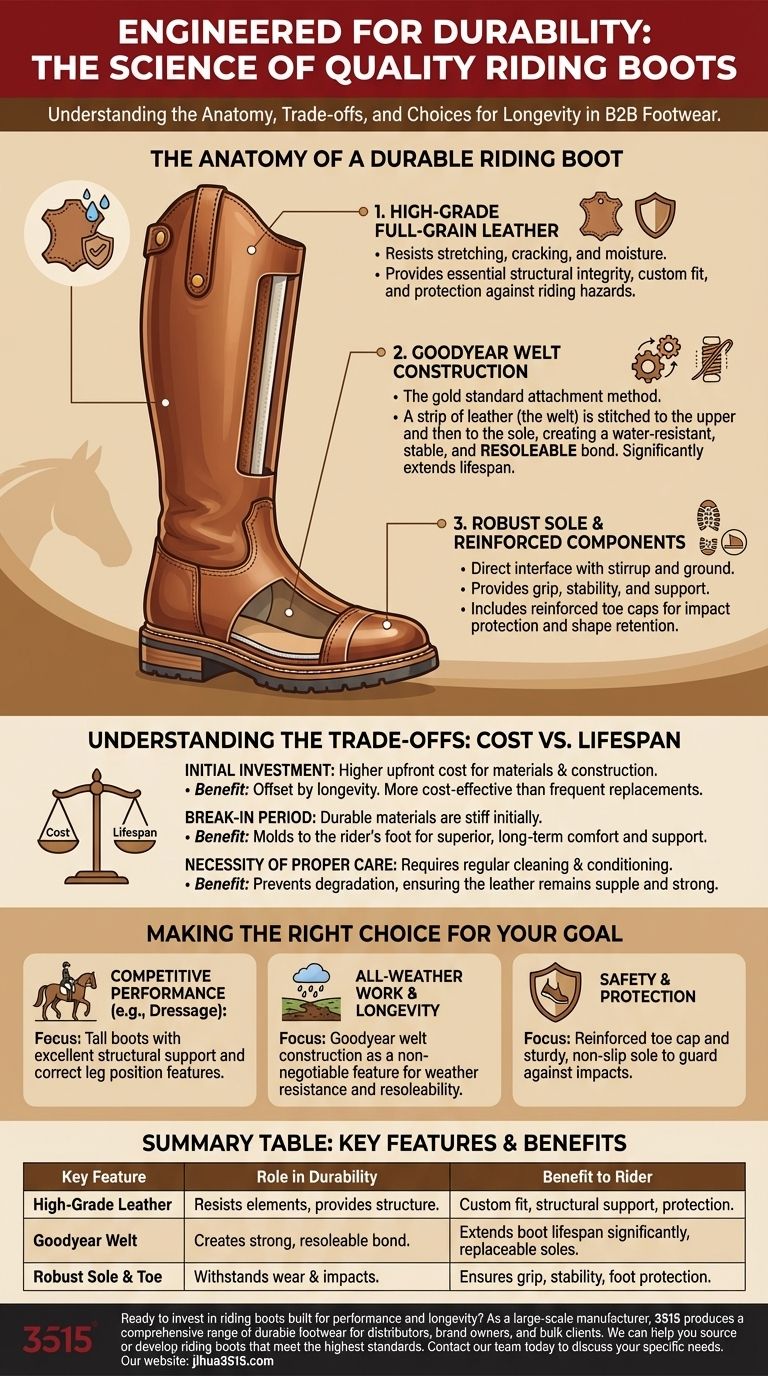
The Anatomy of a Durable Riding Boot
Understanding what makes a boot last requires looking beyond the surface and examining its core construction. The materials and the way they are assembled are what separate a boot that lasts a season from one that lasts a decade.
The Foundation: High-Grade Leather
The single most important material is the leather. High-quality boots use superior grades that resist stretching, cracking, and moisture far better than cheaper alternatives.
This quality leather provides essential structure, helping to keep the rider's leg in the correct and stable position. It also offers critical protection from the friction of the saddle and other potential riding hazards.
The Connection: Goodyear Welt Construction
The method used to attach the boot's upper to the sole is a critical factor in its durability and lifespan. A Goodyear welt is considered the gold standard for high-quality footwear.
In this method, a strip of leather (the "welt") is stitched to the boot's upper, and then a separate stitch attaches that welt to the sole. This creates an incredibly strong, water-resistant, and stable bond.
Crucially, this construction makes the boot resoleable. When the sole wears out, a cobbler can simply remove the old one and stitch on a new one without compromising the boot's structure, effectively doubling or tripling its life.
The Interface: Robust Soles and Reinforced Components
The sole is the boot's direct interface with the stirrup and the ground. A durable boot features a sturdy, well-crafted sole that provides grip, stability, and support.
Additionally, quality boots often include reinforced toe caps. This feature protects the rider's foot from impacts and helps the boot maintain its shape over time, preventing collapse in a high-wear area.
Understanding the Trade-offs: Cost vs. Lifespan
While the benefits of a well-made boot are clear, it's important to approach the decision with a full understanding of the practical considerations.
The Initial Investment
The most obvious trade-off is the upfront cost. Boots built with high-grade leather and Goodyear welt construction are significantly more expensive than mass-produced, cemented alternatives.
This higher price, however, is often offset by the boot's longevity. Investing once in a repairable boot can be more cost-effective than replacing cheaper boots multiple times.
The Break-In Period
Durable materials are often stiff at first. A quality leather boot typically requires a break-in period to soften and mold to the rider's leg and foot.
While this may cause some initial discomfort, the end result is a custom fit that provides superior support and comfort for years to come.
The Necessity of Proper Care
Durability is not a passive quality. Even the best materials will degrade without proper maintenance.
To achieve maximum longevity, high-quality leather boots must be regularly cleaned and conditioned. This prevents the leather from drying out and cracking, ensuring it remains supple and strong.
Making the Right Choice for Your Goal
Selecting the right boot depends on matching its features to your primary riding discipline and needs.
- If your primary focus is competitive performance (e.g., dressage): Prioritize tall boots with excellent structural support and features that promote a correct leg position.
- If your primary focus is all-weather work and longevity: Emphasize Goodyear welt construction as a non-negotiable feature for its weather resistance and resoleable design.
- If your primary focus is safety and protection: Ensure the boot has a reinforced toe cap and a sturdy, non-slip sole to guard against impacts.
Ultimately, a well-chosen boot becomes a trusted piece of equipment that enhances your safety and supports your riding for years to come.
Summary Table:
| Key Feature | Role in Durability | Benefit to Rider |
|---|---|---|
| High-Grade Leather | Resists stretching, cracking, and moisture. | Provides structural support, protection, and a custom fit over time. |
| Goodyear Welt Construction | Creates a strong, water-resistant, and resoleable bond. | Extends boot lifespan significantly; soles can be replaced. |
| Robust Soles & Reinforced Toe | Withstands wear from stirrups and impacts. | Ensures grip, stability, and ongoing foot protection. |
Ready to invest in riding boots built for performance and longevity?
As a large-scale manufacturer, 3515 produces a comprehensive range of durable footwear for distributors, brand owners, and bulk clients. Our production capabilities encompass all types of riding boots engineered with the quality materials and construction methods detailed above.
We can help you source or develop riding boots that meet the highest standards of durability, safety, and value. Contact our team today to discuss your specific needs and explore how we can support your business.
Visual Guide
Related Products
- Heavy-Duty Waterproof Nubuck Safety Boots Safety Shoes for Bulk Supply
- Premium Wholesale Tactical Style Safety Shoes Boots with Quick Lacing
- Wholesale High-Traction Camo Boots - Custom Manufacturer for Brands
- Durable Goodyear Welt Leather Work Boots for Wholesale & Private Label
- Wholesale Tactical Boots High-Traction & Reflective for Bulk & Brand Orders
People Also Ask
- What primary protective functions do professional safety boots provide in urban solid waste recovery and waste picking processes? Discover Dual-Layer Protection.
- How do safety boots reduce cutting hazards? Essential Protection for Your Workforce
- Which organizations develop safety standards for work boots? Ensure Compliance & Worker Safety
- What are the common types of safety boots and their primary uses? A Guide to Industrial Footwear
- Why is ankle and arch support important in safety footwear? Prevent Injury & Fatigue



















