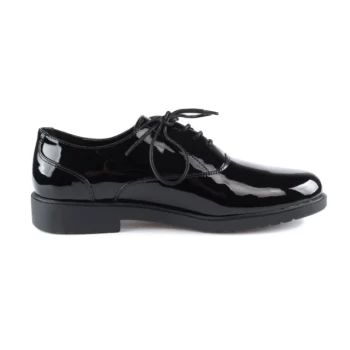
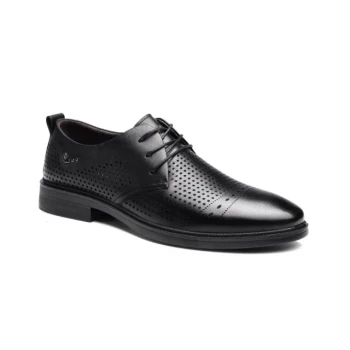
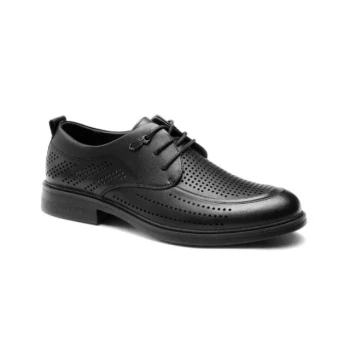
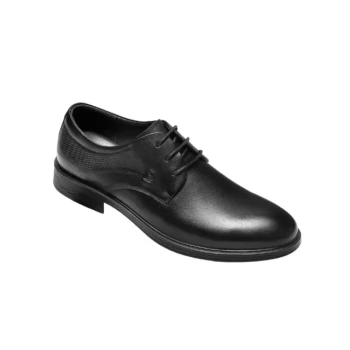
The fundamental difference between an Oxford and a Derby shoe lies entirely in the construction of their lacing systems. An Oxford features a "closed lacing" system where the eyelet facings are stitched underneath the front part of the shoe, creating a sleek, V-shaped opening. A Derby uses an "open lacing" system, where the facings are stitched on top of the front, creating two distinct flaps that open more widely.
This seemingly minor construction detail dictates everything that follows. The Oxford’s closed system prioritizes a clean, formal silhouette, while the Derby’s open system prioritizes comfort, adjustability, and versatility.
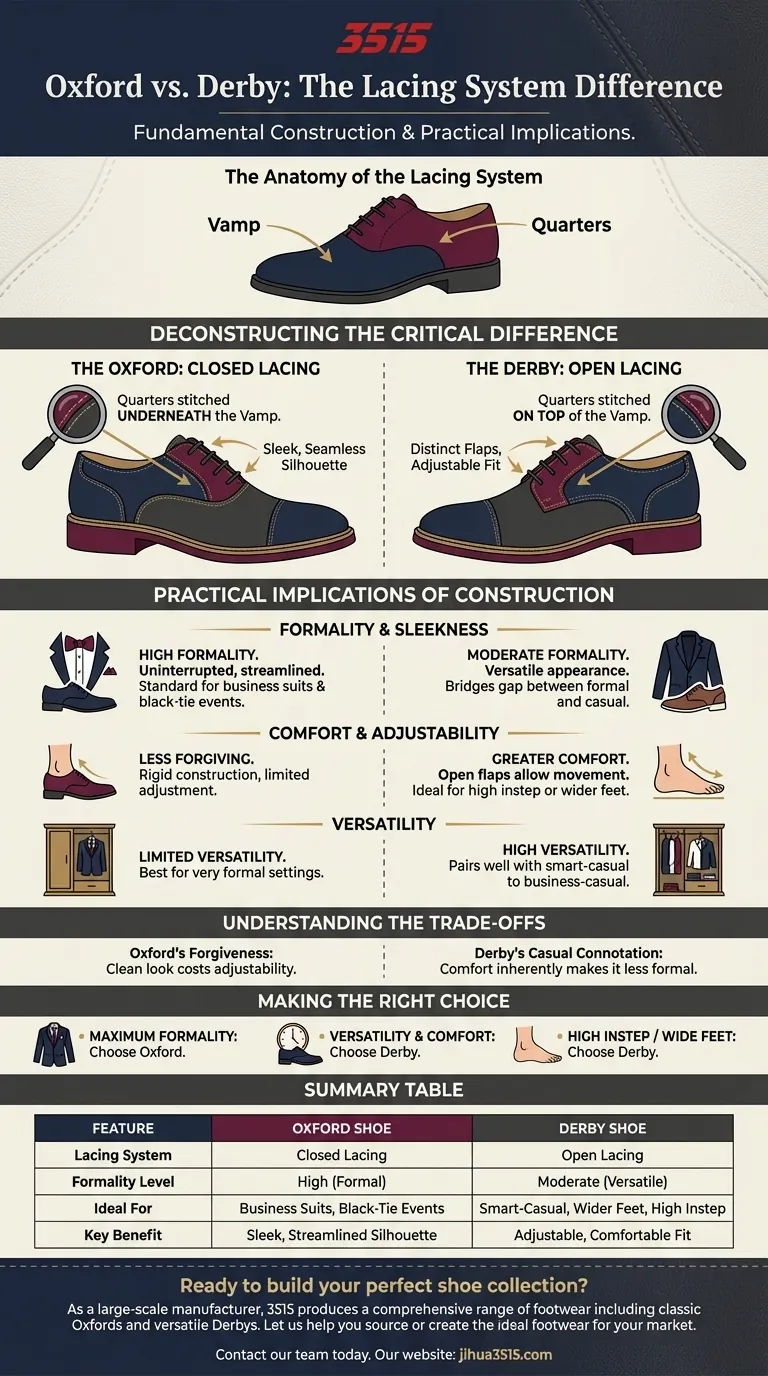
The Anatomy of the Lacing System
To grasp the difference, we must first understand the two key parts of the shoe's upper involved in this construction.
The Vamp
The vamp is the section of the shoe's upper that covers the top of the foot, stretching from the toe up to the ankle. Think of it as the "forehead" of the shoe.
The Quarters
The quarters are the rear and side sections of the shoe that wrap around the heel and extend forward to meet the vamp. The eyelets for the laces are punched into the quarters.
Deconstructing the Critical Difference
The relationship between the vamp and the quarters is the defining characteristic that separates these two iconic shoe styles.
The Oxford's "Closed" Lacing
In an Oxford, the quarters are stitched underneath the vamp.
This construction pulls the two sides of the shoe together tightly, leaving only a narrow, V-shaped slit for the laces. This creates a seamless, elegant profile.
The Derby's "Open" Lacing
In a Derby, the quarters are stitched on top of the vamp.
This creates two flaps of leather that sit on the front of the shoe. Because they are not sewn down, these flaps can be pulled further apart, making the shoe easier to put on and adjust.
The Practical Implications of Construction
This single design choice has a significant impact on the shoe's fit, formality, and appropriate use.
Formality and Sleekness
The Oxford’s closed lacing system creates an uninterrupted, streamlined silhouette. This makes it the more formal of the two styles.
It is the standard for business suits, black-tie events, and any occasion demanding the highest level of dress.
Comfort and Adjustability
The Derby's open lacing allows for greater movement and flexibility across the instep. This makes the shoe significantly more adjustable.
This design is particularly beneficial for individuals with a high instep or wider feet, as it prevents uncomfortable pressure on the top of the foot.
Versatility
Because of its comfort and slightly more robust appearance, the Derby is considered the more versatile shoe.
It bridges the gap between formal and casual, pairing well with everything from a relaxed suit to chinos or jeans.
Understanding the Trade-offs
Choosing between these styles involves acknowledging their inherent limitations. Neither is universally superior; they are simply designed for different purposes.
The Oxford's Forgiveness
The sleekness of the Oxford comes at the cost of a less forgiving fit. Its rigid, closed construction offers little room for adjustment, which can be restrictive.
The Derby's Casual Connotation
The comfort and adaptability of the Derby inherently make it less formal. Wearing a Derby with a tuxedo or a highly conservative business suit is generally considered a stylistic mismatch.
Making the Right Choice for Your Needs
Your decision should be guided by the primary function you need the shoe to serve.
- If your primary focus is maximum formality: The clean, closed lacing of the Oxford is the definitive choice for business suits and formal occasions.
- If your primary focus is versatility and all-day comfort: The Derby's adjustable open lacing makes it the ideal workhorse for smart-casual and business-casual settings.
- If you have a high instep or wider feet: The Derby's accommodating construction will provide a significantly more comfortable fit than a traditional Oxford.
Understanding this single design element empowers you to select the precise shoe for any occasion with confidence.
Summary Table:
| Feature | Oxford Shoe | Derby Shoe |
|---|---|---|
| Lacing System | Closed Lacing | Open Lacing |
| Formality Level | High (Formal) | Moderate (Versatile) |
| Ideal For | Business Suits, Black-Tie Events | Smart-Casual, Wider Feet, High Instep |
| Key Benefit | Sleek, Streamlined Silhouette | Adjustable, Comfortable Fit |
Ready to build your perfect shoe collection?
As a large-scale manufacturer, 3515 produces a comprehensive range of footwear for distributors, brand owners, and bulk clients. Our production capabilities encompass all types of shoes and boots, including both classic Oxfords and versatile Derbys.
Let us help you source or create the ideal footwear for your market. Contact our team today to discuss your manufacturing needs and discover the 3515 advantage.
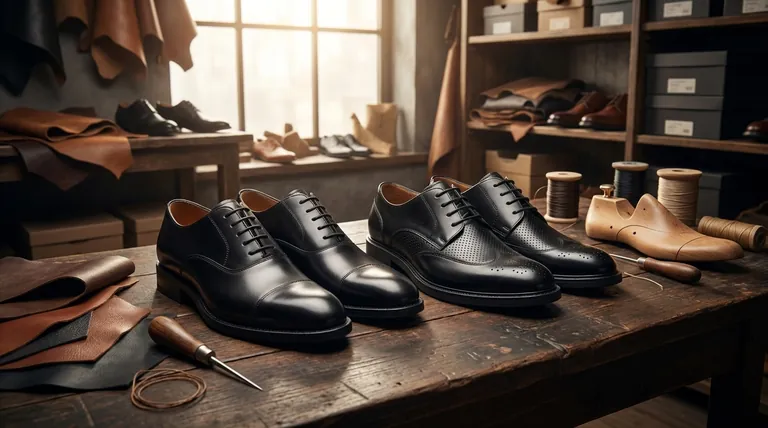
Visual Guide
Related Products
- Wholesale Patent Oxford Dress Shoes | Custom & Bulk Manufacturing
- Wholesale Leather Derby Shoes Manufacturer | Customizable Business & Dress Footwear
- Classic Leather Derby Dress Shoes Wholesale & Custom Manufacturing
- Wholesale Breathable Perforated Leather Derby Dress Shoes for Custom Brands
- Wholesale Perforated Comfort Dress Shoes | Custom Derby Shoe Manufacturer
People Also Ask
- What are the key characteristics of Oxford dress shoes? A Guide to Timeless Formal Footwear
- How do Oxfords and Derbies differ in terms of lacing and formality? A Guide to Choosing the Right Shoe
- What is the origin of the Oxford shoe? From 1800s University Boots to Modern Elegance
- How do Oxford Shoes differ from other casual shoes? The Ultimate Guide to Lacing & Formality
- What makes Oxford shoes suitable for business casual settings? Master the Art of Professional Style