
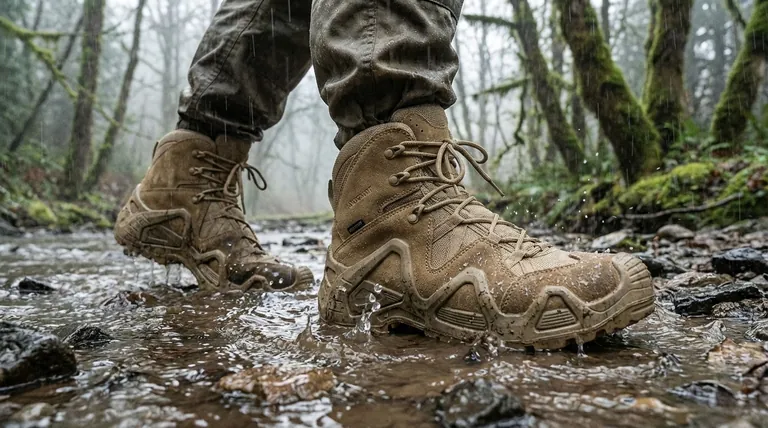
At its core, waterproofing in tactical boots is a critical feature for operator health and mission success. Its primary function is to create an impassable barrier against external moisture, keeping your feet dry, comfortable, and protected from the elements. This prevents debilitating foot issues and ensures the boots themselves last longer.
The central purpose of waterproofing is to maintain a stable, dry internal environment for your feet. This directly prevents moisture-related injuries and preserves the boot's structural integrity, though it comes with a necessary trade-off in breathability.
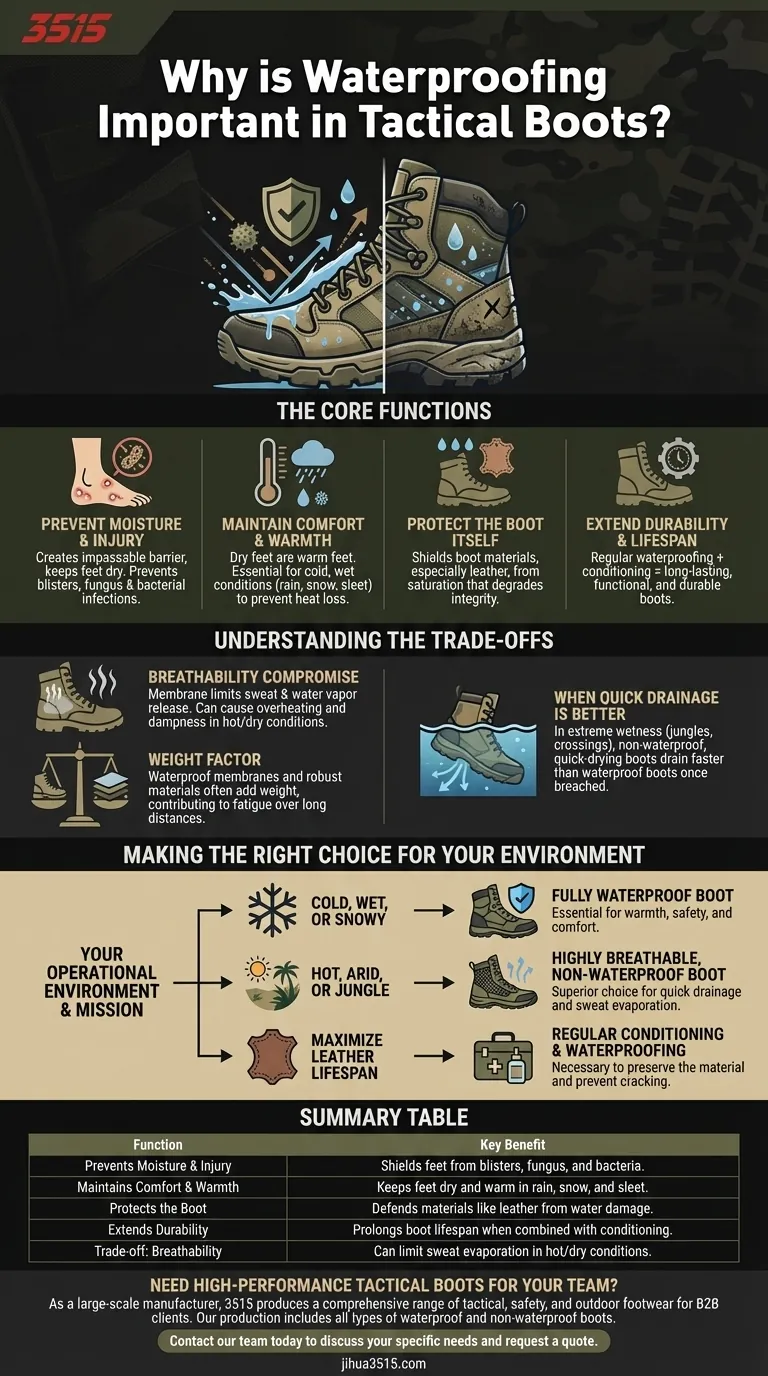
The Core Functions of Waterproofing
Waterproofing is not just about comfort; it is a key performance feature that directly impacts your physical well-being and operational readiness in the field.
Preventing Moisture and Injury
When your feet get wet, the skin softens and becomes extremely vulnerable. This is the primary cause of painful blisters and other friction injuries.
Prolonged moisture can also create a breeding ground for fungus and bacteria, leading to more serious foot health issues that can take you out of action.
Maintaining Comfort and Warmth
Dry feet are warm feet. Waterproof boots are essential for protecting against wet-weather elements like rain, snow, and sleet, preventing dangerous heat loss in cold conditions.
By keeping water out, these boots ensure you remain comfortable and focused on the task at hand, rather than the distracting and painful sensation of cold, wet feet.
Protecting the Boot Itself
Waterproofing provides a crucial layer of defense for the boot's materials, especially leather. It shields the material from moisture saturation that can degrade its integrity over time.
By repelling water, you prevent the material from becoming logged, heavy, and prone to drying out and cracking once the moisture evaporates.
Extending Durability and Lifespan
Regular waterproofing maintenance is key to prolonging the life of your boots. It works hand-in-hand with conditioning to keep the materials supple yet protected.
Conditioning nourishes the leather to prevent cracking, while waterproofing creates the external shield. Both are critical for ensuring your boots remain functional and durable in harsh conditions.
Understanding the Trade-offs
While waterproofing offers unparalleled protection in wet environments, it is not the ideal solution for every situation. Understanding its limitations is key to selecting the right footwear.
The Breathability Compromise
The same membrane that blocks water from getting in also limits the ability of sweat and water vapor to get out.
In hot and dry conditions, this reduced breathability can cause your feet to overheat and become damp from sweat, creating the very moisture problems you sought to avoid.
The Weight Factor
Waterproof boots often incorporate additional layers, membranes, and more robust materials. This construction typically makes them heavier than their non-waterproof counterparts.
While a minor difference, this added weight can contribute to fatigue over long distances.
When Quick Drainage is Better
In extremely wet environments like jungles or river crossings, you will likely experience full submersion. In these cases, no boot can keep water out indefinitely.
A non-waterproof boot made of quick-drying materials will drain water rapidly and dry out much faster than a waterproof boot, which can trap water inside once breached.
Making the Right Choice for Your Environment
Choosing between waterproof and non-waterproof boots depends entirely on your most common operational environment and mission requirements.
- If your primary focus is operating in cold, wet, or snowy conditions: A fully waterproof boot is essential for warmth, safety, and comfort.
- If your primary focus is working in hot, arid, or jungle environments: A highly breathable, non-waterproof boot that drains quickly is the superior choice.
- If your primary focus is maximizing the lifespan of your leather boots: Regular conditioning and waterproofing treatments are necessary to preserve the material.
Ultimately, selecting the right boot is about matching the tool to the specific demands of your environment.
Summary Table:
| Function | Key Benefit |
|---|---|
| Prevents Moisture & Injury | Shields feet from blisters, fungus, and bacteria. |
| Maintains Comfort & Warmth | Keeps feet dry and warm in rain, snow, and sleet. |
| Protects the Boot | Defends materials like leather from water damage. |
| Extends Durability | Prolongs boot lifespan when combined with conditioning. |
| Trade-off: Breathability | Can limit sweat evaporation in hot/dry conditions. |
Need High-Performance Tactical Boots for Your Team?
As a large-scale manufacturer, 3515 produces a comprehensive range of tactical, safety, and outdoor footwear for distributors, brand owners, and bulk clients. Our production capabilities encompass all types of waterproof and non-waterproof boots, ensuring you get the right gear for any environment.
Let us help you equip your personnel with durable, mission-ready footwear. Contact our team today to discuss your specific needs and request a quote.
Visual Guide
Related Products
- Durable Leather Tactical Boots Wholesale & Custom Manufacturing for Brands
- High-Traction Suede Tactical Boots Wholesale & Custom Manufacturing
- Durable Leather High-Ankle Tactical Boots for Wholesale & Custom Manufacturing
- Durable Mid-Cut Tactical Boots for Wholesale & Private Label
- Wholesale Waterproof Tactical Boots Custom Suede & High-Traction Soles
People Also Ask
- What specialized protections do tactical boots offer? Maximize Endurance with High-Performance Footwear
- What features should law enforcement officers look for in tactical boots? Essential Guide for Safety & Performance
- Importance of Professional Tactical Boots in Loess Gully Regions: Ensure Safety and Precision for Field Monitoring
- What is rucking, and why are tactical boots suitable for it? Discover the Ultimate Footwear for Heavy Loads
- What makes the traction of tactical boots superior? Unlock the Science of Unbeatable Grip















