
At their core, motorcycle boots are a system of protection. They are specifically engineered to shield you from the unique and severe risks of riding by absorbing impact, resisting abrasion, preventing debilitating ankle injuries, and improving your fundamental control over the motorcycle.
The most common mistake is viewing motorcycle boots as just a sturdier version of a regular boot. Their true value lies in providing a specialized defense system that addresses multiple threats simultaneously—from the heat of the engine to the physics of a high-speed crash.
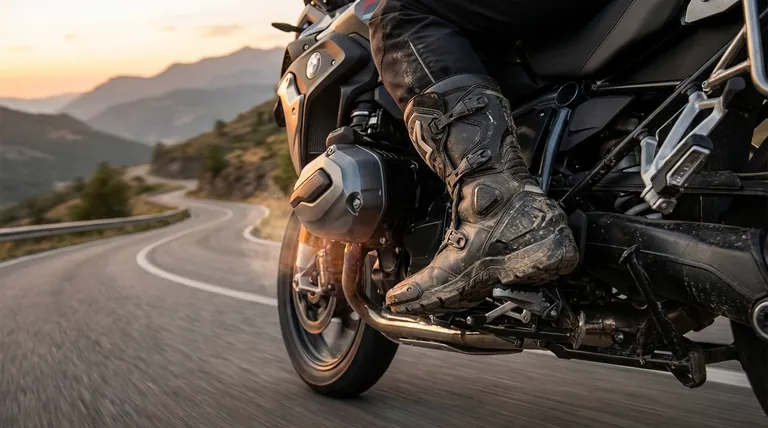
The Pillars of Rider Protection
Understanding how a boot protects you requires looking beyond a single feature. True motorcycle footwear integrates four distinct layers of safety.
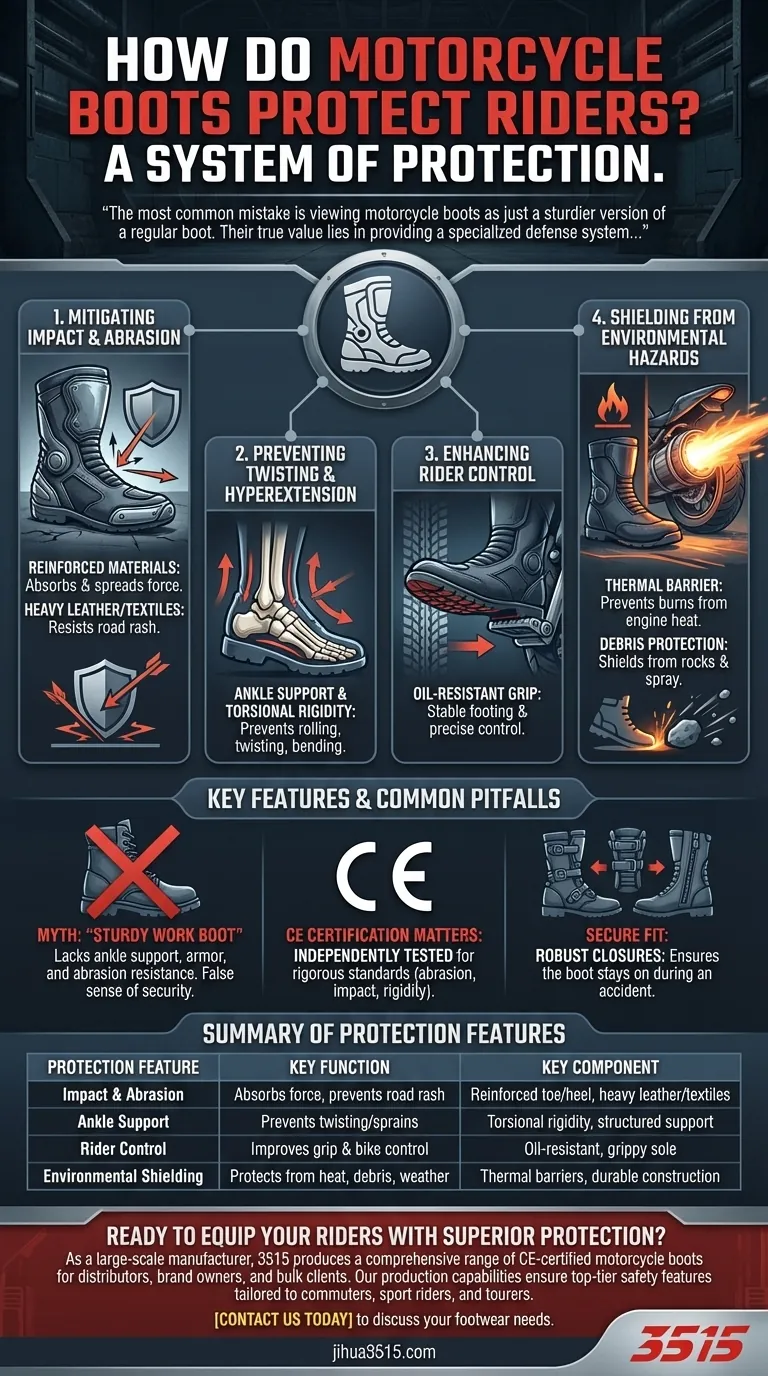
1. Mitigating Impact and Abrasion
In any motorcycle accident, your feet are highly vulnerable to both direct impact and sliding on pavement.
Specialized boots are built with reinforced materials in critical areas like the toe, heel, and shin. This reinforcement is designed to spread and absorb the force of an impact, preventing fractures.
They also provide superior abrasion resistance. Heavy leather and advanced textiles are used to keep the pavement from grinding through to your skin and bone, a common injury known as road rash.
2. Preventing Twisting and Hyperextension
Your ankle is a complex joint not designed to withstand the violent twisting forces common in a motorcycle crash.
Motorcycle boots provide crucial ankle support and torsional rigidity. This structural stiffness prevents your ankle from rolling, twisting, or bending in ways that would cause severe sprains or fractures.
This is a key differentiator from standard work or hiking boots, which offer little to no protection against these specific types of rotational injuries.
3. Enhancing Rider Control
Safety isn't just about crashing; it's also about preventing a crash in the first place.
The soles of motorcycle boots are made from specific oil-resistant compounds that provide a superior grip on both the road surface and the bike's footpegs. This ensures stable footing when you stop and precise control while riding.
This enhanced connection to the machine allows for more confident and accurate inputs, which is a critical aspect of active safety.
4. Shielding from Environmental Hazards
The act of riding itself exposes your feet to immediate dangers beyond a potential crash.
Riding places your feet inches away from the intense heat of the engine and exhaust pipes. Proper boots, especially those made of thick leather, provide an essential thermal barrier to prevent serious burns.
They also protect you from kicked-up road debris, such as rocks or other objects, and spray from other vehicles in wet conditions.
Key Features and Common Pitfalls
Not all boots are created equal. Focusing on the right features and avoiding common misconceptions is critical for your safety.
The Myth of the "Sturdy Work Boot"
The most dangerous pitfall is assuming a heavy work boot or hiking boot provides adequate protection. It does not.
These boots lack the specific torsional ankle support, dedicated impact armor, and tested abrasion resistance required for motorcycling. In a crash, their laces can get caught on the bike, and their construction can fail, offering a false sense of security.
Why CE Certification Matters
Look for boots with a CE certification. This is not a marketing term; it signifies that the boot has been independently tested and meets rigorous European standards for protective performance, including criteria for abrasion resistance, impact absorption, and structural rigidity.
The Importance of a Secure Fit
A boot is useless if it comes off during an accident. Motorcycle boots feature robust and secure closure systems, such as adjustable buckles, high-strength zippers, and hook-and-loop fasteners, to ensure they stay firmly in place when you need them most.
Making the Right Choice for Your Ride
Your ideal boot depends on your specific riding needs. Match the features to the function.
- If your primary focus is daily commuting: Prioritize a boot that balances CE-rated protection with comfort, weather resistance, and walkability.
- If your primary focus is track or sport riding: Emphasize maximum ankle bracing, extensive armor, replaceable sliders, and a high CE rating.
- If your primary focus is long-distance touring: Seek a combination of robust protection, all-day comfort, and proven waterproofing for variable conditions.
Investing in true motorcycle footwear is one of the most effective safety decisions a rider can make.
Summary Table:
| Protection Feature | Key Function | Key Component |
|---|---|---|
| Impact & Abrasion | Absorbs crash force, prevents road rash | Reinforced toe/heel, heavy-duty leather/textiles |
| Ankle Support | Prevents twisting/sprains | Torsional rigidity, structured ankle support |
| Rider Control | Improves grip and bike control | Oil-resistant, grippy sole compound |
| Environmental Shielding | Protects from heat, debris, and weather | Thermal barriers, durable construction |
Ready to Equip Your Riders with Superior Protection?
As a large-scale manufacturer, 3515 produces a comprehensive range of CE-certified motorcycle boots for distributors, brand owners, and bulk clients. Our production capabilities ensure top-tier safety features, including impact absorption, abrasion resistance, and critical ankle support—all tailored to meet the demands of commuters, sport riders, and tourers.
Contact us today to discuss your footwear needs and leverage our manufacturing expertise to enhance your product line.
Visual Guide
Related Products
- Wholesale Tactical Boots High-Traction & Reflective for Bulk & Brand Orders
- High Performance Fire-Retardant Waterproof Safety Boots
- Durable Goodyear Welt Leather Work Boots for Wholesale & Private Label
- Wholesale High-Traction Camo Boots - Custom Manufacturer for Brands
- Heavy-Duty Waterproof Nubuck Safety Boots Safety Shoes for Bulk Supply
People Also Ask
- How do tactical boots protect against injuries? Discover the Integrated Safety System
- Why is the management of Initial Inventory (II) critical in the production and supply of tactical boots?
- How do social media interactivity features enhance procurement engagement for tactical and work boots?
- How does the extraction of sociodemographic factors via NLP influence the design of tactical boots and work shoes?
- How do combat boots and tactical boots differ in design and purpose? Choose the Right Boot for Your Mission



















