
In short, motorcycle boots are specialized safety equipment; regular shoes are not. While a standard shoe is designed for comfort and style, a motorcycle boot is engineered with reinforced materials, armor, and structural support specifically to protect your feet and ankles from the unique dangers of a motorcycle crash, such as abrasion, impact, and crushing forces.
The core difference isn't just about being "tougher." It's about a fundamental design philosophy: regular shoes protect you from the environment during daily activities, while motorcycle boots protect you from catastrophic failure during a high-energy accident.
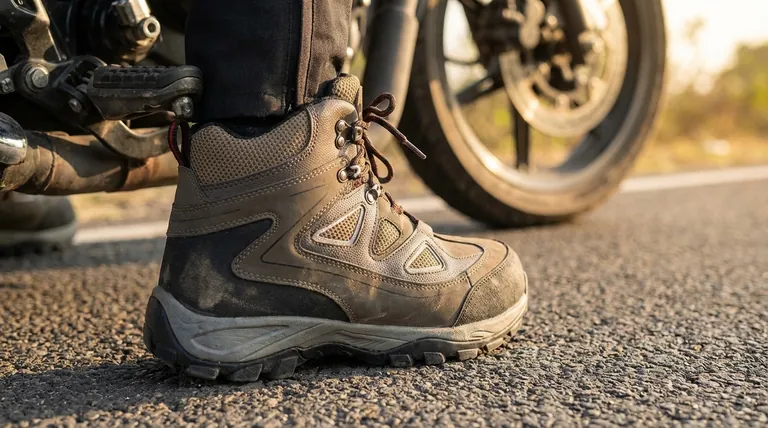
Why Your Everyday Shoes Are a Liability on a Motorcycle
Your feet and ankles are incredibly complex, containing over a quarter of all the bones in your body. They are also one of the most common points of injury in a motorcycle accident. Standard footwear offers virtually no meaningful protection against the forces involved.
The Anatomy of an Accident: Impact, Abrasion, and Torsion
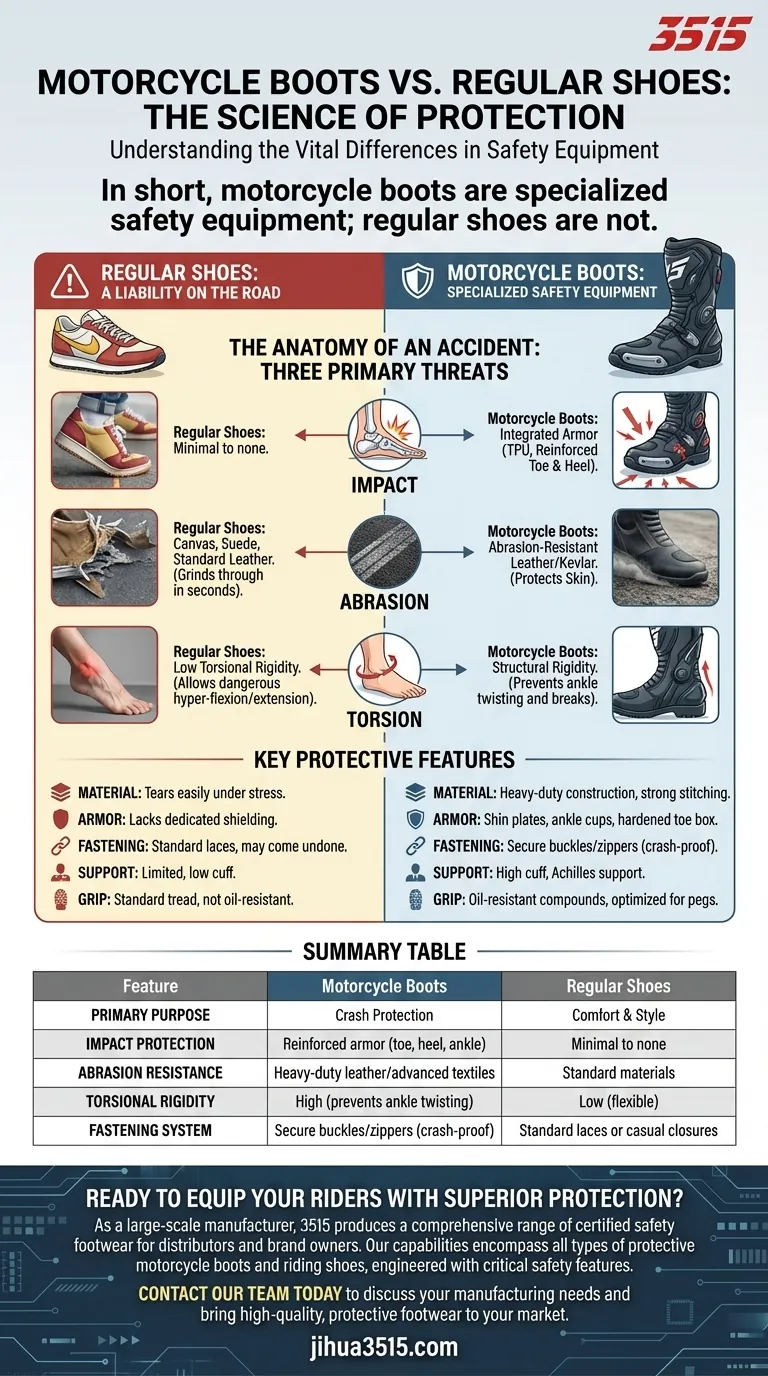
A motorcycle crash exposes your feet to three primary threats.
Impact: This is the force of your foot hitting the pavement or another object. Regular shoes, even sturdy work boots, lack the dedicated armor to absorb this shock. Motorcycle boots integrate armor made of materials like TPU (thermoplastic polyurethane) over the heel, toes, and ankles to dissipate impact energy.
Abrasion: When you slide across asphalt, the friction generates immense heat and can grind through materials like canvas, suede, or standard leather in seconds. Motorcycle boots use thick, abrasion-resistant leather or advanced textiles like Kevlar to withstand this, protecting your skin.
Torsion: This is the twisting force that causes severe sprains and breaks. Motorcycle boots are built with rigid structures to prevent your ankle from bending or twisting in unnatural directions (hyper-flexion/extension), a feature completely absent in regular footwear.
Key Protective Features You Won't Find in Regular Shoes
Understanding the specific components of a motorcycle boot reveals why they are an essential piece of gear.
Material and Construction
Motorcycle boots are constructed from heavy-duty leather or high-tech synthetic fabrics. The stitching and bonding are designed to hold the boot together during the violence of a slide, unlike fashion shoes which can tear apart almost instantly.
Integrated Armor
Purpose-built armor is the most visible difference. You will find reinforced shin plates, ankle cups, and hardened toe boxes. These components are strategically placed to shield the most vulnerable bones from direct impact.
Structural Rigidity
A key, often overlooked, feature is torsional stiffness. You should not be able to easily twist a motorcycle boot by hand. This rigidity is what prevents your ankle from snapping under the weight of the bike or during a tumble.
Secure Fastening and Support
Motorcycle boots use robust buckles, zippers, and hook-and-loop closures that won't come undone in a crash. This ensures the boot stays on your foot to do its job. The higher cuff also provides critical support to the lower leg and Achilles tendon.
Grip and Control
The soles are made from oil-resistant compounds with specific tread patterns designed to grip slippery road surfaces and motorcycle footpegs securely. This enhances control while riding and stability when stopped, preventing minor drops.
Understanding the Trade-offs: Protection vs. Comfort
It's clear that motorcycle boots offer superior protection, but this comes with trade-offs, primarily in off-the-bike comfort and convenience.
The Problem with "Almost Good Enough" Boots
Riders often consider alternatives like tactical or work boots. While tougher than sneakers, they still lack the specific features needed for riding. Tactical boots are designed for flexibility and running, which is the opposite of the rigidity needed to prevent ankle torsion. Work boots may have a steel toe for drop protection but offer no impact armor or slide resistance.
Motorcycle "Riding Shoes" as a Compromise
A growing category is the motorcycle "riding shoe." These look like casual sneakers or high-tops but include basic safety features like reinforced ankle discs, a stronger sole, and abrasion-resistant materials. They offer a significant protective upgrade from regular shoes but lack the shin protection and torsional rigidity of a full boot.
Making the Right Choice for Your Ride
Your choice of footwear should directly match the risks you are willing to accept.
- If your primary focus is maximum protection: A full-height motorcycle boot with external armor and certified torsional stiffness is the only acceptable choice, especially for highway speeds or track riding.
- If your primary focus is urban commuting and walkability: A certified motorcycle "riding shoe" offers a practical balance of protection for lower-speed environments and comfort for when you're off the bike.
- If you are considering non-motorcycle boots (e.g., hiking, tactical): Understand that you are sacrificing purpose-built impact, abrasion, and torsional protection, leaving your feet and ankles critically exposed.
Ultimately, choosing to wear proper motorcycle boots is an investment in your ability to walk away from an accident.
Summary Table:
| Feature | Motorcycle Boots | Regular Shoes |
|---|---|---|
| Primary Purpose | Crash Protection | Comfort & Style |
| Impact Protection | Reinforced armor (toe, heel, ankle) | Minimal to none |
| Abrasion Resistance | Heavy-duty leather/advanced textiles | Standard materials |
| Torsional Rigidity | High (prevents ankle twisting) | Low (flexible) |
| Fastening System | Secure buckles/zippers (crash-proof) | Standard laces or casual closures |
Ready to Equip Your Riders with Superior Protection?
As a large-scale manufacturer, 3515 produces a comprehensive range of certified safety footwear for distributors, brand owners, and bulk clients. Our production capabilities encompass all types of protective motorcycle boots and riding shoes, engineered with the critical features outlined above.
We help you provide your customers with the gear that makes a difference. Contact our team today to discuss your manufacturing needs and bring high-quality, protective footwear to your market.
Visual Guide
Related Products
- Wholesale Tactical Boots High-Traction & Reflective for Bulk & Brand Orders
- High Performance Fire-Retardant Waterproof Safety Boots
- Durable Goodyear Welt Leather Work Boots for Wholesale & Private Label
- Wholesale High-Traction Camo Boots - Custom Manufacturer for Brands
- Heavy-Duty Waterproof Nubuck Safety Boots Safety Shoes for Bulk Supply
People Also Ask
- How do tactical boots protect against injuries? Discover the Integrated Safety System
- What types of boots are used by Bravo in SEAL Team? Salomon & Merrell for Elite Performance
- What factors should be considered when choosing tactical boots for different terrains? Match Your Boot to the Mission.
- Why is the footwear standardization essential in ambient temperature studies? Ensure Scientific Data Accuracy
- How does the comparative gait analysis between grass and asphalt guide safety shoe R&D? Optimize Tactical Performance



















