I've been tasked with providing a concise, expert answer regarding the benefits of jungle boots in wet environments. My analysis shows the core benefit isn't about resisting water, but about managing it.
The defining advantage of a jungle boot is its philosophy of rapid drainage, not water resistance. In environments with frequent water submersion, quickly shedding water is more effective for foot health than attempting, and inevitably failing, to keep it out entirely.
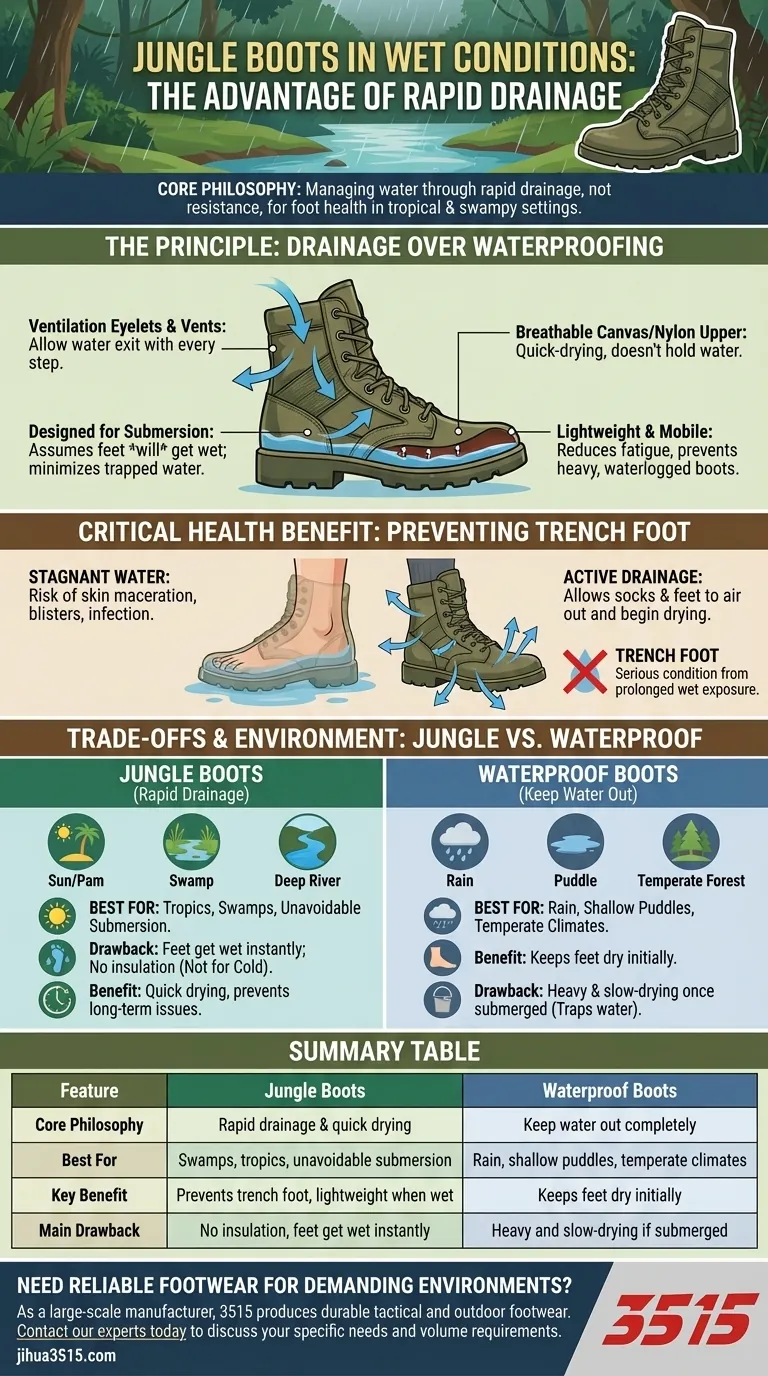
First, I need to convey that jungle boots are designed with the expectation that feet will get wet. Their construction prioritizes the quick exit of water with vents, eyelets and breathable canvas uppers working in tandem. This feature, stemming from being part of tactical boot design, also means they are lightweight and flexible, reducing the burden of waterlogged footwear. I must mention the connection to preventing trench foot, by explaining that constant saturation in wet boots can lead to significant foot issues. By quickly removing water, jungle boots allow feet to begin drying.
Now, I need to present a balanced view. The critical trade-offs between jungle and waterproof boots must be clearly stated. While waterproof boots offer excellent protection from rain and dampness, once water penetrates (and it will if fully submerged), they become heavy and slow-drying, which can be detrimental. In contrast, Jungle boots are for environments where getting wet is inevitable. The water sheds quickly but they aren't going to keep your feet dry. Also, they offer no insulation, rendering them unsuitable in cold conditions.
To conclude, I must offer clear guidance.
- If the goal is to trek in a temperate climate with rain and puddles: A waterproof boot is probably best to keep feet dry and comfortable.
- If the primary focus is a tropical or swampy setting with river crossings: A jungle boot's rapid drainage is key to maintaining long-term foot health.
- If the main concern is cold weather: Neither option will work; an insulated winter boot is needed.
The critical lesson: the ideal footwear relies on the reality of the environment, not a blind belief in a one-size-fits-all solution. In extremely wet and warm conditions, the primary advantage of a jungle boot is not its ability to keep water out, but its capacity to let water out immediately. This rapid drainage system is specifically designed to prevent the prolonged waterlogging of your feet, which is a critical factor in maintaining foot health during extended operations in tropical or swampy environments.
The core philosophy of a jungle boot is rapid drainage, not water resistance. In environments with frequent and unavoidable water submersion, such as river crossings or monsoons, quickly shedding water is far more effective for foot health than attempting, and inevitably failing, to keep it out entirely.
The Principle: Drainage Over Waterproofing
The design of a jungle boot is a direct response to the futility of trying to keep feet dry in a perpetually soaked environment.
Designed for Submersion
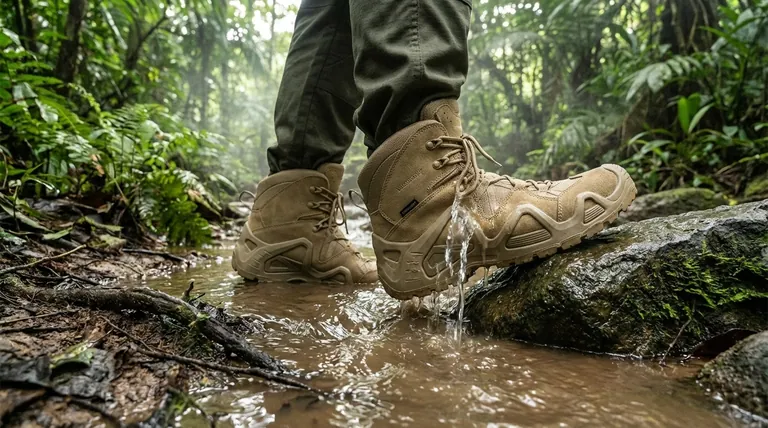
Jungle boots operate on the assumption that your feet will get wet. Their goal is to minimize the time your feet spend submerged in trapped water inside the boot.
The Role of Vents and Canvas
Most jungle boots feature metal drainage vents or eyelets near the instep. These allow water to be physically pushed out with every step. The use of lightweight, breathable canvas or nylon in the uppers further ensures that the boot material itself does not hold onto water and can dry relatively quickly.
Lightweight and Mobile
This construction makes the boots exceptionally lightweight and flexible. Even when soaked, they do not become the heavy, cumbersome "buckets" that waterlogged waterproof boots often do, which reduces fatigue over long distances.
The Critical Health Benefit: Preventing Trench Foot
The engineering behind jungle boots directly addresses one of the most significant dangers in wet environments: immersion foot syndromes like trench foot.
What is Trench Foot?
Trench foot is a serious medical condition caused by prolonged exposure of the feet to wet, unsanitary, and non-freezing conditions. It can lead to skin breakdown, blisters, infections, and even nerve damage.
How Drainage Mitigates Risk
By actively draining water, the boot prevents your foot from being constantly stewing in a pool of stagnant water. This allows your socks and feet a chance to air out and begin drying between submersions, drastically reducing the risk of skin maceration and subsequent infection.
Understanding the Trade-offs: Jungle vs. Waterproof Boots
Choosing the right boot requires understanding the fundamental trade-off between keeping water out and letting it escape.
The "Waterproof" Boot Dilemma
A high-quality waterproof boot, often using a membrane like Gore-Tex, is excellent at keeping feet dry from external moisture like rain or shallow puddles. However, once water breaches the top of the boot during a deep river crossing, it becomes trapped. The boot is now a heavy container that will take an extremely long time to dry, creating a perfect environment for trench foot.
The Jungle Boot Compromise
The jungle boot offers zero initial water protection; your feet will get wet instantly. Its advantage only emerges in environments where staying dry is not a realistic option. Furthermore, their lack of insulation makes them completely unsuitable and even dangerous for use in cold or freezing conditions.
Making the Right Choice for Your Environment
Your decision must be guided by a realistic assessment of the conditions you will face.
- If your primary focus is hiking in a temperate climate with rain and puddles: A waterproof boot is the superior choice for keeping your feet dry and comfortable.
- If your primary focus is operating in a tropical, swampy, or river-heavy environment: The rapid drainage and quick-drying nature of a jungle boot is essential for long-term foot health.
- If your primary focus is performance in cold or freezing weather: Neither is appropriate; you need a dedicated insulated boot designed to protect against cold-weather injuries.
Ultimately, choosing the right footwear begins with understanding that no single boot can master all conditions.
Summary Table:
| Feature | Jungle Boots | Waterproof Boots |
|---|---|---|
| Core Philosophy | Rapid drainage & quick drying | Keep water out completely |
| Best For | Swamps, tropics, unavoidable submersion | Rain, shallow puddles, temperate climates |
| Key Benefit | Prevents trench foot, lightweight when wet | Keeps feet dry initially |
| Main Drawback | No insulation, feet get wet instantly | Heavy and slow-drying if submerged |
Need Reliable Footwear for Demanding Environments?
As a large-scale manufacturer, 3515 produces a comprehensive range of durable tactical and outdoor footwear for distributors, brand owners, and bulk clients. Our production capabilities encompass all types of boots, including specialized designs for rapid drainage and performance in wet conditions.
Let us help you equip your team or customers with footwear engineered for the mission. Contact our experts today to discuss your specific needs and volume requirements.
Visual Guide
Related Products
- Durable Spiked Camouflage Boots Wholesale & Factory Production
- Wholesale Lightweight Tactical Boots Custom Manufacturer for Desert & Combat Use
- Wholesale High-Traction Camo Boots - Custom Manufacturer for Brands
- Durable Leather High-Ankle Tactical Boots for Wholesale & Custom Manufacturing
- Durable High-Ankle Tactical Boots Wholesale Manufacturer for Custom & Bulk Orders
People Also Ask
- How does boot height affect waterproofing? Choose the Right Height for Ultimate Protection
- What are the best types of shoes for different gardening conditions? Find Your Perfect Match.
- What role does camouflage play in hunting boots? It's More Than Just a Pattern
- What should you look for to ensure boots are fully waterproof? The Essential 2-Part System
- How does boot construction affect waterproofing? The Science Behind Truly Dry Feet