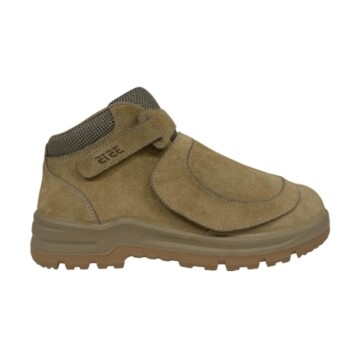
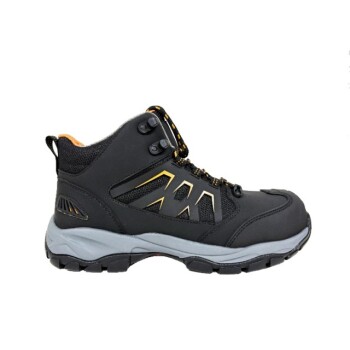
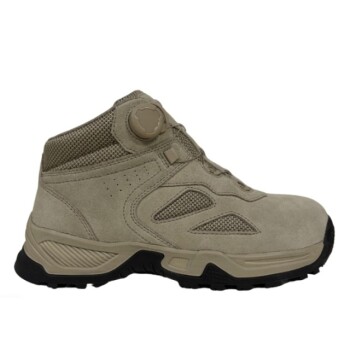
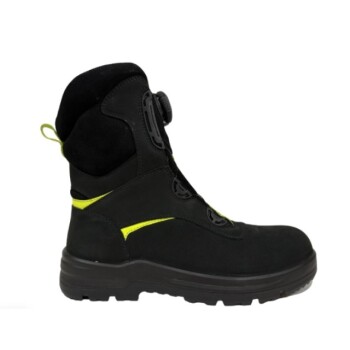
Metal eyelets serve as the structural anchor for the lacing system in professional footwear, transforming a potential point of weakness into a source of strength. Produced through high-precision stamping, these components are embedded into lacing holes to reinforce the edges of leather or textile materials, preventing tearing while minimizing friction to ensure a secure and reliable fit.
Core Insight: In high-stress environments, the structural integrity of a boot is only as strong as its fastening system. Metal eyelets provide the essential reinforcement required to prevent material failure and maintain a consistent, secure fit over the lifespan of the boot.
Preserving Material Integrity
Preventing Material Failure
Without reinforcement, the tension applied to laces can act like a slow-moving saw against the upper material of a boot. Metal eyelets create a rigid barrier that prevents laces from tearing through leather or heavy-duty textiles. This is critical for preventing the "pull-through" damage common in lower-quality footwear.
Edge Reinforcement
The installation process embeds the eyelet directly into the lacing hole. This reinforces the raw edge of the material, distributing the tension of the laces across a wider surface area rather than concentrating it on a single point of the fabric or hide.
Optimizing Fit and Performance
Minimizing Lacing Friction
Metal eyelets are designed to offer a smooth surface for laces to pass through. This significantly reduces friction compared to unlined holes, allowing the wearer to tighten boots quickly and evenly.
Ensuring a Secure Fit
A smooth, low-friction lacing system is not just a convenience; it is a safety feature. It ensures that tension is distributed evenly across the foot, preventing loose areas that could lead to blisters or instability. This reinforcement is vital for maintaining the structural reliability of safety and tactical footwear during active use.
The Role of Manufacturing Precision
High-Precision Stamping
The durability of the eyelet itself stems from its manufacturing process. They are produced using high-precision stamping, which ensures uniformity and strength. This process creates a component capable of withstanding the repetitive stress of daily tightening and loosening without deforming.
Understanding the Trade-offs
The Necessity of Precision
While metal eyelets generally reduce friction, this benefit is entirely dependent on the quality of the stamping process. If the manufacturing lacks precision, the metal may have rough edges or burrs. Instead of protecting the lace, a poorly stamped eyelet becomes an abrasive surface that can fray or snap laces prematurely.
Installation Integrity
The eyelet is a separate component from the boot upper. Its reliability depends on the security of its embedment. If the surrounding material is too weak to hold the eyelet under tension, the entire metal component can pull out, leading to total lacing failure.
Making the Right Choice for Your Goal
When selecting professional footwear, consider how the eyelet construction aligns with your specific operational needs.
- If your primary focus is Long-Term Durability: Prioritize boots with embedded metal eyelets to prevent the laces from tearing through the leather or textile upper over time.
- If your primary focus is Fit and Stability: Ensure the eyelets are precision-stamped to minimize friction, allowing for a smooth, tight, and secure lacing process every time.
True reliability in safety footwear is found in the details that prevent failure before it begins.
Summary Table:
| Aspect | Key Contribution to Professional Safety Boots |
|---|---|
| Material Integrity | Prevents tearing, pull-through damage, and reinforces material edges. |
| Optimized Fit | Minimizes lacing friction, allowing for a smooth, secure, and stable fit. |
| Enhanced Performance | Maintains structural reliability during active use, preventing instability. |
| Manufacturing Quality | High-precision stamping ensures eyelet strength and uniformity. |
| Long-Term Reliability | Extends boot lifespan by protecting the critical lacing system. |
Elevate your product line with footwear built for unparalleled durability and reliability. As a large-scale manufacturer serving distributors and brand owners, 3515 offers comprehensive production capabilities for all footwear types, anchored by our flagship Safety Shoes series. Our extensive portfolio covers work and tactical boots, outdoor shoes, training shoes, and sneakers, as well as Dress & Formal shoes to meet diverse bulk requirements.
Partner with 3515 to ensure every pair of boots you offer delivers the strength and security your customers demand, backed by our precision manufacturing and quality craftsmanship. Contact us today to discuss your specific production needs and elevate your brand's offering!
Connect with 3515 Experts Today
References
- Alexandra Bodoga, Dorina Nicolina Isopescu. Environmental Impact of Footwear Using Life Cycle Assessment—Case Study of Professional Footwear. DOI: 10.3390/su16146094
This article is also based on technical information from 3515 Knowledge Base .
Related Products
- Premium Suede Metatarsal Guard Safety Boots Work Shoes
- Premium Sport Style Safety Boots for Bulk Orders
- Wholesale Durable Safety Boots | Custom Steel Toe & Puncture-Resistant Manufacturing
- Puncture-Resistant Velcro Safety Boots for Wholesale & Custom Manufacturing
- Durable Steel Toe Safety Boots Wholesale & Custom Manufacturing
People Also Ask
- How does metatarsal protection in safety footwear work? The Essential Guide to Foot Safety
- What is a metatarsal guard in safety boots? Essential Protection for Your Entire Foot
- How do metatarsal guards enhance work shoe safety? Prevent Crushing Foot Injuries on the Job
- What does the 'MT' in ASTM F2413-18 stand for? Essential Metatarsal Protection Explained
- What is metatarsal protection in safety boots? Essential Defense for Top-of-Foot Hazards