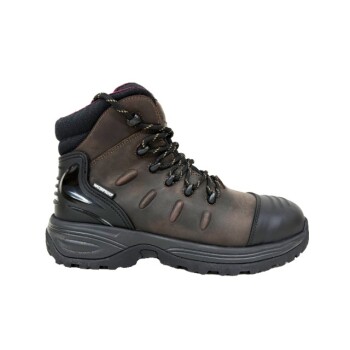
Industrial-grade safety shoes are a critical component of risk management in heavy industries, specifically engineered to act as a primary barrier against mechanical hazards and environmental instability. By integrating reinforced protective structures and specialized traction systems, this footwear directly addresses the three most common causes of industrial accidents: crushing impacts, sharp object penetration, and falls due to loss of traction.
Statistical data indicates that utilizing protective footwear that strictly meets safety standards can reduce foot-related injury accidents by approximately 67%. These shoes function not just as clothing, but as a calibrated safety tool designed to mitigate risks in complex operational environments.
Mechanisms of Mechanical Protection
Shielding Against Impact and Compression
In sectors like construction and mining, the risk of heavy objects falling or machinery compressing the foot is constant. Industrial safety shoes mitigate this by integrating reinforced toe caps, typically made from steel or high-strength composite materials.
These caps provide a rigid shell that shields the toes and metatarsals from crushing forces. This is particularly vital in underground mining or wellhead tasks, where falling rocks and heavy equipment are prevalent hazards.
Preventing Puncture Injuries
Work sites are frequently littered with sharp debris, such as nails, scrap metal, or jagged rocks. Standard footwear offers little resistance to these hazards, leading to debilitating injuries.
Professional-grade safety shoes incorporate puncture-resistant midsoles. This layer acts as an impenetrable shield, preventing sharp objects from piercing the sole and injuring the foot, effectively neutralizing the threat of ground-level debris.
Stability and Fall Prevention
Mitigating Slip Hazards
Slips and falls are a leading cause of workplace accidents, often resulting from wet, oily, or unstable surfaces. Industrial footwear addresses this through specialized rubber outsoles featuring anti-slip designs.
These outsoles are engineered with specific tread patterns to maximize surface contact and fluid dispersion. This superior grip significantly lowers the frequency of accidents caused by loss of traction on slick industrial floors.
Navigating Uneven Terrain
In artisanal and small-scale mining, workers must navigate uneven and geologically unstable surfaces. The structural integrity of safety shoes provides necessary stability that standard boots cannot match.
By combining a rigid chassis with high-traction outsoles, these shoes help maintain balance on rugged terrain. This stability is a primary line of defense against trips and falls that could lead to more severe secondary injuries.
Understanding the Trade-offs
While the protective benefits are substantial, it is important to recognize the limitations of heavy-duty PPE. Protection often comes at the cost of weight. The reinforced materials required for impact and puncture resistance can make the footwear heavier than standard boots, potentially leading to worker fatigue over long shifts.
Furthermore, safety shoes are not a "catch-all" solution; they must be activity-specific. A boot designed primarily for puncture resistance may not offer the specific ankle support needed for extremely uneven geological surveying. Relying on a single type of shoe for diverse industrial tasks without assessing specific environmental risks can lead to suboptimal protection.
Making the Right Choice for Your Goal
Selecting the correct safety footwear requires analyzing the specific hazards of your worksite rather than applying a generic solution.
- If your primary focus is heavy construction or demolition: Prioritize footwear with integrated steel or composite toe caps to defend against crushing injuries from falling heavy objects.
- If your primary focus is site clearing or scrap management: Ensure the footwear features puncture-resistant midsoles to prevent injuries from sharp debris and nails.
- If your primary focus is working on wet, oily, or uneven terrain: Select shoes with specialized anti-slip rubber outsoles to maximize grip and prevent falls.
By standardizing the use of appropriate safety footwear, you do not merely protect individual health; you actively prevent project delays and reduce the legal liabilities associated with occupational harm.
Summary Table:
| Hazard Category | Protective Mechanism | Key Outcome |
|---|---|---|
| Heavy Impact | Reinforced Steel/Composite Toe Caps | Prevents crushing injuries from falling objects |
| Sharp Debris | Puncture-Resistant Midsoles | Blocks nails and scrap metal from piercing soles |
| Slippery Surfaces | Specialized Anti-Slip Outsoles | Maximizes traction to prevent falls and trips |
| Uneven Terrain | Rigid Chassis & High-Traction Treads | Ensures stability in mines and rugged environments |
Partner with 3515 for Reliable Industrial Protection
As a large-scale manufacturer serving distributors and brand owners, 3515 offers comprehensive production capabilities for all footwear types, anchored by our flagship Safety Shoes series. Whether you are supplying heavy construction crews or specialized mining teams, our extensive portfolio—covering work and tactical boots, outdoor shoes, training shoes, and sneakers—is engineered to meet your bulk requirements and international safety standards.
Enhance your safety inventory today: Contact Us to Discuss Your Bulk Requirements
References
- Muhammad Adithya Sasmitha, Triana Srisantyorini. Pelatihan dan Pengawasan sebagai Upaya Meningkatkan Kepatuhan Penggunaan Alat Pelindung Diri (APD) untuk Menurunkan Tingkat Kecelakaan Kerja. DOI: 10.51888/jpmeo.v3i3.325
This article is also based on technical information from 3515 Knowledge Base .
Related Products
- Premium Wheat Nubuck Safety Shoes for Bulk Distribution
- Premium Wholesale Waterproof Safety Boots High Performance Protection for Industrial Markets
- Premium Waterproof High-Cut Industrial Safety Boots for Wholesale and Bulk Orders
- Premium KPU Athletic Safety Shoes for Wholesale
- Premium Wholesale Tactical Style Safety Shoes Boots with Quick Lacing
People Also Ask
- What are the primary protective functions of safety shoes with steel toes in the automotive repair industry?
- What type of safety shoe is recommended for workers exposed to heavy machinery? Steel Toe Boots for Ultimate Protection
- What are the main materials used in steel toe safety shoes? A Guide to Protective Footwear Construction
- Why is it mandatory to wear safety shoes with steel toe protection during metal loading? Prevent Crushing Injuries
- What role do steel-toe safety shoes play in high-rise construction? Essential PPE for Vertical Build Security