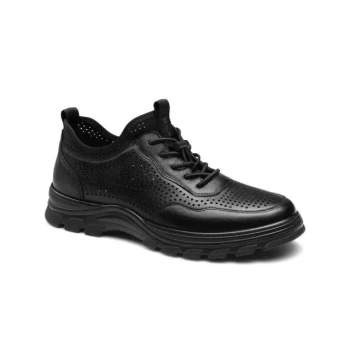
High-quality training or safety shoes serve as a standardized, stable platform that is essential for accurate gait analysis. By utilizing a firm heel and structured upper, these shoes minimize the structural deformation and "wobbling" that occur during movement, ensuring that sensors remain securely fixed and record the foot's true trajectory.
The integrity of gait analysis data relies heavily on the interface between the foot and the sensor. High-quality footwear minimizes mechanical noise, ensuring that the collected signals are a reflection of the patient's intrinsic gait rather than equipment instability.
The Impact on Sensor Mechanics
Creating a Rigid Foundation
For gait analysis involving Inertial Measurement Unit (IMU) sensors, the sensor is typically attached to the shoe itself.
High-quality shoes feature a stable heel counter and a structured upper. This provides a rigid surface that does not collapse or warp significantly when weight is applied.
Reducing Artifact Noise
When a participant walks in flimsy footwear, the shoe fabric distorts, causing the sensor to shift independently of the foot.
This movement creates artifact noise—false signals that clutter the data. A high-quality shoe fixes the sensor firmly at the heel and toe, eliminating this noise and ensuring the raw signals are clean.
Clinical Reliability and Consistency
Ensuring Repeatability
Reliable clinical assessment requires data that can be reproduced across different days or trials.
High-quality shoes provide a standardized environment. By removing the variable of erratic shoe behavior, you ensure that the data remains comparable across different testing batches.
Reflecting Intrinsic Gait Capacity
The shoe acts as the sole interface between the participant and the analysis system.
Unsuitable footwear, such as slippers or high heels, forces the participant to alter their walking pattern to maintain balance. Supportive shoes allow the participant to walk naturally, ensuring the data reflects their true physiological capability.
Common Pitfalls to Avoid
While high-quality shoes are crucial for sensor stability, there are trade-offs to consider regarding standardization.
Over-standardization can mask specific issues. If a patient typically struggles because of their own poor footwear choices, testing them only in high-quality shoes may hide the real-world problem they face daily.
Comfort cannot be ignored. A "high-quality" safety shoe that is too heavy or fits poorly will induce an unnatural gait pattern as the user compensates for the discomfort, potentially skewing the data in a different direction.
Making the Right Choice for Your Goal
To maximize the utility of your gait analysis, align your footwear protocol with your specific testing objectives.
- If your primary focus is Sensor Signal Fidelity: Prioritize shoes with a stiff heel counter and rigid upper materials to minimize micro-movements and artifact noise.
- If your primary focus is Longitudinal Comparison: Enforce the use of the exact same model or type of high-quality shoe across all sessions to ensure data consistency over time.
Ultimately, the shoe is not just an accessory; it is the structural foundation that dictates the validity of your sensor data.
Summary Table:
| Feature | Impact on Gait Analysis | Benefit for Sensor Testing |
|---|---|---|
| Rigid Heel Counter | Prevents sensor shifting/wobbling | Eliminates artifact noise for cleaner data |
| Structured Upper | Minimizes material deformation | Ensures sensor records true foot trajectory |
| Stable Outsole | Provides a standardized platform | Increases repeatability across different trials |
| Supportive Fit | Promotes natural walking patterns | Reflects intrinsic physiological gait capacity |
Partner with 3515 for High-Performance Footwear Solutions
As a large-scale manufacturer serving global distributors and brand owners, 3515 delivers the structural integrity required for professional applications. Whether you need the precision of our flagship Safety Shoes or high-performance Training Shoes, our footwear provides the stable foundation essential for consistent results. From tactical boots to sneakers and formal shoes, we offer comprehensive production capabilities to meet your bulk requirements.
Ready to elevate your product line with industry-leading quality? Contact our team today to discuss your manufacturing needs.
References
- Bérengère Maillard, Jean‐François Kaux. Gait Analysis of Hemiparetic Adult Patients with a Quadripod Cane and a Rolling Cane. DOI: 10.3390/healthcare12040464
This article is also based on technical information from 3515 Knowledge Base .
Related Products
- Lightweight Breathable Training Shoes for Wholesale & Custom OEM Manufacturing
- Custom OEM Training Shoes Wholesale Manufacturer Durable & Breathable
- Wholesale Breathable & Cushioned Training Shoes Custom Factory Production
- Wholesale Durable & Breathable Training Shoes for Custom Brands
- Wholesale Breathable Training Shoes Custom Athletic Footwear Manufacturer
People Also Ask
- Why are lightweight training shoes often preferred over professional hiking boots in urban walking? Maximize City Comfort
- What is the primary role of specialized training or orthopedic shoes? Enhance Safety in Elderly Balance Training
- Why are professional-grade training shoes essential for physical therapy? Ensure Patient Safety and Gait Stability
- Why are the slip-resistance and stability performance of training shoes critical in gait analysis? Ensure Data Accuracy
- Why is the use of flat-soled or professional training shoes essential for WBV? Maximize Vibration Energy Transfer