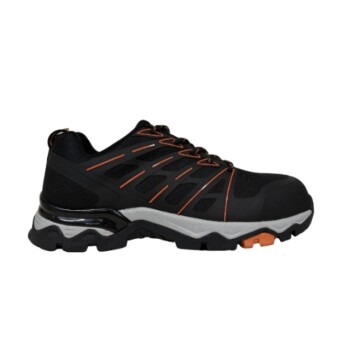
Dynamic foot measurements act as a critical blueprint for ergonomic design. Unlike static measurements, which capture the foot at rest, dynamic data identifies the maximum deformation the foot undergoes during movement. To accommodate this natural expansion, the toe box of functional footwear must include a specific "dynamic allowance" to prevent injury and ensure performance.
The core principle of dynamic design is the inclusion of an internal buffer of at least 3 mm within the toe box. This allowance accommodates the foot's elongation during gait, effectively preventing compression and reducing the risk of medical complications.
The Mechanics of Foot Deformation
Identifying Critical Gait Phases
The foot is not a static structure; its dimensions change significantly while walking. Research shows that both the length and circumference of the foot undergo maximum deformation during specific phases of the gait cycle.
The most critical moment occurs when the first toe makes contact with the ground. At this specific point, the foot reaches its maximum extension, requiring more space than it does when standing still.
The Necessity of Dynamic Allowance
To support this natural movement, designers cannot rely solely on the foot's resting size. They must factor in a dynamic allowance—extra internal space designed to absorb the foot's expansion.
Current guidelines indicate that this allowance must be at least 3 mm. This specific metric ensures that the toes do not strike the front of the shoe during the push-off phase of walking.
Implications for Health and Safety
Preventing Compression Injuries
If a shoe lacks this 3 mm dynamic allowance, the foot is forced to compress against the rigid materials of the toe box.
This leads to repetitive trauma with every step. Over time, this constant compression causes discomfort, fatigue, and potential structural damage to the toes.
Protecting Vulnerable Populations
The stakes are higher for specialized populations, such as diabetic patients.
For these users, friction and pressure can lead to severe foot ulcers. By integrating the dynamic allowance, the shoe design proactively reduces pressure points, significantly lowering the risk of ulceration and injury.
Understanding the Trade-offs
The Danger of Static Reliance
A common pitfall in footwear design is designing strictly around static measurements (standing or sitting).
A shoe designed without dynamic data may feel comfortable when trying it on in a shop. However, it will likely fail during active use, as it cannot accommodate the foot's shape change during a work shift or long walk.
Balancing Space and Stability
While the 3 mm allowance is a minimum requirement, there is a limit to how much space should be added.
Excessive internal volume can cause the foot to slide inside the shoe. This instability can lead to different types of friction injuries, meaning the allowance must be precise rather than simply "loose."
Making the Right Design Choices
Applying dynamic measurement principles ensures that footwear functions as a protective tool rather than a restrictive cage.
- If your primary focus is Safety Footwear: Mandate a minimum 3 mm clearance between the toes and the protective cap to prevent impact trauma during the push-off phase.
- If your primary focus is Medical/Therapeutic Footwear: Prioritize the dynamic allowance to maintain circulation and eliminate contact points that could cause diabetic ulcers.
By shifting from static dimensions to dynamic allowances, you create footwear that respects the biomechanics of the human foot.
Summary Table:
| Gait Phase / Design Factor | Requirement/Impact | Benefit |
|---|---|---|
| First Toe Ground Contact | Maximum foot extension | Crucial for sizing calculations |
| Dynamic Allowance | Minimum 3 mm internal buffer | Prevents toe compression & trauma |
| Static Measurements | Insufficient for movement | Avoids 'shop-fit' failure in use |
| Specialized Populations | High-pressure point reduction | Prevents ulcers in diabetic users |
| Space Balancing | Precise internal volume | Ensures stability without slippage |
Partner with 3515 for High-Performance Footwear Solutions
As a large-scale manufacturer serving global distributors and brand owners, 3515 leverages ergonomic biomechanics to deliver superior safety and functional footwear. Our production expertise ensures that every pair—from our flagship Safety Shoes and Tactical Boots to our Outdoor, Training, and Dress Shoes—integrates the critical dynamic allowance needed for maximum protection and comfort.
By choosing 3515, you gain a manufacturing partner capable of meeting diverse bulk requirements with precision engineering. Contact us today to discuss how our comprehensive production capabilities can elevate your brand's footwear portfolio.
References
- Li-Ying Zhang, Sun‐pui Ng. An exploratory study of dynamic foot shape measurements with 4D scanning system. DOI: 10.1038/s41598-023-35822-0
This article is also based on technical information from 3515 Knowledge Base .
Related Products
- Premium Suede Sport Safety Shoes for Wholesale & Bulk Orders
- Premium Lightweight Safety Shoes for Wholesale & Bulk Orders
- Wholesale Anti-Smash & Puncture-Proof Safety Shoes Custom Manufacturing for Brands
- Premium KPU Injection Athletic Style Safety Shoes
- Premium Safety Shoes with Rotating Buckle Safety Sneakers
People Also Ask
- What industries have specific OSHA footwear requirements? Ensure Compliance & Protect Your Workforce
- What are the primary functions of professional safety shoes? Maximize Safety in Water Supply Confined Spaces
- What role do specialized safety shoes play in preventing falls? Engineering Stability in Industrial Environments
- Why must safety training be synchronized with the provision of physical safety shoes? Achieve Optimal Workplace Protection
- Why wear protective masks, gloves, and safety shoes in 5S Shine? Elevate Safety and Discipline