The right work shoe is a critical tool for managing plantar fasciitis, not just a source of comfort. It actively helps alleviate pain by providing the correct structural support to reduce the immense stress placed on your plantar fascia ligament—the tissue connecting your heel to your toes—during a long workday.
The most effective work shoes for plantar fasciitis don't just cushion your foot; they fundamentally correct its mechanics. The key is a combination of firm arch support to prevent ligament strain and targeted shock absorption to protect the heel from impact.
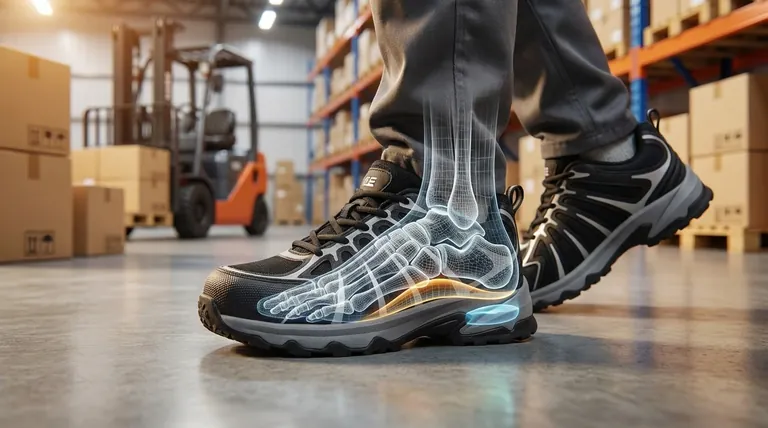
How Footwear Directly Impacts Plantar Fasciitis
To select the right shoe, you first need to understand the problem. The pain you feel is a direct result of stress and inflammation in a specific part of your foot.
The Role of the Plantar Fascia
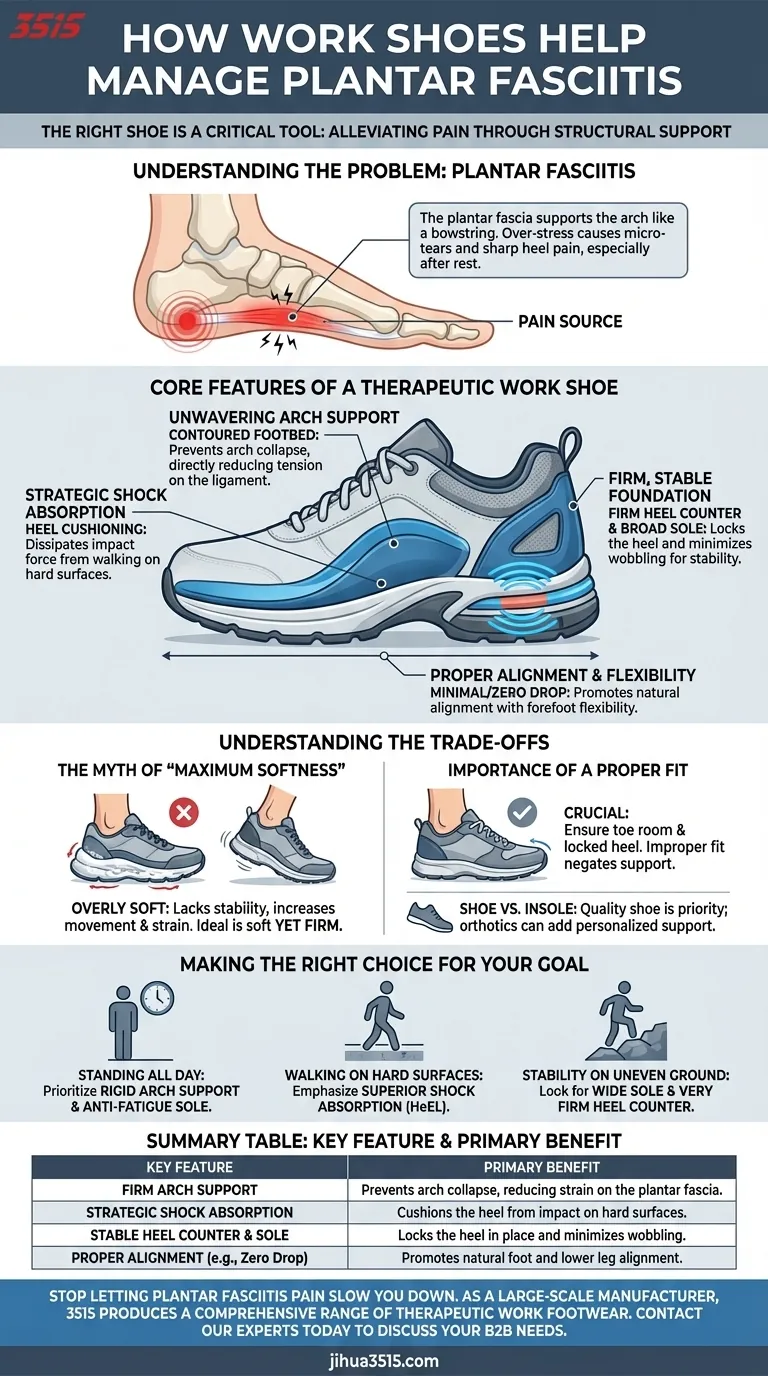
The plantar fascia is a thick band of tissue that runs across the bottom of your foot, acting like a bowstring to support the arch.
What Causes the Pain
When this ligament is over-stressed, it can develop small micro-tears. This leads to the characteristic sharp, stabbing pain in the heel, especially after periods of rest. Walking barefoot or in unsupportive shoes allows your arch to collapse, continuously straining this ligament.
The Core Features of a Therapeutic Work Shoe
The goal of a proper work shoe is to offload stress from the plantar fascia, giving it a chance to heal. This is accomplished through several specific design features working in unison.
Unwavering Arch Support
This is the most critical feature. A contoured, ergonomic footbed supports your foot's natural arch, preventing it from collapsing with each step. This directly reduces the tension on the plantar fascia ligament.
Strategic Shock Absorption
Constant impact from walking on hard surfaces aggravates the condition. Look for shoes with excellent cushioning, especially a padded or shock-absorbing insert in the heel, to dissipate the force of each footfall.
A Firm, Stable Foundation
The shoe must provide a stable base. This is achieved with a firm heel counter that locks your heel in place and a broad sole that prevents your foot from wobbling. This stability minimizes unnecessary movements that can strain the inflamed tissue.
Proper Alignment and Flexibility
A shoe with a minimal or zero heel-to-toe drop can help promote better natural alignment of your foot and lower leg. While the shoe needs to be stable, it should still offer some flexibility in the forefoot to allow for a natural walking motion.
Understanding the Trade-offs
Choosing the right shoe involves more than just picking the one with the most features. There are important nuances to consider for true effectiveness.
The Myth of "Maximum Softness"
While cushioning is important, an overly soft or mushy shoe can be detrimental. A shoe that is too soft will lack the necessary support and stability, potentially allowing your foot to move excessively and worsen the strain. The ideal cushioning is soft yet firm.
The Importance of a Proper Fit
Even the best-designed shoe will fail if it doesn't fit correctly. Ensure there is enough room in the toe box and that your heel is locked securely in place without slipping. An improper fit can negate all the shoe's supportive features.
Shoe vs. Insole
A high-quality supportive shoe is the first priority. However, for some individuals, adding an over-the-counter or custom orthotic insole can provide an even more personalized level of arch support. The shoe itself must still have a stable foundation to host the insole effectively.
Making the Right Choice for Your Goal
Your specific work environment and daily tasks should guide your final decision.
- If your primary focus is standing all day: Prioritize shoes with exceptional, rigid arch support and an anti-fatigue sole to prevent the arch from collapsing over long hours.
- If your primary focus is walking on hard surfaces: Emphasize superior shock absorption, especially in the heel, to cushion your foot against thousands of daily impacts.
- If your primary focus is stability on uneven ground: Look for a shoe with a wide, stable sole and a very firm heel counter to lock your foot in place and prevent unwanted movement.
Choosing your footwear based on these mechanical principles is a direct investment in your long-term foot health and daily comfort.
Summary Table:
| Key Feature | Primary Benefit |
|---|---|
| Firm Arch Support | Prevents arch collapse, reducing strain on the plantar fascia. |
| Strategic Shock Absorption | Cushions the heel from impact on hard surfaces. |
| Stable Heel Counter & Sole | Locks the heel in place and minimizes wobbling. |
| Proper Alignment (e.g., Zero Drop) | Promotes natural foot and lower leg alignment. |
Stop letting plantar fasciitis pain slow you down. As a large-scale manufacturer, 3515 produces a comprehensive range of therapeutic work footwear designed with the precise support and stability needed to manage this condition. Whether you are a distributor, brand owner, or bulk client, we can provide the right footwear solutions for your needs. Contact our experts today to discuss how our production capabilities can deliver comfort and support to your workforce.
Visual Guide
Related Products
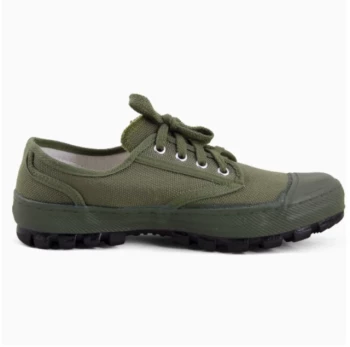
- Durable Canvas Work Shoes with Rubber Lug Sole | Wholesale Manufacturer
- Durable Leather Work Boots for Wholesale & Custom OEM Manufacturing
- Durable Leather Work Boots for Wholesale & Custom Manufacturing
- Durable Goodyear Welt Leather Work Boots for Wholesale & Private Label
- Durable Leather Moc Toe Work Boots for Wholesale & Custom Manufacturing
People Also Ask
- What are the properties of canvas as a shoe material? A Guide to Lightweight Comfort & Style
- Why is the selection of high-strength fabric materials necessary in the production of canvas shoes and training shoes?
- What types of jobs are canvas work boots suitable for? Ideal for Light-Duty, High-Mobility Roles
- Can canvas shoes be worn in rainy conditions? The Truth About Water Resistance
- What are the functional advantages of choosing rubber soles over leather soles for work boots? Superior Safety & Durability