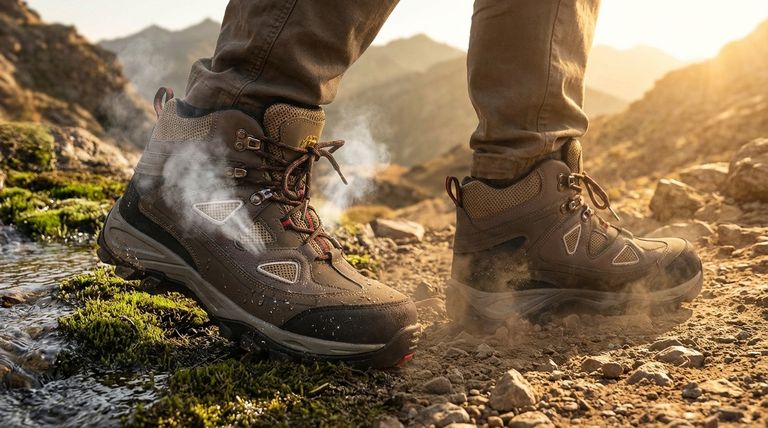
At its core, breathable tactical boots enhance comfort by regulating the temperature and managing moisture inside the boot. This system prevents your feet from overheating in warm conditions and wicks sweat away, keeping them dry and reducing the risk of blisters and discomfort during long periods of wear.
The critical insight is that breathability is not a single feature, but a foundational element of a boot's overall comfort system. True comfort is achieved when breathability works in concert with structural support, cushioning, and proper fit to reduce fatigue and maintain foot health across diverse environments.
The Science of Foot Comfort
A boot's internal climate, or "microclimate," is the primary driver of comfort or misery. Breathable materials are engineered to manage this environment effectively.
Temperature Regulation
Breathable fabrics allow hot air and water vapor (sweat) to escape. This ventilation is crucial for preventing overheating during strenuous activity or in warm climates.
By allowing air exchange, these materials help maintain a more stable and comfortable temperature inside the boot, regardless of external conditions.
Moisture Management
The primary function of breathability is to move moisture away from your skin. This process, known as wicking, is essential for preventing the buildup of sweat.
When feet remain dry, you drastically reduce the chance of friction-related blisters, maceration (skin breakdown from prolonged wetness), and fungal growth.
Beyond Breathability: The Complete Comfort System
While crucial, breathability is only one piece of the puzzle. It works alongside other design elements to create a truly comfortable and high-performance boot.
Shock Absorption and Cushioning
Tactical boots are designed for long hours on your feet, often on hard surfaces. They incorporate cushioned midsoles and removable insoles to absorb impact.
This feature is a key differentiator from more rigid combat boots, reducing the fatigue that comes from constant shock and vibration.
Structural Support and Stability
The boot's architecture provides stability and reduces muscle strain. Higher-cut boots offer superior ankle support for rugged, uneven terrain.
Conversely, shorter-cut styles provide more flexibility and are often lighter, making them better suited for urban environments or tasks requiring agility.
Ergonomic Design
Modern tactical boots borrow ergonomic principles from other high-performance footwear. Features like adequate toe room and proper arch support are critical.
This design ensures your foot can function naturally within the boot, providing a stable platform that reduces fatigue over many hours of standing or walking.
Understanding the Trade-offs
Choosing the perfect boot always involves balancing competing features. Understanding these trade-offs is key to making an informed decision.
Breathability vs. Waterproofing
The most common trade-off is between keeping water out and letting sweat escape. A completely waterproof material, like simple PVC, is not breathable.
Advanced materials like Gore-Tex membranes are engineered with pores large enough to let water vapor out but small enough to block liquid water from entering, offering a compromise between both needs.
Flexibility vs. Support
A highly supportive boot with a rigid sole and tall ankle shaft will inherently be less flexible. This is ideal for carrying heavy loads over rough ground but can feel cumbersome on flat surfaces.
A more flexible boot is more comfortable for walking on city streets or running, but offers less protection against ankle twists and impacts on trails.
Durability vs. Weight
Heavy-duty materials like thick leather offer maximum durability but can be heavy and require a break-in period.
Lighter, synthetic materials often provide better out-of-the-box comfort and breathability but may not withstand the same level of abrasion over time.
Making the Right Choice for Your Goal
Select your boot based on its intended environment and your primary mission.
- If your primary focus is performance in hot, dry climates: Prioritize boots with mesh panels and highly breathable, moisture-wicking linings.
- If your primary focus is operating in wet or variable conditions: Seek a boot with a proven waterproof-breathable membrane to keep you dry from both rain and sweat.
- If your primary focus is long shifts on concrete or hard ground: Emphasize superior cushioning in the midsole and a shock-absorbing insole to combat fatigue.
- If your primary focus is stability on rugged, uneven terrain: Choose a higher-cut boot with excellent ankle support and a rigid sole for protection and stability.
Ultimately, a comfortable boot is an extension of your body that enables you to perform at your best, for longer.
Summary Table:
| Feature | How It Enhances Comfort |
|---|---|
| Temperature Regulation | Vents heat to prevent overheating, maintaining a stable internal climate. |
| Moisture Management | Wicks sweat away to keep feet dry, reducing blisters and skin irritation. |
| Shock Absorption | Cushioned midsoles absorb impact, reducing fatigue on hard surfaces. |
| Structural Support | Provides ankle stability and reduces muscle strain on uneven terrain. |
| Ergonomic Design | Proper arch support and toe room allow for natural foot movement. |
Ready to equip your team with high-performance tactical boots?
As a large-scale manufacturer, 3515 produces a comprehensive range of footwear for distributors, brand owners, and bulk clients. Our production capabilities encompass all types of tactical boots, engineered for superior breathability, durability, and mission-critical comfort.
Let us help you find the perfect balance of features for your operational needs. Contact our experts today for a consultation and discover how we can enhance your product line.
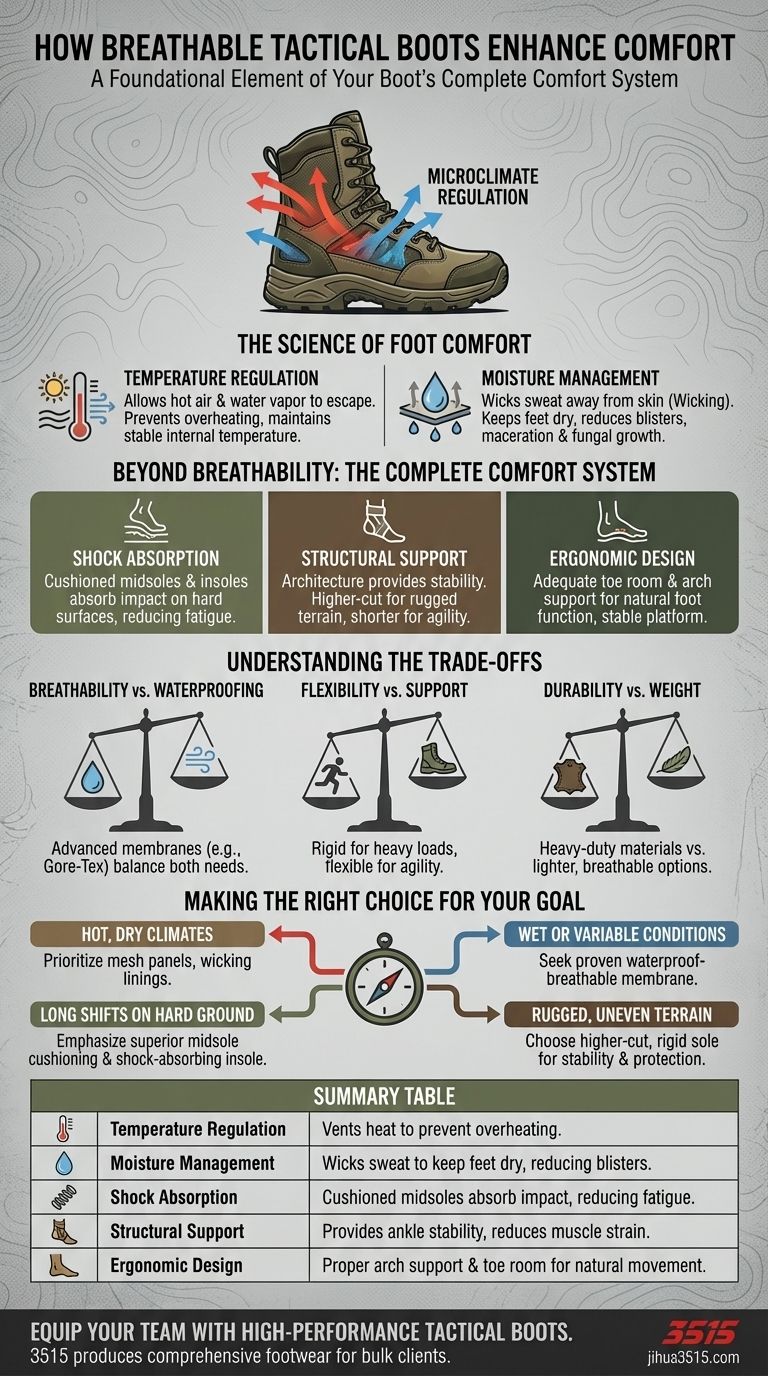
Visual Guide
Related Products
- Wholesale Breathable Training Shoes Custom Athletic Footwear Manufacturer
- Durable Leather Tactical Boots Wholesale & Custom Manufacturing for Brands
- Lightweight Breathable Training Shoes for Wholesale & Custom OEM Manufacturing
- Wholesale Waterproof Tactical Boots Custom Suede & High-Traction Soles
- Wholesale Durable & Breathable Training Shoes for Custom Brands
People Also Ask
- What is the primary role of specialized training or orthopedic shoes? Enhance Safety in Elderly Balance Training
- Why are professional-grade training shoes essential for physical therapy? Ensure Patient Safety and Gait Stability
- Why are the slip-resistance and stability performance of training shoes critical in gait analysis? Ensure Data Accuracy
- Why is specialized athletic footwear necessary for ankle rehab? Unlock Safety and Stability in Recovery
- Why is sole stiffness testing using a force gauge necessary? Build Superior Training Shoes with Precision