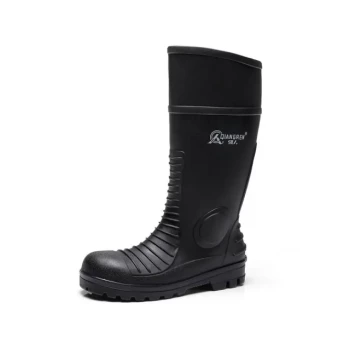
To put it simply, a breathable lining in a PVC work boot acts as an internal climate control system. Because the PVC shell is completely waterproof, it's also non-breathable. The lining's job is to manage the sweat and heat your foot produces, wicking moisture away from your skin to keep you dry, comfortable, and at a stable temperature throughout the workday.
The core function of a breathable lining is to solve the paradox of a waterproof boot: it keeps external water out while managing the internal moisture your own body creates, preventing the dampness that leads to discomfort and blisters.
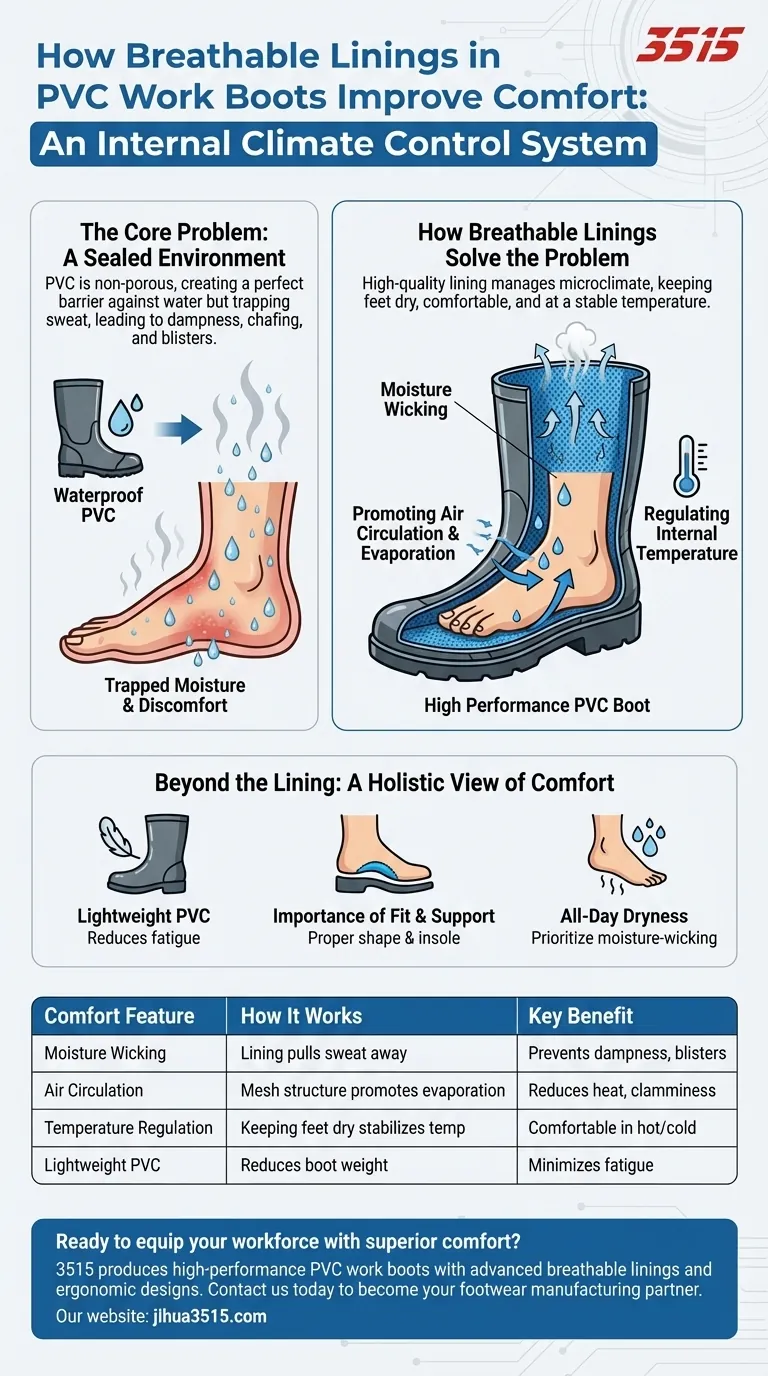
The Core Problem: A Sealed Environment
To appreciate the role of a lining, you must first understand the nature of PVC. It creates a perfect barrier against water, but this barrier works both ways.
Why Unlined Boots Cause Discomfort
Polyvinyl chloride (PVC) is inherently non-porous. This quality makes it an excellent waterproof material, but it also means it traps all air and moisture. Without a functional lining, any sweat your feet produce has nowhere to go.
The Consequence of Trapped Moisture
This trapped sweat quickly creates a damp, uncomfortable environment inside the boot. This moisture can lead to skin chafing, blisters, and an unstable foot temperature—feeling swampy and hot in warm conditions, or cold and clammy in cooler weather.
How Breathable Linings Solve the Problem
A high-quality lining transforms the boot from a simple waterproof shell into a piece of high-performance gear. It actively manages the microclimate around your foot.
The Principle of Moisture Wicking
The primary function is moisture wicking. Materials like mesh are designed to pull perspiration away from your skin and move it to the surface of the lining. This keeps your foot itself feeling dry even if you are sweating.
Promoting Air Circulation and Evaporation
The structure of a good lining, especially mesh, creates tiny air pockets. This allows for a minimal amount of air circulation inside the boot, which helps the wicked moisture evaporate over time, preventing the lining from becoming saturated.
Regulating Internal Temperature
By keeping your feet dry, the lining provides crucial temperature regulation. A dry foot is better able to maintain its natural temperature, preventing the overheating common in warm weather and the rapid heat loss that occurs when socks become damp in the cold.
Beyond the Lining: A Holistic View of Comfort
While the lining is critical for managing moisture, it is one part of a larger system that determines a boot's overall comfort.
The Role of Material and Weight
The PVC material itself contributes to comfort. It is often softer and more flexible than other boot materials, which can reduce foot pain. Furthermore, the lightweight nature of PVC reduces strain on your feet and legs, minimizing fatigue over a long shift and helping to prevent musculoskeletal disorders.
The Importance of Fit and Support
The underlying shape of the boot, determined by the last it was built on, is fundamental to a good fit. This, combined with high-quality insoles for cushioning and proper sizing, ensures your foot is supported, reducing fatigue and preventing long-term health issues.
Making the Right Choice for Your Workday
Understanding these components allows you to select a boot based on your specific needs and work environment.
- If your primary focus is all-day dryness: Prioritize a boot with a high-performance, moisture-wicking mesh lining to actively manage sweat.
- If your primary focus is reducing fatigue: Seek out lightweight PVC construction combined with well-designed, supportive insoles.
- If your primary focus is overall foot health: Consider all factors together—a quality lining, proper fit, and good support—to create a comfortable system for your feet.
Ultimately, choosing the right boot means looking beyond the waterproof shell and understanding the technology working inside.
Summary Table:
| Comfort Feature | How It Works | Key Benefit |
|---|---|---|
| Moisture Wicking | Lining pulls sweat away from skin. | Prevents dampness and blisters. |
| Air Circulation | Mesh structure promotes evaporation. | Reduces heat and clamminess. |
| Temperature Regulation | Keeping feet dry stabilizes temperature. | Comfortable in both hot and cold conditions. |
| Lightweight PVC | Reduces overall boot weight. | Minimizes leg and foot fatigue. |
Ready to equip your workforce with superior comfort?
As a large-scale manufacturer, 3515 produces a comprehensive range of high-performance PVC work boots for distributors, brand owners, and bulk clients. Our boots feature advanced breathable linings and ergonomic designs to ensure all-day comfort, reduce fatigue, and enhance productivity for your teams.
Contact us today to discuss your requirements and discover how we can be your trusted footwear manufacturing partner.
Visual Guide
Related Products
- Wholesale Customizable Safety Boots Durable & Protective Footwear Manufacturing
- Wholesale Heavy-Duty Waterproof Steel Toe Work Boots OEM Manufacturer
- Durable Leather Work Boots for Wholesale & Custom OEM Manufacturing
- Durable Leather Moc Toe Work Boots for Wholesale & Custom Manufacturing
- Durable Leather Work Boots for Wholesale & Custom Manufacturing
People Also Ask
- Why are industrial safety boots with steel toes necessary for machine operators? Essential Foot Protection for Safety
- What is the history of steel toe work boots? From German Invention to Modern Safety Standard
- What are the different types of steel toe work boots? Choose the Right Boot for Your Job
- What are the pros and cons of steel toe work boots? A Guide to Maximum Protection vs. Comfort
- What common features do safety toe work boots share regardless of style? Essential Protection Explained