
The transition of the Wellington boot to civilian use was driven by two pivotal developments: the invention of a vulcanized rubber version in 1856 and its mass deployment to soldiers during World War I. This exposure during the war demonstrated its unparalleled utility as a waterproof, durable boot, seeding its widespread adoption for practical work like farming and gardening in post-war society.
The Wellington's journey from an aristocratic fashion accessory to a ubiquitous practical tool is a clear lesson in how technological innovation (rubber) and a large-scale societal catalyst (WWI) can fundamentally redefine an object's purpose and place in the world.
The Origins: An Aristocratic Fashion Statement
The Duke's Original Design
The Wellington boot was originally a modified leather riding boot designed for Arthur Wellesley, the first Duke of Wellington, in the early 19th century. It was created as a more comfortable and practical alternative to the standard Hessian boot of the era.
A Symbol of Status
As the Duke's fame grew, particularly after his victory at Waterloo, his boots became a fashionable item among the British aristocracy. They were seen as a symbol of status and were even featured in political cartoons of the day, remaining popular until the Duke's death in 1852.
The Technological Pivot: The Advent of Rubber
The 1856 Innovation
The most critical evolution occurred in 1856 with the introduction of the vulcanized rubber Wellington. This new material transformed the boot from a leather fashion item into a truly waterproof and far more durable piece of footwear.
A Shift From Fashion to Function
Rubber made the boots more affordable and accessible to a wider audience. The focus began to shift away from high-society style and toward pure, practical function, setting the stage for its future role.
The Catalyst for Mass Adoption: World War I
The Problem of Trench Foot
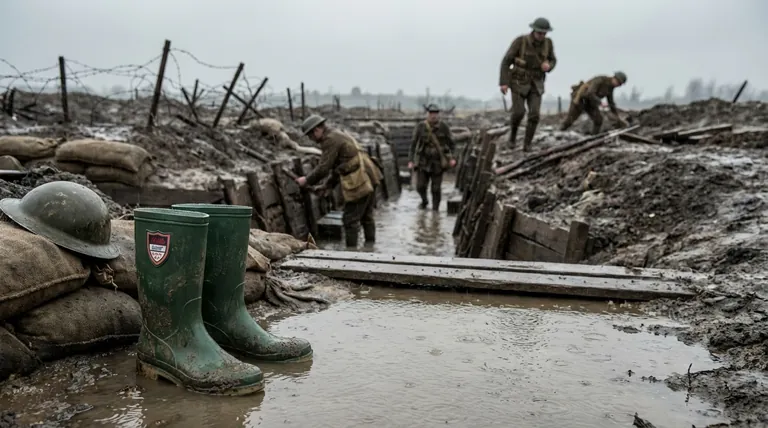
The static, waterlogged conditions of trench warfare during World War I led to a widespread and debilitating condition known as trench foot. Soldiers' feet would suffer severe damage from prolonged exposure to cold, damp, and unsanitary environments.
The Wellington as a Solution
To combat this, the British army commissioned the mass production of rubber Wellington boots. Millions of pairs were issued to soldiers to keep their feet dry in the trenches, making the boot an essential piece of military equipment.
Seeding a Post-War Market
This mass deployment meant millions of soldiers returned to civilian life intimately familiar with the Wellington's practical benefits. They had firsthand experience of its durability and waterproof nature, creating a pre-existing market for the boot after the war.
Understanding the Shift in Perception
The Decline of Traditional Boots
The rise of the automobile in the early 20th century made traditional leather riding boots increasingly obsolete for the general population. As horses were no longer the primary mode of transport, the need for specialized riding footwear diminished significantly.
Filling a Practical Void
The Wellington boot perfectly filled the new void for tough, all-weather footwear. Its post-war popularity surged among civilians, especially in agriculture and gardening, where its waterproof qualities were invaluable.
From Officer Class to Everyman
The boot's association changed completely. It was no longer the exclusive domain of senior military officers and aristocrats but became a democratic symbol of outdoor work and rural life, valued for its utility above all else.
Key Drivers of the Wellington's Transition
The history of the Wellington boot provides clear insights into how products evolve.
- If your primary focus is technological impact: The invention of the vulcanized rubber version was the single most important factor, transforming the boot into a waterproof utility tool.
- If your primary focus is social catalysts: World War I was the critical event that introduced the boot's practical benefits to millions of people on an unprecedented scale.
- If your primary focus is market shifts: The boot's civilian success was secured by filling the void left by obsolete riding boots as society transitioned from horses to automobiles.
Ultimately, the Wellington boot's history shows how a combination of technological innovation and societal necessity can completely redefine an object's purpose.
Summary Table:
| Key Driver | Impact on Transition |
|---|---|
| Vulcanized Rubber (1856) | Transformed boots into affordable, waterproof, and durable utility footwear. |
| World War I Deployment | Mass exposure to soldiers demonstrated practical benefits, creating post-war demand. |
| Decline of Riding Boots | Filled the void for all-weather footwear as society moved from horses to cars. |
Need reliable, durable footwear for your business?
As a large-scale manufacturer, 3515 produces a comprehensive range of waterproof boots and shoes for distributors, brand owners, and bulk clients. Our production capabilities encompass all types of durable footwear, perfect for agriculture, outdoor work, and more.
Contact us today to discuss your manufacturing needs and discover how we can provide high-quality, functional footwear for your market.
Visual Guide

Related Products
- Durable Waterproof Rain Boots | Custom Manufacturer for Wholesale & Brands
- Durable Goodyear Welt Leather Work Boots for Wholesale & Private Label
- Wholesale Durable Leather Work Boots | 8-Inch Goodyear Welt Manufacturer
- High-Traction Suede Tactical Boots Wholesale & Custom Manufacturing
- Premium Wholesale Tactical Style Safety Shoes Boots with Quick Lacing
People Also Ask
- What are the main materials for waterproof rain boots? Choose the Right Material for Durability & Comfort
- What is the overall recommendation for choosing rain boot materials? A Guide to Rubber vs. PVC
- How does boot height affect waterproofing? Choose the Right Height for Ultimate Protection
- Why are rain boots more flexible and comfortable than snow boots? The Key Differences Explained
- What are the best types of shoes for different gardening conditions? Find Your Perfect Match.



















