
The short answer is yes, but not in your household recycling bin. Recycling Wellington boots correctly depends entirely on the manufacturer and the material they are made from. Your first step should always be to check the brand's website for a specific take-back or recycling program.
The most effective ways to deal with old Wellington boots are through brand-specific recycling schemes or by extending their life through donation and proper care. Direct recycling through municipal services is rarely an option due to the complex materials involved.
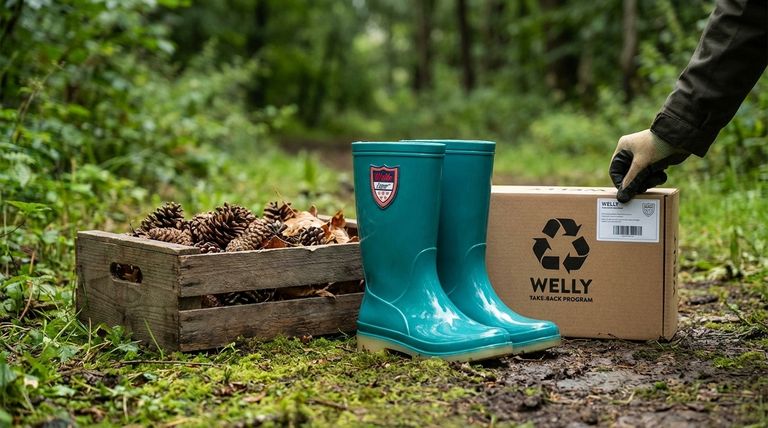
Why Wellies Are Difficult to Recycle
Most consumers assume all rubber or plastic items can be recycled, but footwear presents unique challenges that prevent it from being included in standard collection programs.
The Material Problem
Wellington boots can be made from natural rubber, recycled rubber, or synthetics like PVC. Each material requires a completely different recycling process, and many boots are composites, making them difficult for standard facilities to sort and process.
The Challenge for Local Recycling Centers
Curbside recycling programs are designed for common packaging materials like bottles, cans, and paper. They are not equipped to handle complex items like footwear, especially PVC, which can contaminate other plastic streams if not processed correctly.
Your Best Disposal Options, Step-by-Step
Before you consider throwing them away, follow this hierarchy of options for the most responsible approach.
Option 1: Brand Take-Back Programs
This is your best and most direct route to true recycling. Many environmentally-conscious brands offer schemes where you can mail back your old boots for free. They will then ensure the materials are properly broken down and reused.
Option 2: Donation and Resale
If your boots are still waterproof and in good, wearable condition, the most sustainable choice is to give them a second life. Donating to charity shops, selling them online, or passing them on to someone who can use them keeps them out of the landfill entirely.
Option 3: Local Waste Facility Inquiry
As a last resort for boots made of PVC, you can contact your local recycling center. Be specific and ask if they accept PVC footwear. In most cases, the answer will be no, but it is worth checking before consigning them to general waste.
Extending Boot Life: The Best Form of Recycling
The most environmentally friendly boot is one you don't have to replace for a long time. Proper maintenance is the key to preventing the need for disposal in the first place.
Proper Cleaning and Care
After use, clean your boots with mild soap and water. Avoid harsh chemicals or solvents that can degrade the material. Critically, keep them away from direct sunlight or extreme heat sources, which can cause the rubber or PVC to crack.
Conditioning and Storage
To keep rubber supple, occasionally apply a rubber conditioner. In a pinch, a mix of olive oil and warm water can also be used to restore some shine. Always store your boots upright in a cool, dry place to prevent creasing and material breakdown.
Understanding the Trade-offs
Making a responsible choice means understanding the full context and avoiding common pitfalls.
The Myth of "Easy" Recycling
Even when a brand offers a take-back scheme, the process of breaking down and recycling footwear is energy-intensive. The term "recyclable" does not mean the process is without an environmental footprint.
The Downside of Improper Donation
Donating boots that are no longer waterproof or are in very poor condition can create a disposal problem for charities. Be honest about the condition of the boots to ensure they are a help, not a burden.
Making the Right Choice for Your Boots
Your course of action depends entirely on the condition of your boots and the policies of the manufacturer.
- If your boots are from a brand with a take-back scheme: Prioritize using their free recycling service, as this is the only guaranteed route for proper material recovery.
- If your boots are still in good, wearable condition: Extend their useful life by donating them to a local charity, community garden, or selling them online.
- If your boots are worn out and have no take-back option: Focus on responsible purchasing and proper care for your next pair to significantly extend their lifespan.
Ultimately, conscious purchasing and diligent care are the most powerful tools for reducing your environmental impact.
Summary Table:
| Boot Condition | Recommended Action | Key Considerations |
|---|---|---|
| Good, wearable | Donate or resell | Extends product life, most sustainable option |
| Worn out, from eco-brand | Use brand take-back program | Ensures proper material recovery |
| Worn out, PVC material | Check local waste facility | Most centers don't accept PVC footwear |
| Any condition | Proper cleaning and storage | Prevents premature disposal need |
As a large-scale manufacturer, 3515 produces a comprehensive range of footwear for distributors, brand owners, and bulk clients. Our production capabilities encompass all types of shoes and boots, including durable Wellington boots designed for longevity and easier end-of-life recycling. We partner with clients to develop sustainable footwear solutions with responsible disposal options.
Let us help you create footwear that's built to last and easier to recycle – Contact our team today to discuss your manufacturing needs and sustainable product development.
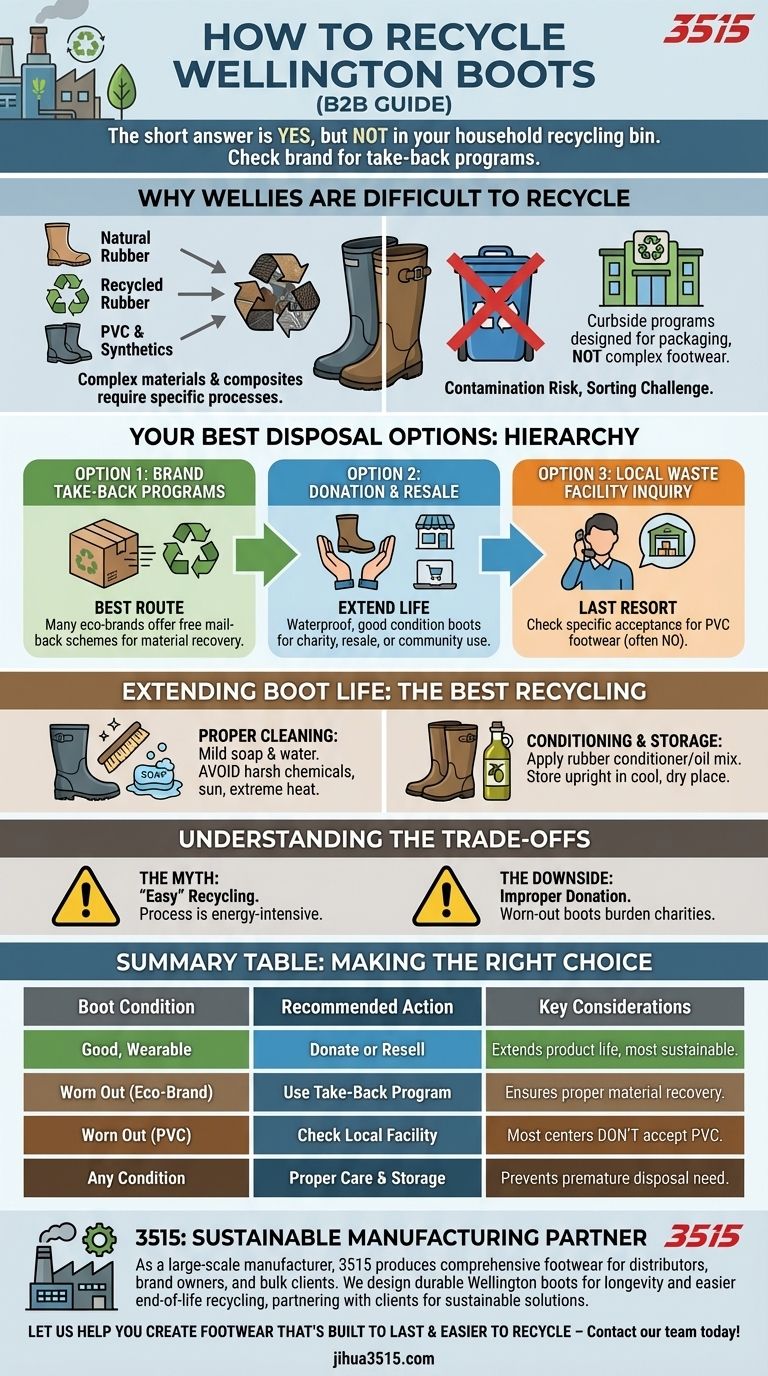
Visual Guide
Related Products
- Durable Waterproof Rain Boots | Custom Manufacturer for Wholesale & Brands
- Durable Goodyear Welt Leather Work Boots for Wholesale & Private Label
- Wholesale Durable Leather Work Boots | 8-Inch Goodyear Welt Manufacturer
- High-Traction Suede Tactical Boots Wholesale & Custom Manufacturing
- Premium Wholesale Tactical Style Safety Shoes Boots with Quick Lacing
People Also Ask
- What are the main materials for waterproof rain boots? Choose the Right Material for Durability & Comfort
- What is the overall recommendation for choosing rain boot materials? A Guide to Rubber vs. PVC
- How does boot height affect waterproofing? Choose the Right Height for Ultimate Protection
- Why are rain boots more flexible and comfortable than snow boots? The Key Differences Explained
- What are the best types of shoes for different gardening conditions? Find Your Perfect Match.



















