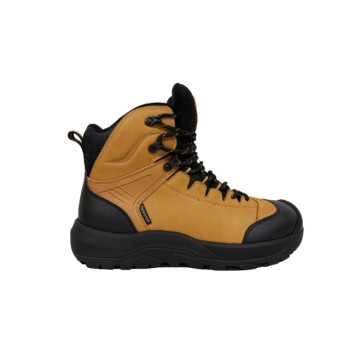
Yes, wellington boots can be highly effective in snowy weather, but their usefulness depends on their specific design and the conditions. Their primary advantage is their seamless, waterproof construction, which is perfect for keeping feet dry from wet, melting snow and slush during outdoor play.
While wellies are unmatched for keeping feet dry in slushy snow, their ability to provide sufficient warmth and safe traction is not guaranteed. True winter performance depends entirely on three factors: insulation, sole grip, and the right choice of socks.
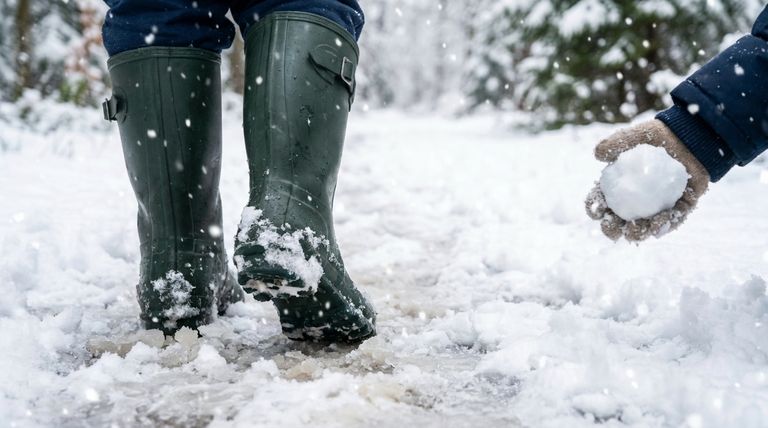
The Primary Benefit: Unmatched Waterproofing
The core strength of a wellington boot is its ability to create an impermeable barrier against moisture. This is especially valuable in snow, which is often wet and slushy.
Preventing Wet Feet from Melting Snow
Unlike stitched boots that can have points of failure, the single-piece rubber or PVC construction of a welly ensures that melting snow and slush cannot seep in. This makes them ideal for keeping feet completely dry.
Perfect for Active Snow Play
For activities like building a snowman, sledging, or having a snowball fight, wellies are an excellent choice. These are typically shorter-duration, active pursuits where staying dry is the main priority.
Evaluating Wellies for Winter Performance
To determine if a pair of wellies is truly suitable for snow, you must assess them on more than just their waterproof nature. Three factors are critical for comfort and safety in cold, slippery conditions.
Factor 1: Insulation
A standard, unlined welly offers very little protection from the cold. The rubber itself gets cold and will quickly transfer that chill to the foot.
Insulated wellies, often featuring fleece or neoprene linings, provide a crucial thermal barrier. This feature transforms them from a simple rain boot into a viable winter option.
Factor 2: Traction
Many basic wellies have shallow, simple tread patterns designed for mud, not ice. These can be dangerously slippery on packed snow or icy surfaces.
Look for wellies with deep, aggressive lugs on the outsole. A sole designed for winter conditions will provide much better grip and stability, significantly reducing the risk of a fall.
Factor 3: The Right Socks
Never underestimate the power of socks. Wearing wellies in the snow without proper thermal socks is a recipe for cold feet.
Choose thick socks made from wool or synthetic thermal materials. These not only provide insulation but also wick moisture away from the skin, which is key to staying warm.
Understanding the Trade-offs and Limitations
While useful, wellies are not a universal solution for all winter weather. It's crucial to understand their inherent limitations to avoid discomfort or unsafe situations.
Poor Breathability
The same waterproof quality that keeps snow out also traps sweat in. During intense activity, this can lead to damp feet, which then get cold very quickly once you stop moving.
Ineffective in Extreme Cold
For prolonged exposure to freezing temperatures, especially during periods of inactivity, most wellies cannot compete with dedicated snow boots. Their insulation is simply not sufficient for extreme or sustained cold.
The Risk on Icy Surfaces
As mentioned, a standard welly sole offers minimal grip on ice. In urban environments where snow melts and refreezes into ice on pavements, they can be a significant slipping hazard.
How to Apply This to Your Goal
Your choice of footwear should always match the specific activity and conditions you anticipate.
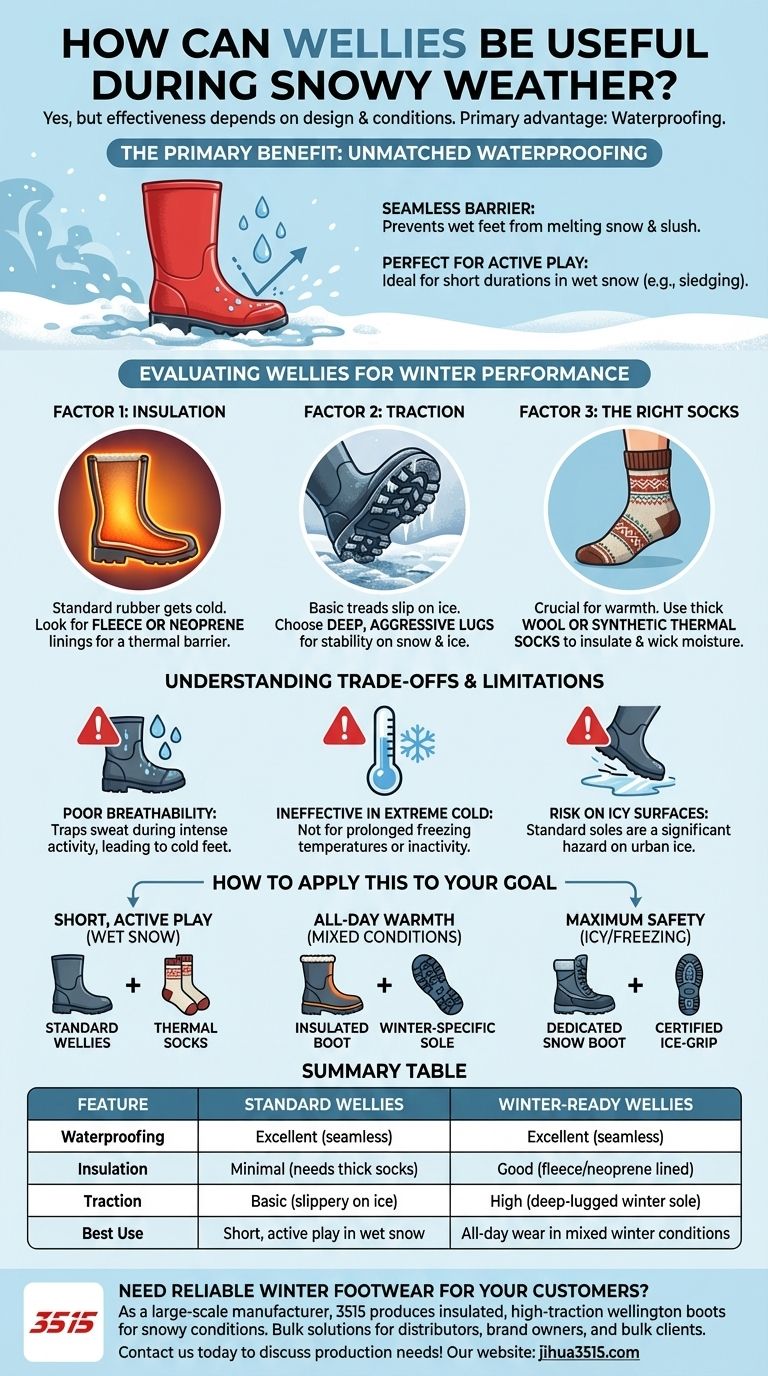
- If your primary focus is short, active play in wet snow: A standard pair of wellies combined with thick, thermal socks is a perfectly suitable and effective choice.
- If your primary focus is all-day warmth and walking in mixed conditions: You must choose an insulated welly that features a high-traction, winter-specific sole.
- If your primary focus is maximum safety on icy ground or warmth in freezing temperatures: A dedicated, insulated snow boot with a certified ice-grip sole is the superior option.
Ultimately, choosing the right boot is about matching its specific features to the demands of your winter environment.
Summary Table:
| Feature | Standard Wellies | Winter-Ready Wellies |
|---|---|---|
| Waterproofing | Excellent (seamless rubber/PVC) | Excellent (seamless rubber/PVC) |
| Insulation | Minimal (requires thick socks) | Good (fleece/neoprene lined) |
| Traction | Basic (slippery on ice) | High (deep-lugged winter sole) |
| Best Use | Short, active play in wet snow | All-day wear in mixed winter conditions |
Need reliable winter footwear for your customers?
As a large-scale manufacturer, 3515 produces a comprehensive range of insulated and high-traction wellington boots perfect for snowy conditions. We offer bulk solutions for distributors, brand owners, and bulk clients, ensuring durability and performance. Let us help you equip your market with the right winter gear.
Contact us today to discuss your production needs!
Visual Guide
Related Products
- Durable Waterproof Rain Boots | Custom Manufacturer for Wholesale & Brands
- Premium Insulated Safety Boots and Shoes for Wholesale & Bulk Orders
- Durable Goodyear Welt Leather Work Boots for Wholesale & Private Label
- Factory Direct Wholesale Rain Boots Durable Waterproof & Fully Customizable
People Also Ask
- What are the main materials for waterproof rain boots? Choose the Right Material for Durability & Comfort
- What is the overall recommendation for choosing rain boot materials? A Guide to Rubber vs. PVC
- How does boot height affect waterproofing? Choose the Right Height for Ultimate Protection
- Why are rain boots more flexible and comfortable than snow boots? The Key Differences Explained
- What are the best types of shoes for different gardening conditions? Find Your Perfect Match.