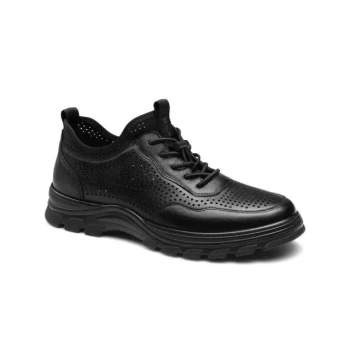
Consumer perception acts as a direct blueprint for engineering decisions. When quantitative research indicates that consumers perceive high value in repairing a product rather than replacing it, manufacturers must adapt the physical structure of footwear to meet this expectation. This influence manifests primarily through the integration of modular components, such as replaceable sole technologies, and the adoption of assembly methods that prioritize maintenance over permanent bonding.
The "perceived repair benefits" dimension serves as a critical signal for R&D teams, indicating a market preference for longevity. By aligning structural design with this metric, manufacturers can successfully extend product life cycles and meet the demand for high-quality, durable goods like work boots and formal shoes.
Translating Feedback into Engineering
The Role of Quantitative Data
The "perceived repair benefits" dimension is not a vague sentiment; it is a measurable data point.
It quantifies the degree to which a customer believes fixing a shoe is superior to buying a new pair.
This data allows engineering teams to justify the investment in more complex, durable manufacturing processes.
Iterative Design Evolution
Insights from this dimension drive iterative product design.
Instead of a static design process, manufacturers use this feedback to refine the shoe's architecture continuously.
The goal shifts from creating a product that is easy to dispose of, to one that is engineered for a second or third life.
Specific Structural Adaptations
Implementing Replaceable Sole Technologies
The most direct structural change influenced by this research is the adoption of replaceable sole technologies.
Since soles often degrade faster than uppers, designing them as independent, removable components is essential for repairability.
This prevents the need to discard a structurally sound shoe simply because the traction layer has worn down.
Maintenance-Friendly Construction Methods
Designers must select construction methods that facilitate easier maintenance.
This often means avoiding permanent adhesives in favor of stitching or mechanical fasteners that allow a cobbler to disassemble the shoe without destroying it.
This approach is particularly prevalent in categories where longevity is paramount, such as work boots and formal footwear.
Understanding the Trade-offs
Durability vs. Manufacturing Complexity
Shifting to repairable designs often requires more complex manufacturing techniques.
While a disposable shoe might be molded in a single step, a repairable shoe requires precise assembly of distinct parts.
This can increase initial production time and costs, even though it reduces long-term waste.
Category Relevance
High perceived repair benefits are not universal across all footwear types.
The reference specifically highlights work boots and formal shoes as key categories for this approach.
Applying complex repairable structures to low-cost or fast-fashion footwear may not align with consumer cost expectations or resource efficiency goals.
Making the Right Choice for Your Product
To effectively leverage the "perceived repair benefits" dimension, you must align your design strategy with your target market's values.
- If your primary focus is Sustainability: Prioritize construction methods that extend the product life cycle to directly address resource pressures.
- If your primary focus is Product Quality: Focus on robust categories like work boots, where repairability is viewed as a hallmark of premium construction.
- If your primary focus is Innovation: Invest in proprietary replaceable sole technologies that differentiate your brand from disposable alternatives.
By treating repairability as a core design constraint rather than an afterthought, you turn consumer expectations into a tangible competitive advantage.
Summary Table:
| Structural Feature | Impact of Perceived Repair Benefits | Primary Benefit |
|---|---|---|
| Sole Technology | Integration of replaceable/removable sole units | Extends life cycle beyond outsole wear |
| Assembly Method | Shift from permanent bonding to stitching/fasteners | Allows non-destructive disassembly |
| Component Design | Modular architecture for independent parts | Simplifies targeted maintenance |
| Material Choice | Use of high-durability, long-lasting materials | Justifies the cost of complex assembly |
Partner with 3515 for Durable, Repair-Ready Footwear Solutions
As a large-scale manufacturer serving global distributors and brand owners, 3515 leverages consumer research to deliver superior engineering. We offer comprehensive production capabilities for all footwear types, anchored by our flagship Safety Shoes series. Our portfolio covers everything from heavy-duty Work and Tactical Boots to Outdoor and Training Shoes, as well as high-end Dress & Formal footwear designed for longevity.
Ready to elevate your product line with repairable, high-quality designs? Contact us today to discuss your bulk requirements and benefit from our expert manufacturing and R&D capabilities.
References
- Теофана Димитрова, V. Stanev. I Consume, Therefore I Am? Hyperconsumption Behavior: Scale Development and Validation. DOI: 10.3390/socsci11110532
This article is also based on technical information from 3515 Knowledge Base .
Related Products
- Lightweight Breathable Training Shoes for Wholesale & Custom OEM Manufacturing
- Wholesale Durable Camouflage Canvas Shoes with High-Traction Cleated Rubber Sole
- Wholesale Breathable Training Shoes Custom Athletic Footwear Manufacturer
- Durable Leather High-Ankle Tactical Boots for Wholesale & Custom Manufacturing
- Wholesale Durable Safety Boots Manufacturer Customizable Steel Toe Work Boots
People Also Ask
- Why are lightweight training shoes often preferred over professional hiking boots in urban walking? Maximize City Comfort
- What is the primary role of specialized training or orthopedic shoes? Enhance Safety in Elderly Balance Training
- Why are professional-grade training shoes essential for physical therapy? Ensure Patient Safety and Gait Stability
- Why are the slip-resistance and stability performance of training shoes critical in gait analysis? Ensure Data Accuracy
- Why is the use of flat-soled or professional training shoes essential for WBV? Maximize Vibration Energy Transfer