
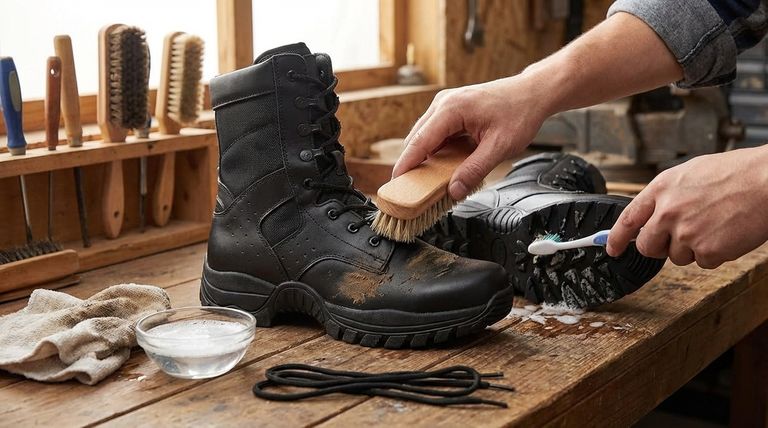
To remove stubborn stains from military boots, use a soft-bristled brush with a solution of mild soap or detergent mixed with warm water. For concentrated spots and small crevices, an old toothbrush is an effective tool to gently scrub away the grime without damaging the boot's material.
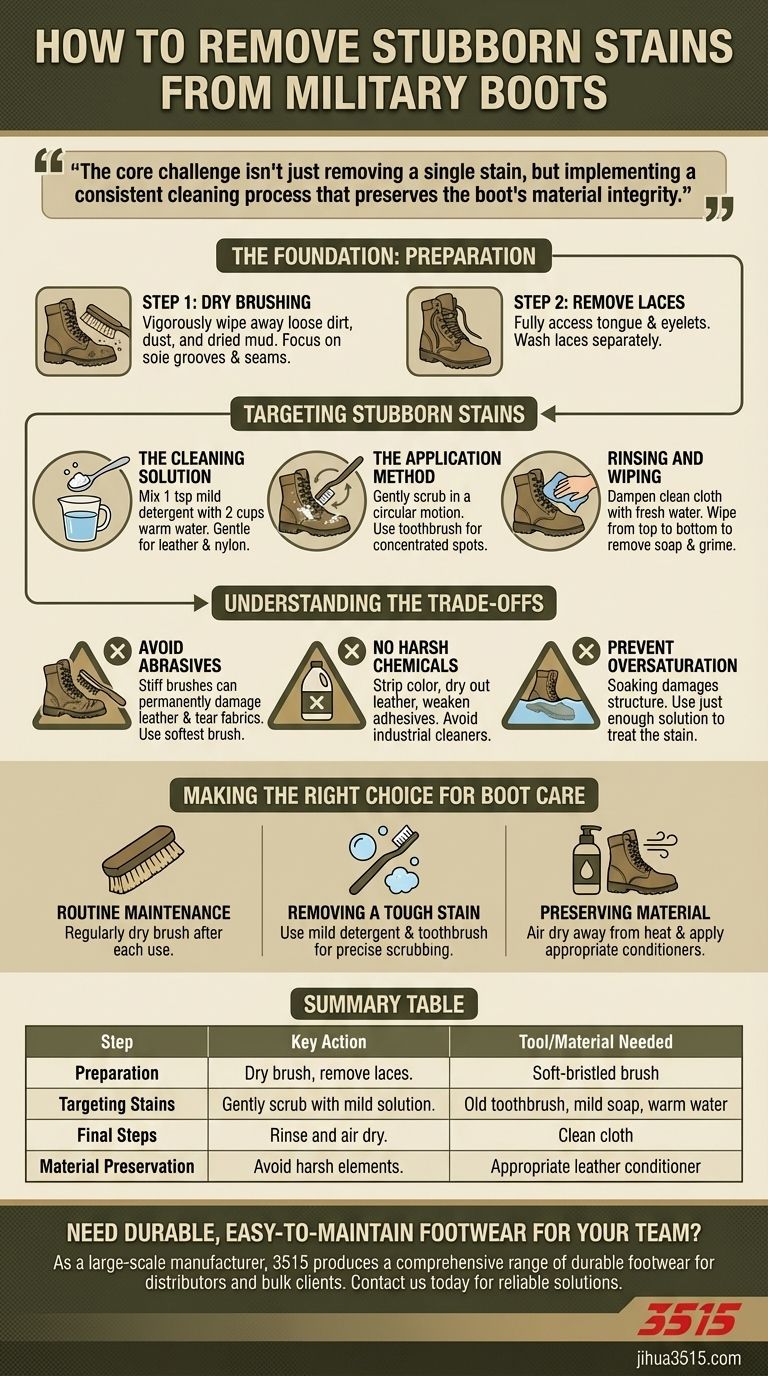
The core challenge isn't just removing a single stain, but implementing a consistent cleaning process that preserves the boot's material integrity while tackling accumulated dirt, salt, and grime. The right tools and a gentle approach are paramount.
The Foundation: Preparing Your Boots for Cleaning
Before you can address a stubborn stain, you must first remove all the loose surface-level dirt and debris. Skipping this step means you'll just be rubbing grit into the boot's material, potentially causing scratches or driving the stain deeper.
Step 1: Dry Brushing
First, use a soft-bristled brush to vigorously wipe away all loose dirt, dust, and dried mud.
Pay special attention to the grooves in the sole and the seams where the upper connects to the sole, as this is where dirt most often collects.
Step 2: Removing Laces
If your boots have laces, remove them completely. This allows you to fully access the tongue and eyelets, which are common areas for dirt to become trapped. Laces can be washed separately in a machine or by hand.
Targeting Stubborn Stains
With the surface dirt gone, you can now focus your efforts on the specific stain. The goal is to lift the stain out of the material, not to scrub it into submission.
The Cleaning Solution
Create a simple but effective cleaning agent by mixing one teaspoon of mild detergent (like dish soap) with approximately two cups of warm water.
This solution is strong enough to break down oils and dissolve salt stains but gentle enough for most boot materials, including leather and nylon fabrics.
The Application Method
Dip your soft-bristled brush or an old toothbrush into the cleaning solution.
Gently scrub the stained area in a circular motion. This helps lift the particles from the fibers of the material.
For tougher, concentrated spots, the smaller, stiffer bristles of a toothbrush provide more focused cleaning power.
Rinsing and Wiping
After scrubbing, dampen a clean cloth with fresh water and wipe away the soap solution and loosened grime.
Wipe the boot from top to bottom to prevent dirty water from streaking down onto already cleaned areas. Repeat this step until all soap residue is gone.
Understanding the Trade-offs
A common mistake is using excessive force or harsh chemicals, which can cause irreparable damage. Understanding the balance between effective cleaning and material preservation is critical.
The Risk of Abrasives
Using a stiff-wire brush or abrasive cleaners can permanently scratch leather and tear the fibers in nylon or canvas components. Always start with the softest brush possible.
The Danger of Harsh Chemicals
Avoid industrial cleaners, bleach, or solvents not specifically designed for footwear. These can strip color, dry out and crack leather, and weaken the adhesives used to construct the boot.
The Problem with Oversaturation
Soaking the boots completely in water can damage leather and compromise the integrity of the boot's structure. Use just enough of the cleaning solution to treat the stain, and then wipe it clean.
Making the Right Choice for Boot Care
Your approach should be guided by the goal of long-term durability, not just short-term cleanliness.
- If your primary focus is routine maintenance: Regularly dry brush your boots after each use to prevent dirt from becoming a stubborn stain in the first place.
- If your primary focus is removing a specific tough stain: Use the targeted mild detergent solution and a toothbrush for precise application and gentle scrubbing.
- If your primary focus is preserving the boot's material: Always air dry your boots away from direct heat and apply appropriate conditioners (for leather) after cleaning.
Ultimately, consistent, gentle care is the most effective strategy for keeping your boots in prime condition.
Summary Table:
| Step | Key Action | Tool/Material Needed |
|---|---|---|
| Preparation | Dry brush to remove loose dirt; remove laces. | Soft-bristled brush. |
| Targeting Stains | Gently scrub stained area with mild detergent solution. | Old toothbrush, mild soap, warm water. |
| Final Steps | Rinse with clean water and wipe dry; air dry away from heat. | Clean cloth. |
| Material Preservation | Avoid harsh chemicals, abrasives, and oversaturation. | Appropriate leather conditioner (if needed). |
Need Durable, Easy-to-Maintain Footwear for Your Team?
As a large-scale manufacturer, 3515 produces a comprehensive range of footwear for distributors, brand owners, and bulk clients. Our production capabilities encompass all types of durable shoes and boots designed to withstand tough conditions while being easy to care for.
Contact us today to discuss your specific needs and discover how our expertise can provide you with reliable, high-quality footwear solutions.
Visual Guide
Related Products
- Durable Military Combat Boots with Water Drainage for Wholesale & OEM
- High-Traction Suede Tactical Boots Wholesale & Custom Manufacturing
- Durable High-Ankle Tactical Boots for Wholesale & Custom Manufacturing
- Durable Mid-Cut Tactical Boots for Wholesale & Private Label
- Wholesale Waterproof Tactical Boots Custom Suede & High-Traction Soles
People Also Ask
- Why must gait validation for military applications be conducted in combat boots? Ensure Data Accuracy for Soldiers
- What are the common types of combat boots? Find the Right Boot for Your Mission
- What factors should be considered when choosing military boots for hiking? Durability vs. Weight for Your Terrain
- What are the key considerations when choosing military boots? Prioritize Compliance, Environment & Fit
- How should the midfoot and heel fit in military boots? Achieve a Snug, Secure Fit for Blister Prevention


















