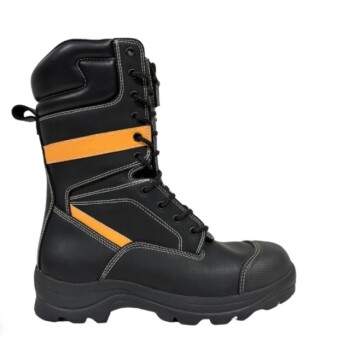
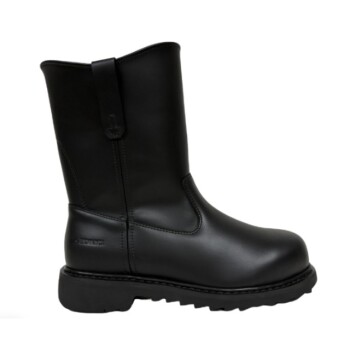
Properly maintaining firefighter footwear involves a consistent cycle of cleaning, drying, conditioning, and inspecting the boots after use. This routine is not for appearance but is a critical safety measure to preserve the protective qualities of the leather, ensure structural integrity, and extend the lifespan of this essential equipment.
Firefighter boot maintenance is a fundamental safety discipline. It ensures your primary point of contact with hazardous environments remains uncompromised, protecting you from thermal, physical, and electrical threats.

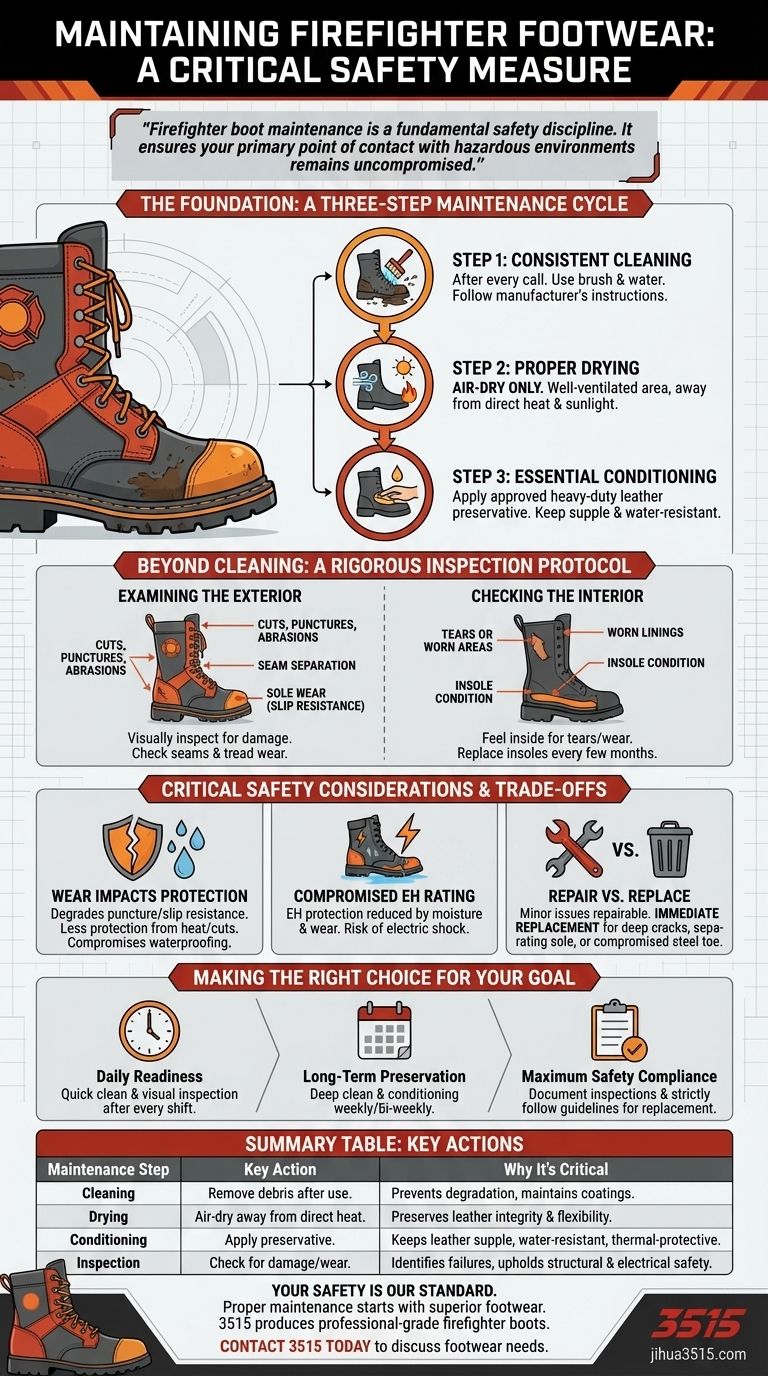
The Foundation: A Three-Step Maintenance Cycle
A firefighter's boot is a complex system of materials designed to perform under extreme stress. Neglecting basic care degrades these materials, silently eroding their protective capabilities.
Step 1: Consistent Cleaning
After every call, boots should be cleared of mud, soot, and chemical contaminants. Use a brush and water to remove debris.
Adhering to the manufacturer’s cleaning instructions is critical to avoid damaging specialized materials or protective coatings.
Step 2: Proper Drying
Never place boots near a direct heat source, such as a fire or vent, as this can cause the leather to dry out too quickly, crack, and lose its strength.
The correct method is to air-dry them in a well-ventilated area away from direct sunlight. This preserves the material's integrity and flexibility.
Step 3: Essential Conditioning
Leather requires conditioning to remain supple, water-resistant, and durable. Use an approved heavy-duty leather preservative or oil.
This step replenishes the natural oils in the leather, preventing cracks that can compromise the boot's waterproof and thermal-protective layers.
Beyond Cleaning: A Rigorous Inspection Protocol
A clean boot is an inspectable boot. Regular, detailed inspections are what separate a well-maintained tool from a potential point of failure.
Examining the Exterior
Visually inspect the entire boot for cuts, punctures, or abrasions, paying close attention to seams. Check for any separation between the boot upper and the sole.
You must also examine the tread for significant wear, as this directly impacts slip resistance on wet or uneven surfaces.
Checking the Interior
Feel the inside lining for tears or worn areas that could lead to blisters or discomfort. Worn linings can also indicate a deeper structural issue.
For comfort and support, plan to replace the insoles every few months, depending on the frequency of use.
Critical Safety Considerations and Trade-offs
Understanding the consequences of poor maintenance is essential for every firefighter. Worn or improperly cared-for boots are a direct threat to your safety.
The Impact of Wear on Protection
As boots wear down, their protective features degrade. The sole loses puncture and slip resistance, and worn leather offers less protection from high heat and cuts.
Standing water and moisture are constant threats, and even small cracks can compromise the boot’s waterproofing.
Compromised Electrical Hazard (EH) Rating
Many firefighter boots carry an Electrical Hazard (EH) rating. This protection is significantly reduced by moisture and wear.
A boot with cracked leather or a wet interior may fail to protect against electric shock, creating a life-threatening risk.
When to Repair vs. Replace
Minor issues may be correctable, but you must know when a boot is beyond saving.
Any damage that compromises the structural integrity—such as deep cracks in the leather, a separating sole, or a compromised steel toe—mandates immediate replacement.
Making the Right Choice for Your Goal
Your maintenance schedule should align with your primary objective, whether it's daily readiness or ensuring maximum equipment lifespan.
- If your primary focus is daily readiness: Perform a quick clean and visual inspection after every shift to catch new damage immediately.
- If your primary focus is long-term preservation: Commit to a deep clean and conditioning treatment on a regular weekly or bi-weekly basis.
- If your primary focus is maximum safety compliance: Document your inspections and strictly follow manufacturer and departmental guidelines for replacement.
Ultimately, treating your boots as a critical piece of life-safety equipment is a non-negotiable part of your professional responsibility.
Summary Table:
| Maintenance Step | Key Action | Why It's Critical |
|---|---|---|
| Cleaning | Remove debris & contaminants after each use. | Prevents material degradation and maintains protective coatings. |
| Drying | Air-dry away from direct heat. | Preserves leather integrity and flexibility, preventing cracks. |
| Conditioning | Apply heavy-duty leather preservative. | Keeps leather supple and water-resistant, ensuring thermal protection. |
| Inspection | Check for cuts, sole wear, and interior damage. | Identifies potential failures to uphold structural and electrical safety (EH rating). |
Your Safety is Our Standard. Proper maintenance starts with superior footwear. As a large-scale manufacturer, 3515 produces a comprehensive range of professional-grade firefighter boots for distributors, brand owners, and bulk clients. Our boots are engineered for durability and protection, but their longevity depends on your care. Ensure your team is equipped with the best. Contact 3515 today to discuss your footwear needs and enhance your safety protocol.
Visual Guide
Related Products
- High Performance Fire-Retardant Waterproof Safety Boots
- Premium Flame-Retardant Waterproof Safety Boots and Shoes
- Durable Military Combat Boots with Water Drainage for Wholesale & OEM
- Wholesale Lightweight Tactical Boots Custom Manufacturer for Desert & Combat Use
- Durable Leather Tactical Boots Wholesale & Custom Manufacturing for Brands
People Also Ask
- Why are waterproof safety boots recommended for certain work environments? Essential Protection for Wet & Hazardous Jobs
- What roles do 3D vision systems and industrial robots play in the manufacturing of fire safety boots? Smart Automation
- What materials make waterproof boots durable? The Ultimate Guide to Long-Lasting Footwear
- What is a drawback of waterproof boots? The Hidden Cost of Trapped Sweat and Heat
- How does boot construction affect waterproofing? The Science Behind Truly Dry Feet