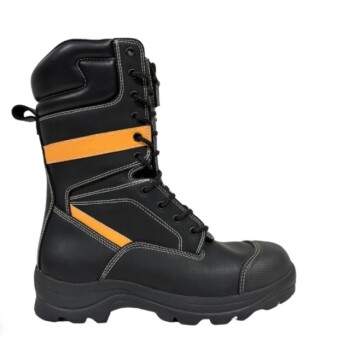
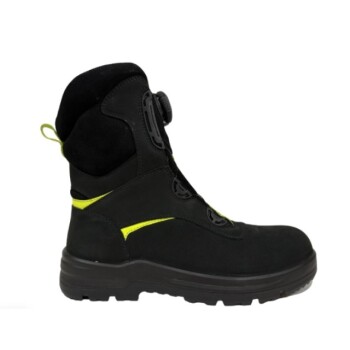
In short, NFPA boots are highly specialized footwear designed specifically for firefighters and emergency responders. They are built to meet the rigorous safety standards set by the National Fire Protection Association (NFPA), ensuring comprehensive protection against the unique and extreme hazards encountered during emergency situations, from intense heat to chemical exposure.
While a standard safety boot protects against a single, predictable hazard like a falling object, an NFPA-certified boot is a complete protective system designed to withstand the unpredictable, multi-hazard environment of a fire or emergency scene.
The Core Protections of an NFPA Boot
An NFPA certification is not about a single feature; it is a holistic standard that guarantees a boot can perform under the most demanding conditions. This goes far beyond the protection offered by typical work boots.
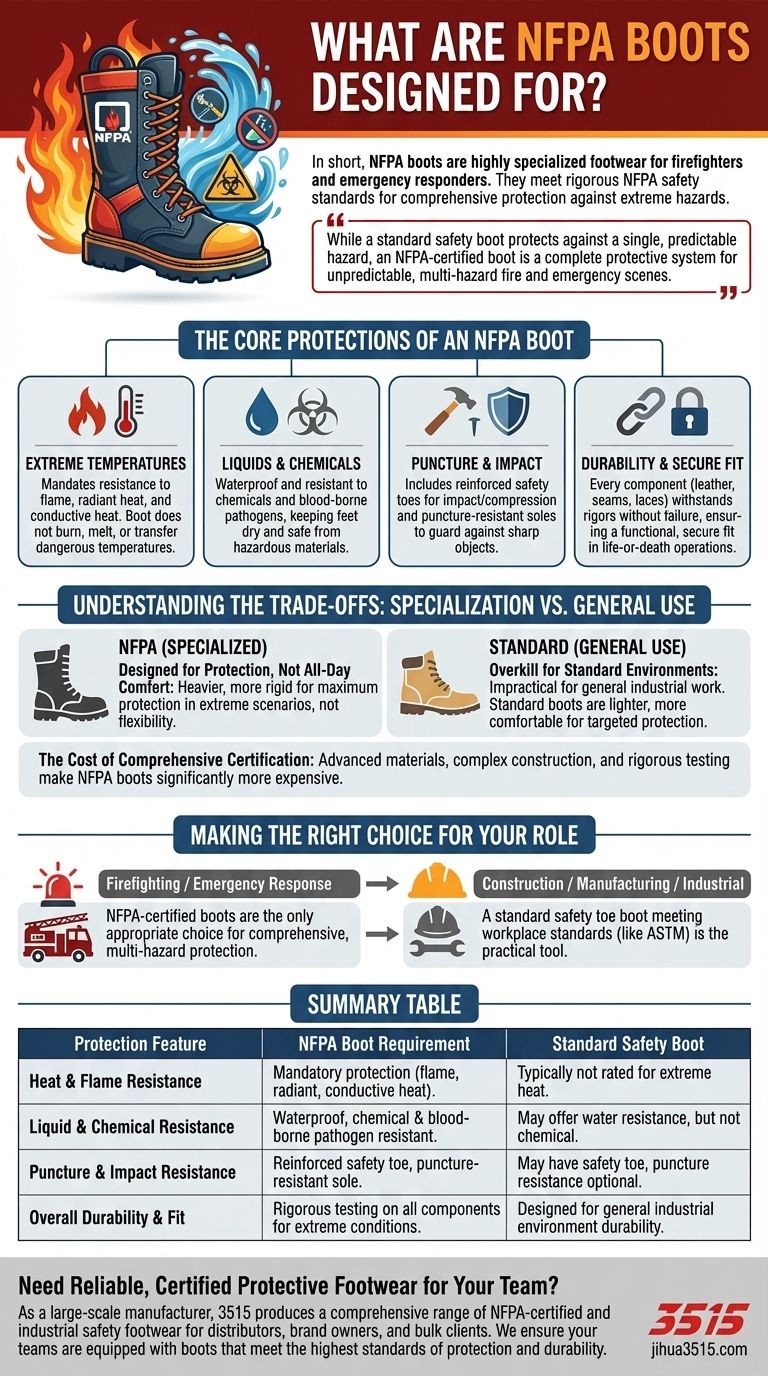
Protection Against Extreme Temperatures
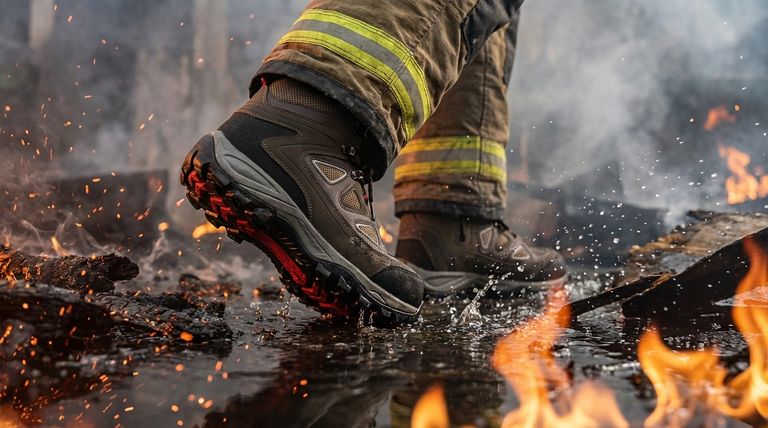
The most critical function for a firefighter's boot is resistance to heat. NFPA standards mandate protection against flame, radiant heat, and conductive heat, ensuring the boot itself does not burn, melt, or transfer dangerous temperatures to the responder's foot.
Resistance to Liquids and Chemicals
Emergency scenes can be saturated with water, fuel, and a cocktail of unknown chemicals. NFPA boots are required to be waterproof and resistant to chemical and blood-borne pathogen penetration, keeping the responder’s feet dry and safe from hazardous materials.
Superior Puncture and Impact Resistance
NFPA boots must include the features of a high-end safety toe boot and more. They contain reinforced safety toes to protect against compression and impact from falling debris, as well as puncture-resistant soles to guard against nails, glass, and other sharp objects hidden in the environment.
Mandated Durability and Secure Fit
The standard ensures every component, from the leather and rubber to the seams and laces, can withstand the rigors of the job without failing. This guarantees the boot remains functional and securely fitted throughout a life-or-death operation.
Understanding the Trade-offs: Specialization vs. General Use
NFPA boots are a specialized tool, and their design priorities reflect that. Understanding their limitations is key to appreciating their purpose.
Designed for Protection, Not All-Day Comfort
These boots are often heavier and more rigid than standard work boots. Their primary design goal is maximum protection in extreme scenarios, not flexibility or comfort for walking on a predictable job site for eight hours.
Overkill for Standard Work Environments
Using an NFPA boot for a construction or manufacturing job is often impractical. A standard safety toe boot is lighter, more comfortable, and provides the specific, targeted protection needed for those roles without the added cost and bulk of NFPA features.
The Cost of Comprehensive Certification
The advanced materials, complex construction, and rigorous third-party testing required to meet NFPA standards make these boots significantly more expensive than other types of protective footwear.
Making the Right Choice for Your Role
Choosing the correct footwear is a critical safety decision. Your professional role dictates the level of protection you require.
- If your primary focus is firefighting or emergency response: NFPA-certified boots are the only appropriate choice, as they provide the comprehensive, multi-hazard protection your job demands.
- If your primary focus is construction, manufacturing, or general industrial work: A standard safety toe boot that meets relevant workplace safety standards (like ASTM) is the more practical and appropriate tool for the job.
Ultimately, selecting the right boot is about matching the level of protection to the real-world risks you face.
Summary Table:
| Protection Feature | NFPA Boot Requirement | Standard Safety Boot |
|---|---|---|
| Heat & Flame Resistance | Mandatory protection against flame, radiant, and conductive heat. | Typically not rated for extreme heat. |
| Liquid & Chemical Resistance | Waterproof and resistant to chemicals and blood-borne pathogens. | May offer water resistance, but not chemical penetration resistance. |
| Puncture & Impact Resistance | Reinforced safety toe and puncture-resistant sole. | May have a safety toe, but sole puncture resistance is often optional. |
| Overall Durability & Fit | Rigorous testing on all components (leather, seams, laces) for secure fit in extreme conditions. | Designed for durability in general industrial environments. |
Need Reliable, Certified Protective Footwear for Your Team?
As a large-scale manufacturer, 3515 produces a comprehensive range of NFPA-certified and industrial safety footwear for distributors, brand owners, and bulk clients. We ensure your teams are equipped with boots that meet the highest standards of protection and durability.
Contact 3515 today to discuss your specific needs and discover how our manufacturing expertise can provide the right protective solution for your customers.
Visual Guide
Related Products
- High Performance Fire-Retardant Waterproof Safety Boots
- Premium Flame-Retardant Waterproof Safety Boots and Shoes
- Durable High-Ankle Tactical Boots for Wholesale & Custom Manufacturing
- Wholesale Durable Mid-Cut Tactical Boots for Custom & Private Label Brands
- Heavy-Duty Waterproof Nubuck Safety Boots Safety Shoes for Bulk Supply
People Also Ask
- Why are waterproof safety boots recommended for certain work environments? Essential Protection for Wet & Hazardous Jobs
- What roles do 3D vision systems and industrial robots play in the manufacturing of fire safety boots? Smart Automation
- What's the difference between waterproof and water-resistant boots? Choose the Right Footwear for Your Environment
- How can you ensure your feet stay dry during winter walks? A Two-Part Defense System for Total Comfort
- How should you maintain waterproof boots? A Simple 3-Step Guide to Long-Lasting Performance