
To prevent common problems with wellington boots, you must adopt a simple but consistent care routine focused on three key areas. Prevent cracking by regularly conditioning the rubber, avoid mould and mildew by ensuring the boots are completely dry inside and out before storage, and stop discolouration by cleaning off mud and stains promptly after each use.
The core principle is to treat your wellies not as indestructible tools, but as items made from a natural material—rubber—that requires proactive maintenance to preserve its flexibility, integrity, and appearance over time.
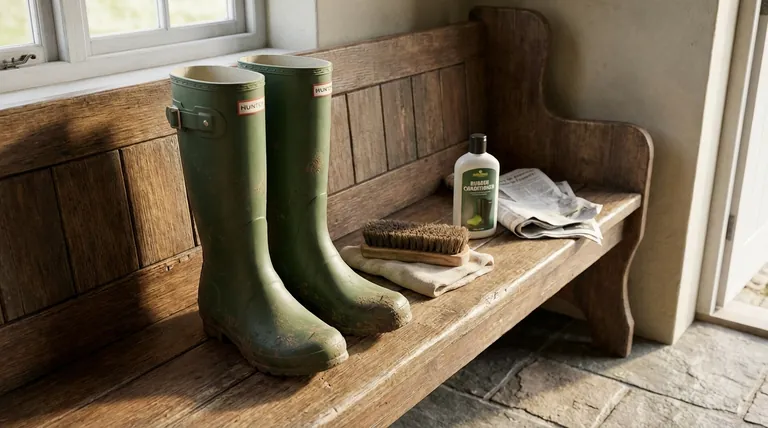
Preventing Structural Failure: Cracking
Cracking is the most common reason wellington boots fail. It occurs when the natural rubber loses its inherent oils and elasticity, becoming brittle and splitting under stress.
The Root Cause: Rubber Degradation
Natural rubber is susceptible to drying out from exposure to environmental factors. The primary culprits are UV radiation from direct sunlight and extreme fluctuations in temperature, both of which accelerate the degradation of the material.
The Solution: Regular Conditioning
The most effective preventative measure is to regularly treat your boots with a rubber conditioner or silicone spray. These products replenish the emollients in the rubber, keeping it supple and resistant to drying and cracking. This should be done every few months, or more often if the boots are used frequently.
Environmental Factors to Control
Never store your wellies in direct sunlight or next to a heat source like a radiator or boiler. A cool, dark, and dry place is the ideal environment to slow the aging process of the rubber.
Preventing Biological Growth: Mould and Mildew
The inside of a boot provides the perfect dark, damp environment for mould and mildew to thrive, leading to odour and material damage.
The Root Cause: Trapped Moisture
After a day of use, perspiration and external moisture become trapped inside the boot. If not allowed to evaporate completely, this moisture creates an ideal breeding ground for fungal spores.
The Solution: Complete Drying
Always ensure your boots are thoroughly dry before storing them. You can aid this process by removing any insoles, stuffing the boots with newspaper to absorb moisture, or using a specialized, low-heat boot dryer.
Proper Storage Technique
Store your wellies upright in a well-ventilated area. This allows air to circulate, preventing moisture from pooling and becoming stagnant inside the boot.
Maintaining Appearance: Stains and Discolouration
While wellies are made for mud, allowing dirt and other substances to sit on the surface for extended periods can lead to permanent staining.
The Root Cause: Surface Contaminants
Mud, soil, agricultural chemicals, and road salt can all leech into the rubber over time, causing discolouration or a persistent dull film.
The Solution: A Simple Cleaning Routine
After each use, rinse your boots with clean water and wipe them down with a cloth. For more stubborn stains, a soft brush and a solution of mild soap and water are sufficient to restore the finish.
Common Pitfalls to Avoid
Even with the best intentions, common mistakes can shorten the lifespan of your boots. Understanding these is critical.
Harsh Chemicals Are the Enemy
Never use solvents, harsh detergents, or oil-based cleaning products on your wellies. These chemicals can strip the natural oils from the rubber, causing it to become brittle and sticky. Stick to pH-neutral soaps.
Heat Is Not Your Friend
While drying is essential, using high, direct heat is counterproductive. Placing boots on a radiator or in front of a fire can "cook" the rubber, causing it to become rigid and prone to cracking. Gentle, circulating air is always the best method.
The Myth of "Maintenance-Free"
The biggest pitfall is neglect. Assuming that a rugged boot requires no care is the fastest way to ensure it fails prematurely. A few minutes of preventative maintenance saves you the cost of a replacement pair.
A Simple Care Routine for Your Goal
Your specific maintenance focus may vary depending on how you use and store your boots.
- If your primary focus is maximum durability: Prioritize applying a rubber conditioner every 1-2 months to keep the material supple and prevent cracking at flex points.
- If your primary focus is hygiene and appearance: Make the post-use rinse-and-dry routine a non-negotiable habit.
- If your primary focus is long-term storage: Ensure the boots are perfectly clean and bone-dry inside and out before putting them away in a cool, dark location.
A consistent care routine is the definitive way to protect your investment and ensure your wellies are ready when you need them.
Summary Table:
| Problem | Root Cause | Key Prevention Method |
|---|---|---|
| Cracking | Rubber degradation from UV/sunlight, heat, and drying out. | Regular conditioning with rubber conditioner/silicone spray. |
| Mould & Mildew | Trapped moisture and dampness inside the boot. | Ensure boots are completely dry before storage; use newspaper or a boot dryer. |
| Discolouration | Mud, chemicals, and stains left on the surface. | Rinse and clean with mild soap and water after each use. |
Need Durable, High-Quality Wellington Boots? Partner with 3515.
As a large-scale manufacturer, 3515 produces a comprehensive range of durable footwear for distributors, brand owners, and bulk clients. Our production capabilities encompass all types of boots, including wellingtons built to last with proper care.
Let us help you source reliable footwear that meets your customers' needs. Contact our team today to discuss your requirements and discover the 3515 advantage.
Visual Guide

Related Products
- Durable Waterproof Rain Boots | Custom Manufacturer for Wholesale & Brands
- Durable Goodyear Welt Leather Work Boots for Wholesale & Private Label
- Wholesale Durable Leather Work Boots | 8-Inch Goodyear Welt Manufacturer
- Premium Wholesale Tactical Style Safety Shoes Boots with Quick Lacing
- Durable High-Ankle Tactical Boots Wholesale Manufacturer for Custom & Bulk Orders
People Also Ask
- What are the main materials for waterproof rain boots? Choose the Right Material for Durability & Comfort
- What is the overall recommendation for choosing rain boot materials? A Guide to Rubber vs. PVC
- How does boot height affect waterproofing? Choose the Right Height for Ultimate Protection
- Why are rain boots more flexible and comfortable than snow boots? The Key Differences Explained
- What are the best types of shoes for different gardening conditions? Find Your Perfect Match.



















