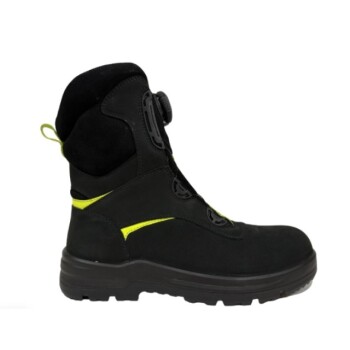
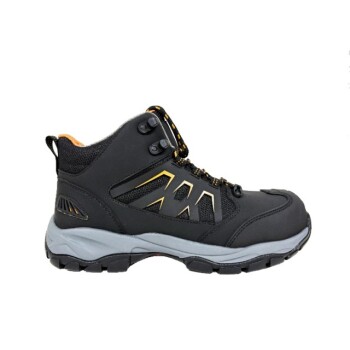
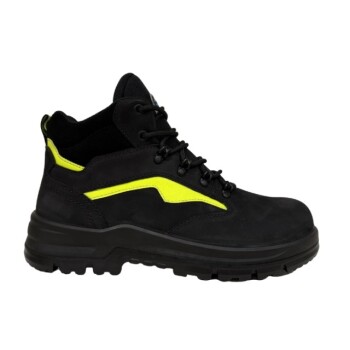
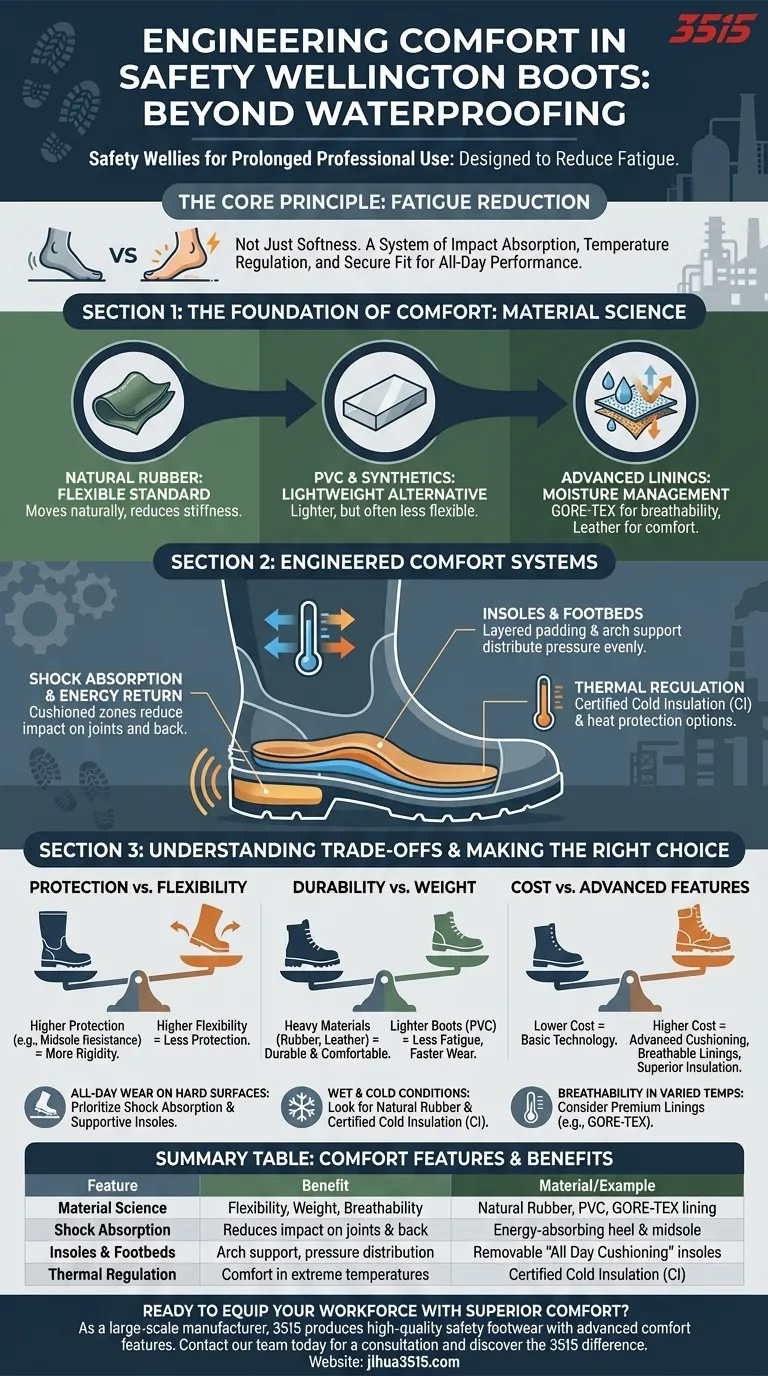
Safety Wellington boot comfort is engineered, not accidental. Unlike standard wellies, which prioritize only waterproofing, safety Wellingtons are designed for prolonged professional use. Their comfort comes from a deliberate combination of advanced materials, shock-absorbing structures, and ergonomic features designed to reduce fatigue over long work shifts.
The core principle of safety wellington comfort is not about softness, but about fatigue reduction. True comfort is achieved through a system of features that absorb impact, regulate temperature, and provide a secure, non-restrictive fit for all-day performance.
The Foundation of Comfort: Material Science
The material of the boot itself is the first layer of comfort. Each choice has a direct impact on flexibility, weight, and breathability.
Natural Rubber: The Flexible Standard
Natural rubber is prized for its inherent flexibility and comfort. It moves more naturally with your foot, reducing stiffness and the break-in period common with other materials.
PVC and Synthetics: The Lightweight Alternative
Polyvinyl chloride (PVC) is a common synthetic alternative that is lighter and more affordable than rubber. However, this often comes at the cost of flexibility, making PVC boots feel more rigid and less comfortable during extended wear.
Advanced Linings: Managing Moisture
Premium boots may incorporate specialized linings. A GORE-TEX membrane provides both waterproofing and breathability, allowing sweat vapor to escape, while a leather lining offers high comfort and durability.
Beyond Materials: Engineered Comfort Systems
Modern safety wellies are built with internal features specifically designed to cushion the body from the stresses of a long workday.
Shock Absorption and Energy Return
High-quality safety wellies integrate energy-absorbing technology, typically in the heel and midsole. These cushioned zones reduce the harsh impact of walking on hard surfaces, which protects not only your feet but also your joints and lower back.
Insoles and Footbeds
Many boots include removable "All Day Cushioning" insoles or anatomically shaped footbeds. These components provide layered padding and arch support, distributing pressure evenly across the foot to prevent aches and pains.
Thermal Regulation
Comfort is also about temperature. Certified cold insulation (CI) protects against freezing conditions, while features for heat protection are available for high-temperature environments. This regulation prevents the discomfort caused by extreme temperatures.
Understanding the Trade-offs
Choosing the right boot involves balancing competing priorities. Understanding these trade-offs is key to making an informed decision.
Protection vs. Flexibility
Features like midsole penetration resistance are critical for safety but can add rigidity to the boot. The most protective boots may not be the most flexible.
Durability vs. Weight
Heavier materials like natural rubber and leather offer excellent durability and comfort but add weight. Lighter PVC boots may reduce leg fatigue from lifting but can wear out faster and feel less forgiving.
Cost vs. Advanced Features
There is a direct correlation between price and comfort technology. Features like advanced cushioning systems, premium breathable linings, and superior insulation significantly increase the cost but also dramatically improve the all-day wearing experience.
Making the Right Choice for Your Goal
Select a boot based on the primary demands of your environment and tasks.
- If your primary focus is all-day wear on hard surfaces: Prioritize boots with excellent shock absorption in the heel and cushioned, supportive insoles.
- If your primary focus is working in wet and cold conditions: Look for natural rubber construction combined with certified cold insulation (CI) features.
- If your primary focus is breathability in varied temperatures: Consider boots with premium linings like GORE-TEX, but be prepared for a higher cost.
Choosing the right safety wellington is an investment in your daily well-being and professional performance.
Summary Table:
| Feature | Benefit | Material/Example |
|---|---|---|
| Material Science | Determines flexibility, weight, and breathability. | Natural Rubber, PVC, GORE-TEX lining |
| Shock Absorption | Reduces impact on joints and lower back. | Energy-absorbing heel and midsole technology |
| Insoles & Footbeds | Provides arch support and even pressure distribution. | Removable "All Day Cushioning" insoles |
| Thermal Regulation | Maintains comfort in extreme temperatures. | Certified Cold Insulation (CI) |
Ready to equip your workforce with safety wellingtons engineered for superior comfort and performance?
As a large-scale manufacturer, 3515 produces a comprehensive range of high-quality safety footwear for distributors, brand owners, and bulk clients. Our production capabilities encompass all types of safety shoes and boots, designed with the advanced comfort features detailed above to reduce worker fatigue and enhance productivity.
Let us help you find the perfect boot for your specific needs and environment. Contact our team today for a consultation and discover the 3515 difference.
Visual Guide
Related Products
- Durable Waterproof Rain Boots | Custom Manufacturer for Wholesale & Brands
- Puncture-Resistant Velcro Safety Boots for Wholesale & Custom Manufacturing
- Wholesale Durable Safety Boots | Custom Steel Toe & Puncture-Resistant Manufacturing
- Premium Wholesale Tactical Style Safety Shoes Boots with Quick Lacing
- Premium High-Cut Waterproof Safety Boots Manufacturing & Wholesale Solutions
People Also Ask
- What are the main materials for waterproof rain boots? Choose the Right Material for Durability & Comfort
- What is the overall recommendation for choosing rain boot materials? A Guide to Rubber vs. PVC
- How does boot height affect waterproofing? Choose the Right Height for Ultimate Protection
- Why are rain boots more flexible and comfortable than snow boots? The Key Differences Explained
- What are the best types of shoes for different gardening conditions? Find Your Perfect Match.