
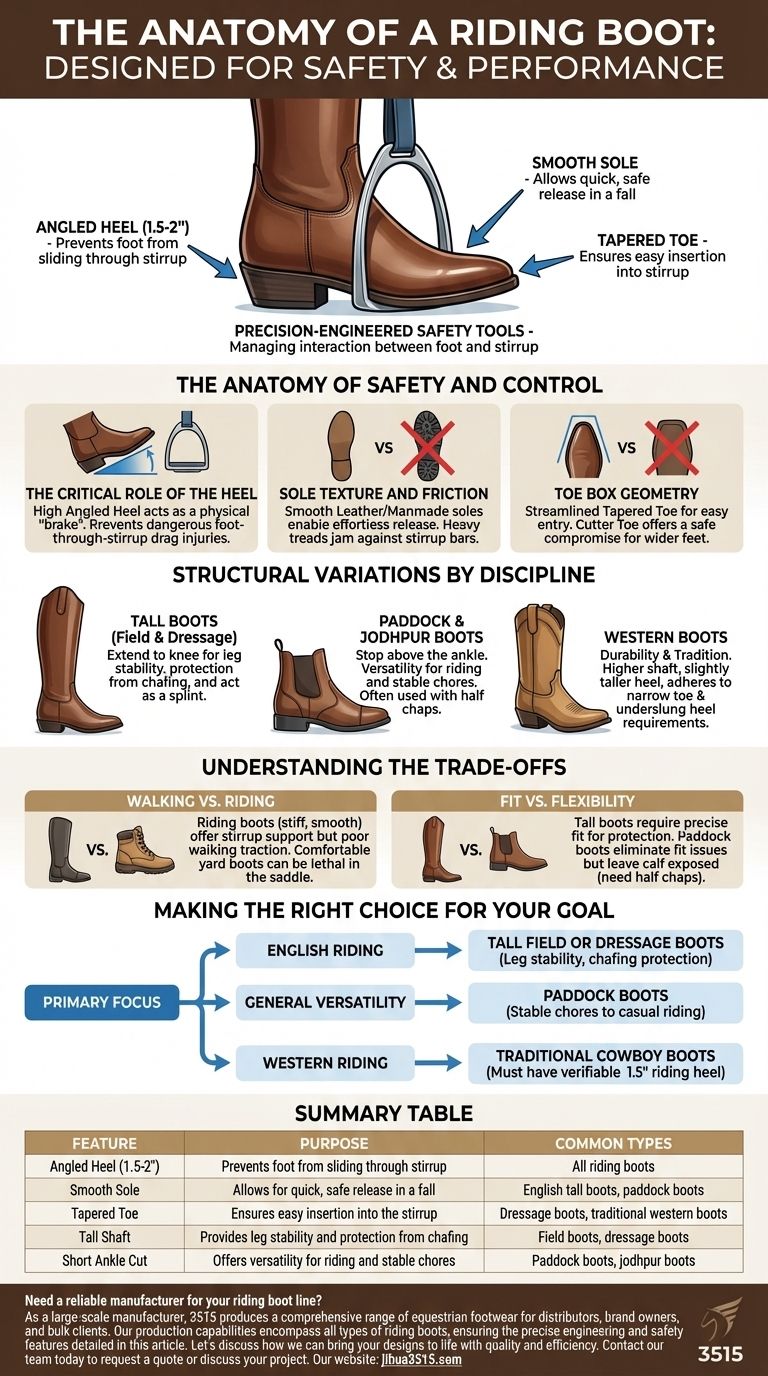
Riding boots are precision-engineered safety tools designed specifically to manage the interaction between the rider's foot and the stirrup. Their architecture features a distinct 1.5 to 2-inch angled heel to prevent the foot from sliding dangerously through the iron, coupled with a smooth sole and tapered toe to ensure a quick release in an emergency. Unlike standard footwear, every element—from the sole material to the shaft height—is constructed to prioritize stability in the saddle and prevent entrapment during a fall.
The fundamental geometry of a riding boot—specifically the heel block and low-friction sole—serves a singular, critical function: preventing drag injuries by ensuring the foot remains secure while riding yet releases instantly if the rider is unseated.
The Anatomy of Safety and Control
To understand how a riding boot functions, you must look at its specific components. Each part addresses the mechanical risks associated with horseback riding.
The Critical Role of the Heel
The most defining feature of a riding boot is the high angled heel, typically measuring between 1.5 and 2 inches.
This heel acts as a physical "brake" or catch against the bottom of the stirrup iron.
Without this catch, the foot could slide forward through the stirrup, creating a potentially life-threatening situation where a rider is dragged by the ankle.
Sole Texture and Friction
Proper riding boots feature smooth leather soles or lightly textured manmade materials.
Heavy treads or lugs, common in hiking boots, are dangerous in the saddle because they can jam against the stirrup bar.
The smooth surface ensures that if a rider falls, their foot will slide out of the stirrup effortlessly without catching.
Toe Box Geometry
The toe of a riding boot is traditionally tapered or narrow.
This streamlined shape allows for easy insertion into the stirrup without fumbling.
For riders with wider feet, a "cutter toe" design offers a compromise, providing more internal room while maintaining a profile safe for stirrup entry.
Structural Variations by Discipline
While the safety principles remain constant, the upper design of the boot changes based on the specific requirements of the riding discipline.
Tall Boots for Leg Stability
Tall boots, such as field or dressage boots, extend up the calf to just below the knee.
This design provides crucial protection against chafing from the saddle and leathers (stirrup straps).
Furthermore, the stiffness of the tall shaft acts as a splint, helping the rider maintain a stable lower leg position for better communication with the horse.
Paddock and Jodhpur Boots
Paddock boots (also known as jodhpur boots) are short boots that stop just above the ankle.
They are often constructed from full-grain or calfskin leather and are favored for their versatility.
These offer sufficient safety for riding but provide the flexibility and comfort needed for walking around the stable or performing barn chores.
Western Boot Distinctives
Western boots prioritize durability and a distinct stylistic tradition.
They typically feature a higher shaft without laces and a slightly taller heel profile suited for western stirrups.
Despite the stylistic differences, they strictly adhere to the narrow toe and underslung heel requirements for safety.
Understanding the Trade-offs
Selecting the right boot involves balancing stability in the saddle against comfort on the ground.
Walking Comfort vs. Riding Stability
Boots optimized for riding are often stiff and smooth-soled, which provides excellent support in the stirrup but offers poor traction and comfort for walking.
Conversely, boots with comfortable, cushioned insoles and grippy treads for yard work can be lethal in the saddle if they provide too much friction against the stirrup.
Fit vs. Flexibility
Tall boots offer superior protection and leg control but require a precise fit.
If the boot is too tall, it restricts knee movement; if too loose, it slides down and fails to protect the calf.
Paddock boots eliminate these fit issues but leave the calf exposed, often requiring the addition of "half chaps" to simulate the protection of a tall boot.
Making the Right Choice for Your Goal
To select the correct footwear, you must match the boot's specific design features to your primary activity.
- If your primary focus is English riding disciplines: Choose tall field or dressage boots to maximize leg stability and prevent pinching from saddle leathers.
- If your primary focus is general versatility: Opt for paddock boots, which allow you to transition safely from stable chores to casual riding without changing footwear.
- If your primary focus is Western riding: Select traditional cowboy boots with a verifiable riding heel (minimum 1.5 inches) rather than fashion boots, to ensure the stirrup stop is functional.
Ultimately, the best riding boot is one that you barely notice while riding, because it is securely holding your position while offering the assurance of an immediate release.
Summary Table:
| Feature | Purpose | Common Types |
|---|---|---|
| Angled Heel (1.5-2") | Prevents foot from sliding through stirrup | All riding boots |
| Smooth Sole | Allows for quick, safe release in a fall | English tall boots, paddock boots |
| Tapered Toe | Ensures easy insertion into the stirrup | Dressage boots, traditional western boots |
| Tall Shaft | Provides leg stability and protection from chafing | Field boots, dressage boots |
| Short Ankle Cut | Offers versatility for riding and stable chores | Paddock boots, jodhpur boots |
Need a reliable manufacturer for your riding boot line? As a large-scale manufacturer, 3515 produces a comprehensive range of equestrian footwear for distributors, brand owners, and bulk clients. Our production capabilities encompass all types of riding boots, ensuring the precise engineering and safety features detailed in this article. Let's discuss how we can bring your designs to life with quality and efficiency. Contact our team today to request a quote or discuss your project.
Visual Guide
Related Products
- Heavy-Duty Waterproof Nubuck Safety Boots Safety Shoes for Bulk Supply
- Premium Wholesale Tactical Style Safety Shoes Boots with Quick Lacing
- Wholesale High-Traction Camo Boots - Custom Manufacturer for Brands
- Durable Goodyear Welt Leather Work Boots for Wholesale & Private Label
- Wholesale Tactical Boots High-Traction & Reflective for Bulk & Brand Orders
People Also Ask
- What primary protective functions do professional safety boots provide in urban solid waste recovery and waste picking processes? Discover Dual-Layer Protection.
- How do safety boots reduce cutting hazards? Essential Protection for Your Workforce
- Which organizations develop safety standards for work boots? Ensure Compliance & Worker Safety
- What are the common types of safety boots and their primary uses? A Guide to Industrial Footwear
- Why is ankle and arch support important in safety footwear? Prevent Injury & Fatigue



















