
The most important rule for drying wet cowboy boots is to do it slowly and gently. The correct method involves removing the insoles, absorbing as much moisture as possible with paper towels or newspaper, and letting them air dry naturally in a well-ventilated area, completely away from any direct heat sources.
The core principle is simple: rapid drying is the enemy of leather. Applying heat forces moisture out too quickly, stripping the leather of its natural oils and causing it to become brittle, shrink, and crack, permanently damaging your boots.
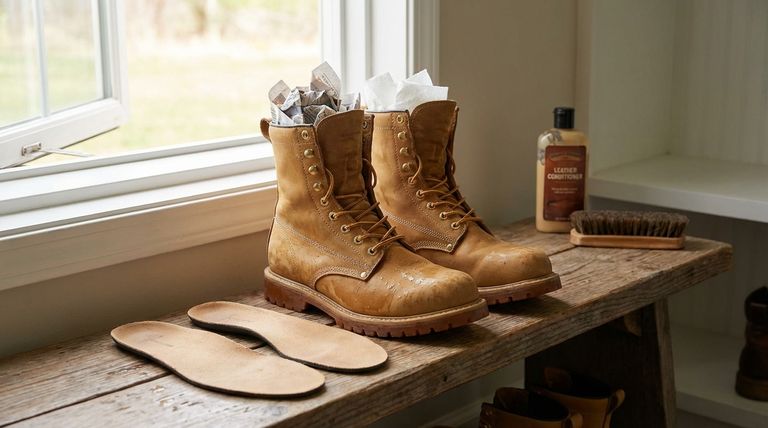
The Immediate Steps for Saturated Boots
When your boots get soaked, your first actions are critical to preventing long-term damage. The goal is to remove excess water and set up the ideal conditions for slow, natural evaporation.
Step 1: Remove Insoles
Always take out the removable insoles. This simple step opens up the boot's interior, dramatically improving air circulation and allowing the footbed—one of the thickest parts—to dry thoroughly.
Step 2: Absorb Excess Water
Use paper towels or a dry cloth to blot the entire boot, both inside and out. Press gently to absorb surface water. Avoid rubbing, which can damage the leather's finish, especially when it's saturated and vulnerable.
Step 3: Stuff the Boots
Loosely pack the inside of your boots with absorbent material like newspaper or paper towels. This is the most crucial step, as the paper will wick moisture from deep within the leather to the surface.
Be sure to change the stuffing every few hours as it becomes damp. Continuing to use wet paper will only trap moisture and encourage mildew.
Understanding the Trade-offs: Patience vs. Damage
The temptation to speed up the drying process is the single greatest risk to your boots. Understanding why helps reinforce the importance of patience.
Why Direct Heat Causes Cracking
Leather is a natural skin that contains oils and moisture, which keep it supple and strong. When you apply direct heat (from a hairdryer, radiator, or direct sunlight), you are essentially "cooking" the leather.
This rapid evaporation violently pulls the oils out along with the water, causing the leather's fibers to constrict, shrink, and crack. This damage is irreversible.
What to Absolutely Avoid
To protect your investment, never place your boots near these sources:
- Fireplaces or wood stoves
- Radiators or heating vents
- Hairdryers
- Clothes dryers
- Direct sunlight
These shortcuts will permanently ruin the structure and integrity of the leather.
Post-Drying Care and Prevention
Once your boots are completely dry—a process that can take 24-48 hours—they will need some care to restore them to their original condition.
Recondition the Leather
The drying process, even when done correctly, will remove some of the leather's essential oils. Applying a high-quality leather conditioner is a non-negotiable final step.
Work the conditioner into the leather with a soft cloth. This replenishes the oils, restores flexibility, and revitalizes the color.
Proactive Waterproofing
The best way to deal with water damage is to prevent it. Regularly treat your boots with a waterproof protectant spray. Applying a coat once a month, especially during wet seasons, creates a barrier that causes water to bead up and roll off rather than soak in.
Making the Right Choice for Your Boots
Your approach depends on the level of saturation and your long-term goals for your boots.
- If your boots are completely soaked: Commit to the full process. Remove insoles, blot, stuff with paper (changing it frequently), and allow at least two full days to air dry before conditioning.
- If your boots are just slightly damp: You can likely skip the stuffing. Simply remove the insoles and place them in a well-ventilated room overnight.
- If your primary focus is longevity: Make proactive care a habit. Clean your boots regularly and apply a waterproof spray to prevent saturation from ever becoming an issue.
Ultimately, treating your leather boots with patience and care is the only way to ensure they last for years to come.
Summary Table:
| Step | Action | Key Benefit |
|---|---|---|
| 1 | Remove Insoles | Improves air circulation for thorough drying. |
| 2 | Blot Excess Water | Prevents surface damage to vulnerable leather. |
| 3 | Stuff with Paper Towels | Wicks moisture from deep within the leather. |
| 4 | Air Dry Naturally | Prevents irreversible cracking and shrinkage. |
| 5 | Condition After Drying | Restores essential oils and flexibility. |
Need durable, high-quality cowboy boots built to withstand the elements? As a large-scale manufacturer, 3515 produces a comprehensive range of footwear for distributors, brand owners, and bulk clients. Our production capabilities encompass all types of durable leather boots designed for longevity and performance. Contact us today to discuss your footwear needs and discover how we can deliver value and reliability for your business.
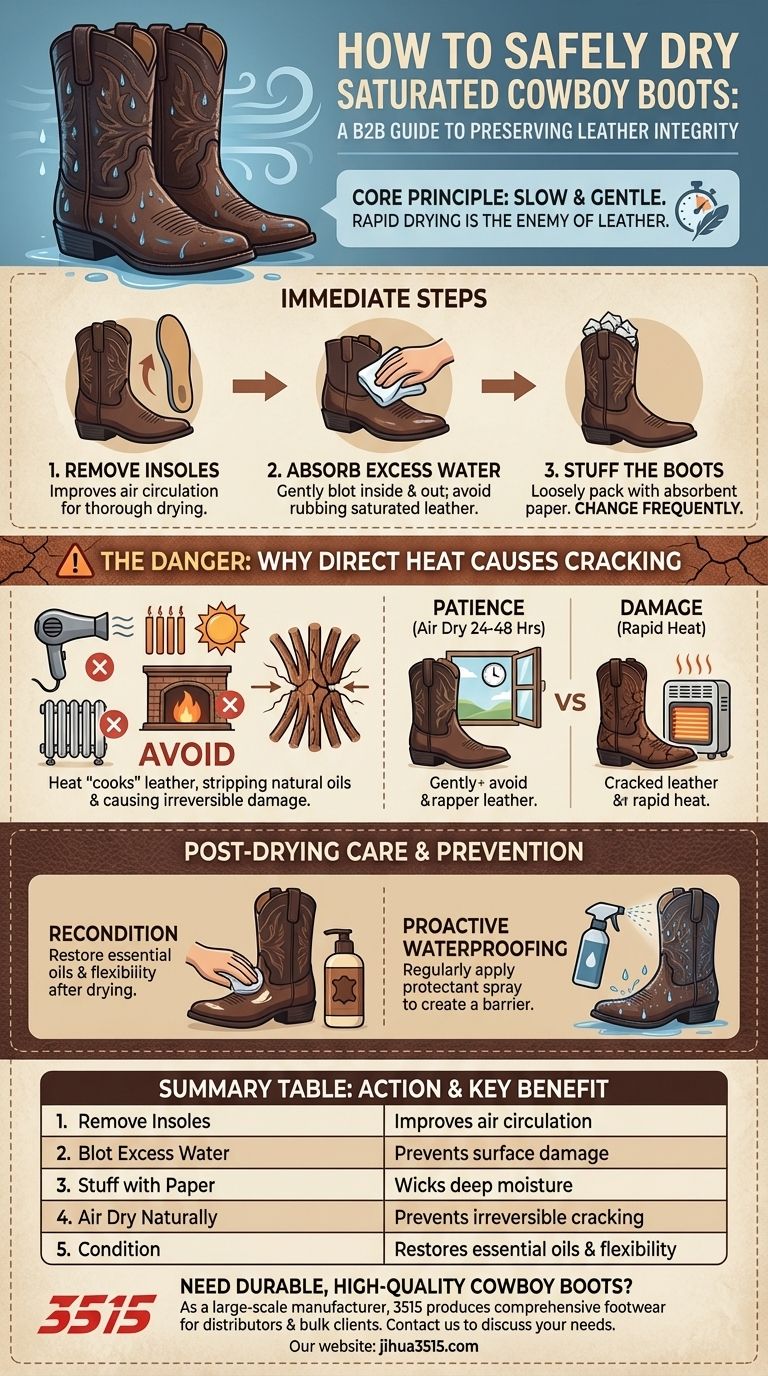
Visual Guide
Related Products
- High-Traction Suede Tactical Boots Wholesale & Custom Manufacturing
- Wholesale High-Traction Camo Boots - Custom Manufacturer for Brands
- Wholesale Lightweight Tactical Boots Custom Manufacturer for Desert & Combat Use
- Durable Leather Tactical Boots Wholesale & Custom Manufacturing for Brands
- Wholesale Durable Mid-Cut Tactical Boots for Custom & Private Label Brands
People Also Ask
- Why is sequential analysis utilized to evaluate tactical boots? Master Dynamic Boot Development and Ergonomic Performance
- How does the material of tactical boots affect their performance? Choose the Right Material for Your Mission
- How do tactical boots differ from regular boots? Performance, Durability & Design Explained
- How do military uniforms and tactical boots impact the prediction of thermal risk? Essential Safety Insights
- What are the benefits of integrating FES and sEMG into tactical boots? Safety, Reliability & Field-Ready Performance

















