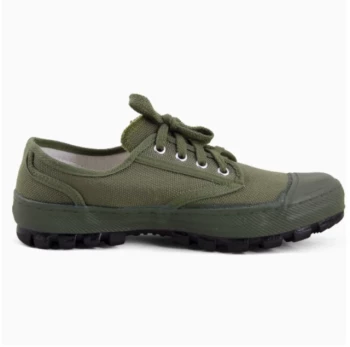
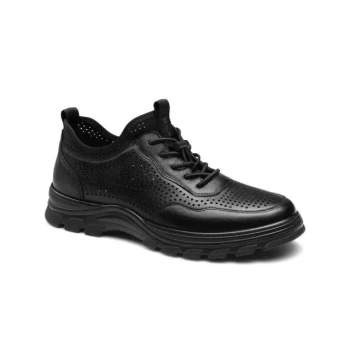
The primary biomechanical advantage of a plantigrade shoe sole structure is its ability to generate superior rotational stability through an increased contact area. By extending contact in the anterior-posterior and medial-lateral directions, this design creates longer moment arms that allow the foot to exert a greater Vertical Free Moment (VFM), effectively counteracting the body's angular momentum during walking.
Core Insight: A large contact area is not just about balance; it is a mechanical lever system. While point-contact designs minimize ground interaction, plantigrade structures leverage the ground to generate the necessary torque to stabilize the body's vertical axis, a critical function when natural balancing mechanisms like arm swings are restricted.
The Mechanics of Rotational Stability
The Role of Moment Arms
A plantigrade structure mimics the natural anatomy of the human foot by maximizing the surface area in contact with the ground. This geometry creates longer moment arms—the distance from the center of rotation to the point where force is applied.
In contrast, a point-contact design drastically shortens these levers. Without these extended moment arms, the foot loses the mechanical advantage required to apply torque against the ground efficiently.
Generating Vertical Free Moment (VFM)
The specific torque generated by the foot against the ground is known as the Vertical Free Moment (VFM). The magnitude of this moment is directly influenced by the distribution of ground reaction forces across the sole.
Because a plantigrade sole offers a wide platform, it allows friction forces to act over greater distances from the center of pressure. This structure generates a significantly higher VFM compared to point-contact designs, acting as a mechanical anchor for the limb.
Why Walking Efficiency Depends on Sole Structure
Counteracting Angular Momentum
Every step you take generates angular momentum along the body's vertical axis. To maintain a straight path and upright posture, this rotational force must be neutralized.
The plantigrade sole uses its high VFM to actively counteract this angular momentum. It effectively "brakes" the rotation, preventing excessive twisting of the body without requiring excessive muscular effort.
Stability Under Load or Restriction
The importance of this sole structure becomes most apparent when the body's other stabilizing mechanisms are compromised. For example, when carrying heavy loads or when arm swing is restricted, the upper body cannot effectively balance rotational forces.
In these scenarios, the responsibility for stability shifts almost entirely to the feet. The plantigrade structure compensates for the lack of upper-body counter-rotation, ensuring walking efficiency is maintained even under duress.
Understanding the Limitations
The Dependency on Surface Area
The mechanical advantage of a plantigrade sole is strictly tied to its contact with the environment. If the terrain prevents full contact (e.g., extremely uneven ground), the effective moment arms are reduced, and the advantage over a point-contact design diminishes.
The Trade-off of Point-Contact Designs
While point-contact designs are less stable regarding rotational torque, they effectively decouple the foot from the ground's rotational friction. However, this forces the walker to rely heavily on upper-body mechanics—such as vigorous arm swinging—to manage angular momentum. If the walker cannot swing their arms, a point-contact design becomes biomechanically inefficient and unstable.
Making the Right Choice for Your Goal
To select the appropriate footwear structure, you must assess the environmental and physical constraints of the activity.
- If your primary focus is stability while carrying loads: Prioritize a plantigrade structure to generate the high VFM needed to counteract the added rotational inertia without straining your muscles.
- If your primary focus is efficient walking with restricted movement: Choose a large contact area to mechanically compensate for the inability to use arm swing for rotational balance.
Ultimately, the plantigrade structure serves as a critical mechanical interface that transforms the ground into a tool for rotational control.
Summary Table:
| Feature | Plantigrade Structure (Large Contact) | Point-Contact Design |
|---|---|---|
| Moment Arm Length | Long; maximized for leverage | Short; minimal leverage |
| Vertical Free Moment (VFM) | High; superior rotational torque | Low; minimal ground torque |
| Stability Mechanism | Mechanical (Ground interaction) | Biological (Upper body/arm swing) |
| Load Bearing | Highly stable under heavy loads | Less efficient; higher muscle strain |
| Walking Efficiency | High, especially with restricted movement | Moderate; requires active balancing |
Elevate Your Footwear Standards with 3515 Expertise
As a premier large-scale manufacturer serving global distributors and brand owners, 3515 leverages advanced biomechanical insights to deliver superior footwear solutions. Our plantigrade sole structures provide the essential stability and rotational control required for high-performance environments.
Whether you are expanding your portfolio in Safety Shoes, tactical boots, or specialized outdoor and training footwear, 3515 offers comprehensive production capabilities to meet your bulk requirements. Partner with us to provide your customers with the perfect balance of efficiency and durability.
Contact 3515 Today for Custom Manufacturing Solutions
References
- Takuo Negishi, Naomichi Ogihara. Functional significance of vertical free moment for generation of human bipedal walking. DOI: 10.1038/s41598-023-34153-4
This article is also based on technical information from 3515 Knowledge Base .
Related Products
- Durable Rubber-Soled Utility Shoes for Wholesale & Custom Brand Manufacturing
- Durable Rubber Sole Outdoor Shoes Wholesale & Custom Manufacturing
- Durable Canvas Work Shoes with Rubber Lug Sole | Wholesale Manufacturer
- Wholesale Breathable Training Shoes Custom Athletic Footwear Manufacturer
- Wholesale Breathable Perforated Leather Derby Shoes with Modern Comfort Sole
People Also Ask
- Why are rubber-soled shoes considered multi-weather footwear? Unlock All-Season Traction & Protection
- Why should we wear rubber soled shoes? Unlock Superior Safety and Durability
- How do rubber soles affect a shoe's appearance? Defining Your Shoe's Style and Formality
- What are the types of rubber sole shoes available? Choose the Right Sole for Durability & Comfort
- When were rubber sole shoes invented? From 1800s Concept to Modern Mainstay