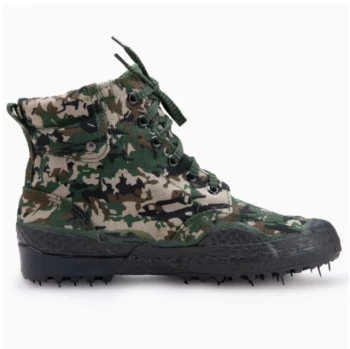
At its core, hiking boot categorization is straightforward. Boots are primarily grouped into three classes based on their intended use: lightweight hikers, midweight hiking boots, and heavyweight backpacking boots. This system classifies them by their weight, stiffness, and the level of ankle support they provide, allowing you to match the footwear directly to the demands of your hike.
Choosing the right hiking boot is not about finding the "best" boot, but the right boot for your specific activity. The categories simply provide a framework to understand the fundamental trade-off between lightweight agility and rugged support.
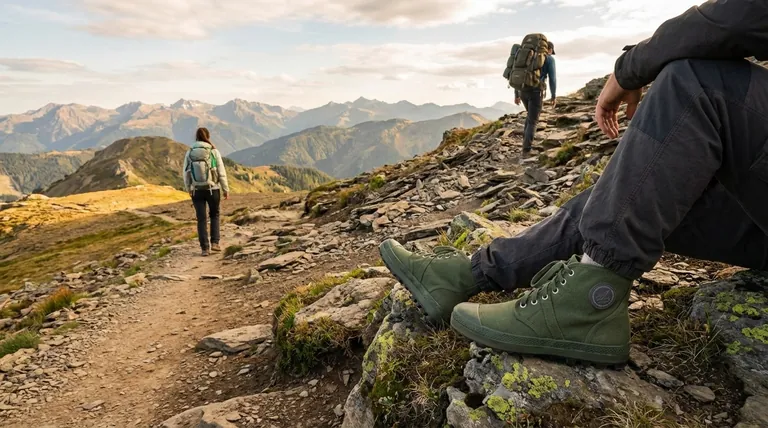
The Three Core Categories of Hiking Boots
Understanding each category helps clarify which boot is engineered for your specific goals, from a casual walk in the park to a multi-day trek through challenging terrain.
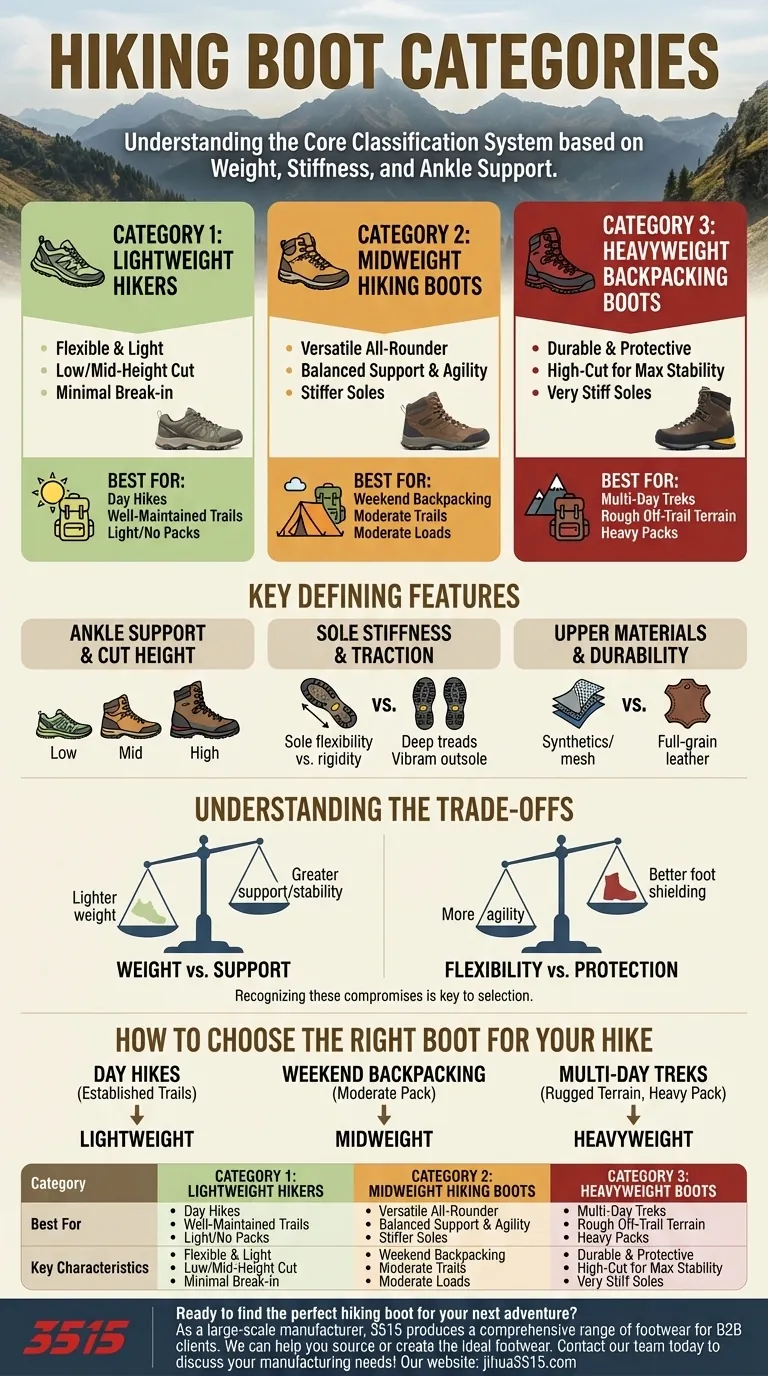
Category 1: Lightweight Hikers
These are the most flexible and lightest options, often feeling more like a robust running shoe than a traditional boot. They typically feature a low or mid-height ankle cut.
Their primary advantage is comfort right out of the box, requiring little to no break-in period. They are built for speed and agility on less demanding ground.
Best for: Day hikes, walks on well-maintained trails, and carrying a light pack or no pack at all.
Category 2: Midweight Hiking Boots
This category represents the versatile all-rounder, striking a balance between the agility of a lightweight hiker and the support of a heavyweight boot.
They offer more substantial ankle support and stiffer soles than lightweight models, making them suitable for more varied terrain and heavier loads.
Best for: Weekend backpacking trips, multi-day hikes on moderately difficult trails, and when carrying a pack of moderate weight.
Category 3: Heavyweight Backpacking Boots
These are the most durable, supportive, and protective boots available. They almost always feature a high cut that fully covers the ankle for maximum stability.
Their construction prioritizes foot protection and load-bearing capability, with very stiff soles and uppers often made from durable, one-piece leather.
Best for: Multi-day or week-long treks, navigating rough or off-trail terrain, and carrying heavy backpacks over long distances.
Key Features That Define Each Category
The differences between these categories are driven by specific design choices in their construction, materials, and components.
Ankle Support and Cut Height
The height of the boot's collar is a primary indicator of its category. Low-cut shoes offer minimal ankle support, while high-cut boots are designed to prevent ankle twists under heavy loads on uneven ground.
Sole Stiffness and Traction
A boot's sole determines its performance on different surfaces. Lightweight boots have flexible soles for comfort on flat trails, while heavyweight boots have rigid soles to protect your feet from sharp rocks and provide a stable platform.
Nearly all dedicated hiking boots feature deep treads (lugs) for reliable traction. High-quality boots often use a Vibram outsole, a hallmark of durability and grip.
Upper Materials and Durability
The materials used for the boot's upper impact its weight, breathability, and water resistance.
Synthetics and mesh are common in lightweight boots for their breathability and minimal break-in time. Full-grain leather is the classic choice for heavyweight boots, prized for its exceptional durability and ability to mold to the foot over time.
Understanding the Trade-offs
Every design choice in a hiking boot involves a compromise. Recognizing these trade-offs is key to selecting the right footwear for your needs.
Weight vs. Support
This is the most fundamental trade-off. A heavier, more supportive boot provides excellent protection and stability but requires more energy to lift with every step. A lighter boot reduces fatigue but offers less protection from terrain and ankle strain.
Flexibility vs. Protection
A flexible boot feels comfortable and agile on a smooth, predictable path. On rugged, rocky trails, however, that same flexibility can lead to sore, overworked feet. A stiffer boot shields your foot but can feel clumsy and restrictive on simple hikes.
Break-in Period
Lightweight synthetic boots are typically comfortable immediately. In contrast, durable, heavyweight leather boots often require a significant break-in period to soften and conform to the shape of your feet before they can be worn comfortably on a long trek.
How to Choose the Right Boot for Your Hike
Your intended activity is the single most important factor in your decision. Use the categories as a guide to narrow your search.
- If your primary focus is day hikes on established trails: A lightweight hiking shoe or boot offers the best blend of comfort and agility.
- If your primary focus is weekend backpacking with a moderate pack: A midweight boot provides the necessary support and durability without excessive weight.
- If your primary focus is multi-day treks in rugged terrain with a heavy pack: A heavyweight boot is essential for maximum foot protection and ankle stability.
Understanding these categories transforms your choice from a guess into a strategic decision, ensuring every step on the trail is supported correctly.
Summary Table:
| Category | Best For | Key Characteristics |
|---|---|---|
| Lightweight Hikers | Day hikes, light packs | Flexible, low-cut, minimal break-in |
| Midweight Hiking Boots | Weekend trips, moderate loads | Balanced support and agility |
| Heavyweight Backpacking Boots | Multi-day treks, heavy packs | Maximum ankle support, durable, stiff sole |
Ready to find the perfect hiking boot for your next adventure?
As a large-scale manufacturer, 3515 produces a comprehensive range of footwear for distributors, brand owners, and bulk clients. Our production capabilities encompass all types of shoes and boots, from lightweight hikers to rugged backpacking models. We can help you source or create the ideal footwear for your target market.
Contact our team today to discuss your manufacturing needs!
Visual Guide
Related Products
- Wholesale High-Traction Camo Boots - Custom Manufacturer for Brands
- Durable Rubber Sole Outdoor Shoes Wholesale & Custom Manufacturing
- Durable Spiked Camouflage Boots Wholesale & Factory Production
- Wholesale Lightweight Tactical Boots Custom Manufacturer for Desert & Combat Use
- Wholesale Waterproof Tactical Boots Custom Suede & High-Traction Soles
People Also Ask
- What are the key features of the new line of camo boots? Built for Extreme Cold & Rugged Terrain
- Are camo boots necessary for hunting success? Prioritize Performance Over Pattern
- What is the technical logic behind using closed-eye testing for tactical boots? Unlocking Peak Footwear Stability
- How does the Rank Score Test identify the primary causes of premature failure in tactical and work boots? Key Insights
- What shoes to wear for a security job? Durable, Protective Footwear for Long Shifts