
Unlike leather footwear, wellies are not designed to stretch. While the natural rubber used in their construction has a minor degree of flexibility for comfort, it will not permanently stretch out to accommodate a larger foot size. The structural integrity required to keep them waterproof and durable prevents any significant change in their shape over time.
The core principle to remember is this: the fit you feel when you first try on a pair of wellies is the fit you will always have. You cannot rely on a "breaking-in" period to create more room.
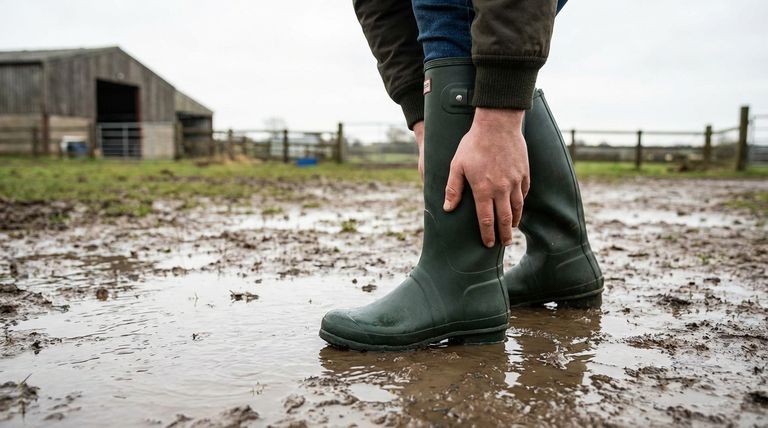
Why Wellies Resist Stretching
The materials and manufacturing process of wellington boots are engineered specifically for stability and durability, not for malleability.
The Inherent Nature of Rubber
Wellies are typically made from vulcanized natural rubber. This material is elastic, not plastic.
This means it can flex under pressure to accommodate movement, but its core property is to return to its original, molded shape. This is fundamentally different from leather, which has fibers that can be permanently elongated.
The Role of Linings
Common linings like neoprene, jersey, or leather provide insulation and comfort inside the boot.
However, these materials do not alter the structural size of the rubber shell. A boot's fit is determined by the rubber mold, not the interior lining.
The Difference Between "Flex" and "Stretch"
It's crucial to distinguish between the slight give a welly might have and the permanent stretching you might expect from other shoes.
Minor Flexibility for Comfort
As you wear wellies, your body heat may slightly soften the rubber, allowing for a minimal amount of "give."
This can make the boots feel marginally more comfortable as they conform to your walking motion, but it does not create additional space or increase the boot's length or width.
What This "Give" Won't Do
This minor flexibility will not solve the problem of a fundamentally poor fit.
If your toes are cramped or the boot is too narrow, this slight softening will be insufficient to relieve the pressure and discomfort.
Finding a Solution for a Better Fit
Since stretching is not a viable option, addressing fit issues requires a different approach. Assuming your boots are too tight is a clear sign that you need a different solution.
The Fallacy of "Breaking Them In"
Attempting to "break in" a pair of tight wellies is a common mistake. Unlike hiking boots, this process will not work and will only lead to blisters and foot pain.
Option 1: The Adjustable Gusset
For those who need more room around the calf, not the foot, the best solution is a welly with an adjustable side gusset.
This feature allows you to customize the fit around your leg, providing crucial comfort without changing the foot size.
Option 2: Sizing Up
If your wellies feel cramped in length or width, the only correct course of action is to get a larger size.
Never purchase a pair of wellies with the hope that they will stretch to fit. The discomfort you feel in the store will persist.
How to Ensure the Perfect Fit from Day One
Achieving the right fit at the moment of purchase is the only reliable strategy for long-term comfort.
- If your primary focus is accommodating wider calves: Seek out models specifically designed with an adjustable side gusset for a truly custom fit.
- If your wellies feel even slightly tight in length: Do not buy them; you must size up, as they will not stretch to fit over time.
- If you are unsure about your size: Always measure your foot and compare it to the brand's specific sizing chart before making a decision.
Ultimately, trusting the initial fit is the definitive key to ensuring your wellies provide the comfort and protection you need.
Summary Table:
| Key Point | Explanation |
|---|---|
| Material Property | Made from vulcanized rubber, which is elastic and returns to its original shape. |
| Flexibility vs. Stretch | Boots may have minor 'give' for comfort but will not permanently stretch. |
| Solution for Tight Fit | Sizing up is the only effective solution; do not rely on a 'break-in' period. |
| Solution for Wide Calves | Look for models with an adjustable side gusset for a custom leg fit. |
Need a Reliable Source for High-Quality Wellies?
As a large-scale manufacturer, 3515 produces a comprehensive range of durable, comfortable, and perfectly fitting footwear for distributors, brand owners, and bulk clients. Our production capabilities encompass all types of boots, including wellington boots designed for optimal fit from the first wear.
We can help you provide your customers with the right fit, every time.
Contact us today to discuss your needs and explore our catalog.
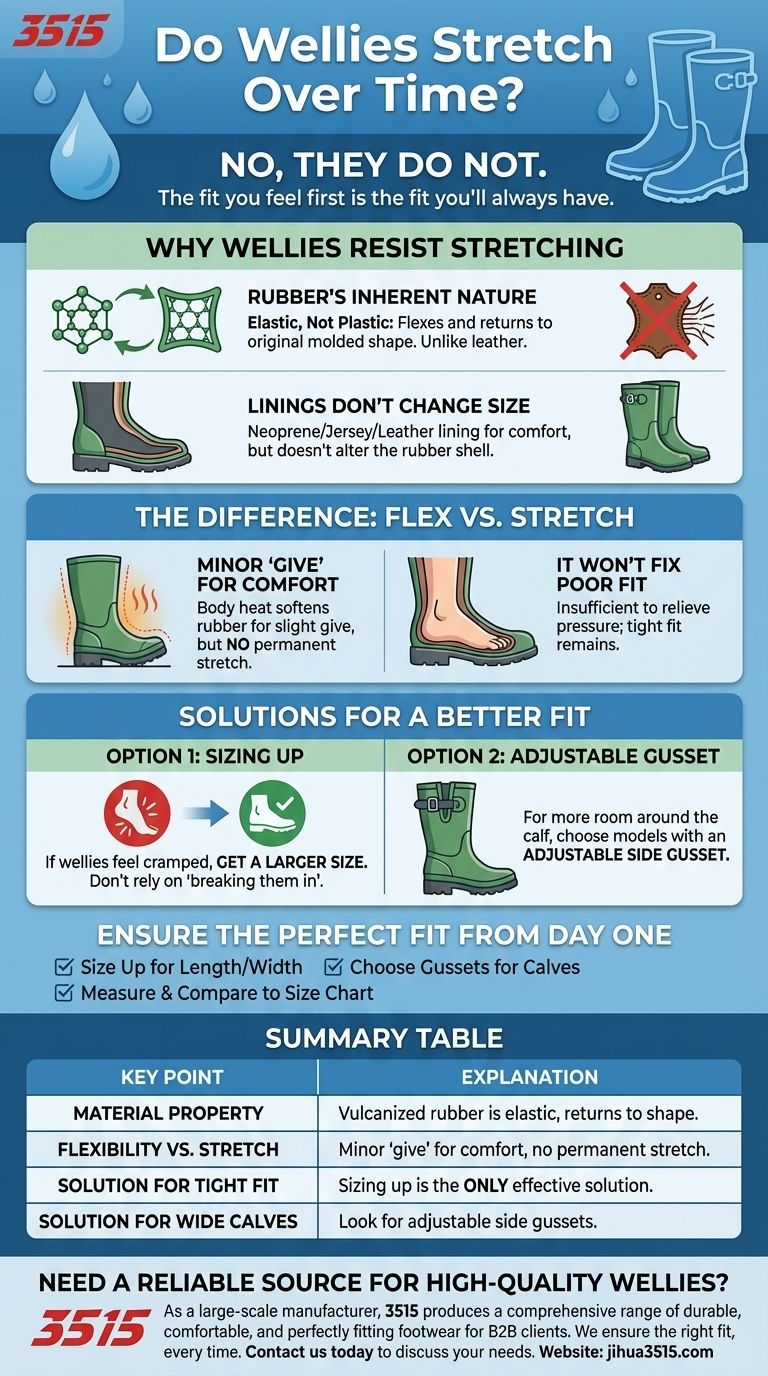
Visual Guide
Related Products
- Durable Waterproof Rain Boots | Custom Manufacturer for Wholesale & Brands
- Durable Goodyear Welt Leather Work Boots for Wholesale & Private Label
- Wholesale Durable Leather Work Boots | 8-Inch Goodyear Welt Manufacturer
- Premium Wholesale Tactical Style Safety Shoes Boots with Quick Lacing
- Durable High-Ankle Tactical Boots Wholesale Manufacturer for Custom & Bulk Orders
People Also Ask
- What are the main materials for waterproof rain boots? Choose the Right Material for Durability & Comfort
- What is the overall recommendation for choosing rain boot materials? A Guide to Rubber vs. PVC
- How does boot height affect waterproofing? Choose the Right Height for Ultimate Protection
- Why are rain boots more flexible and comfortable than snow boots? The Key Differences Explained
- What are the best types of shoes for different gardening conditions? Find Your Perfect Match.



















