
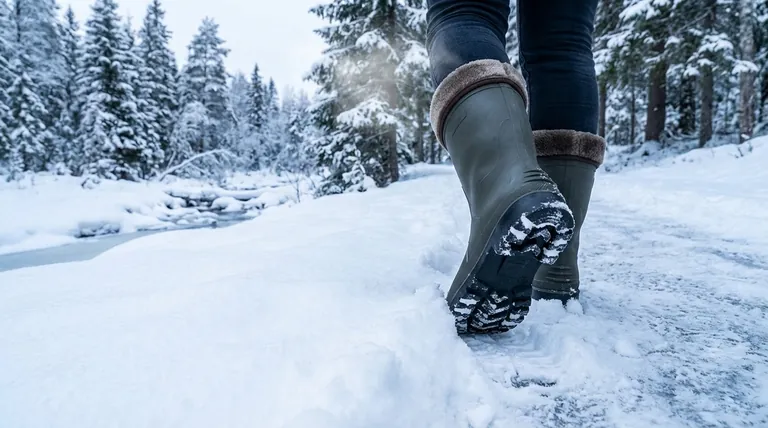
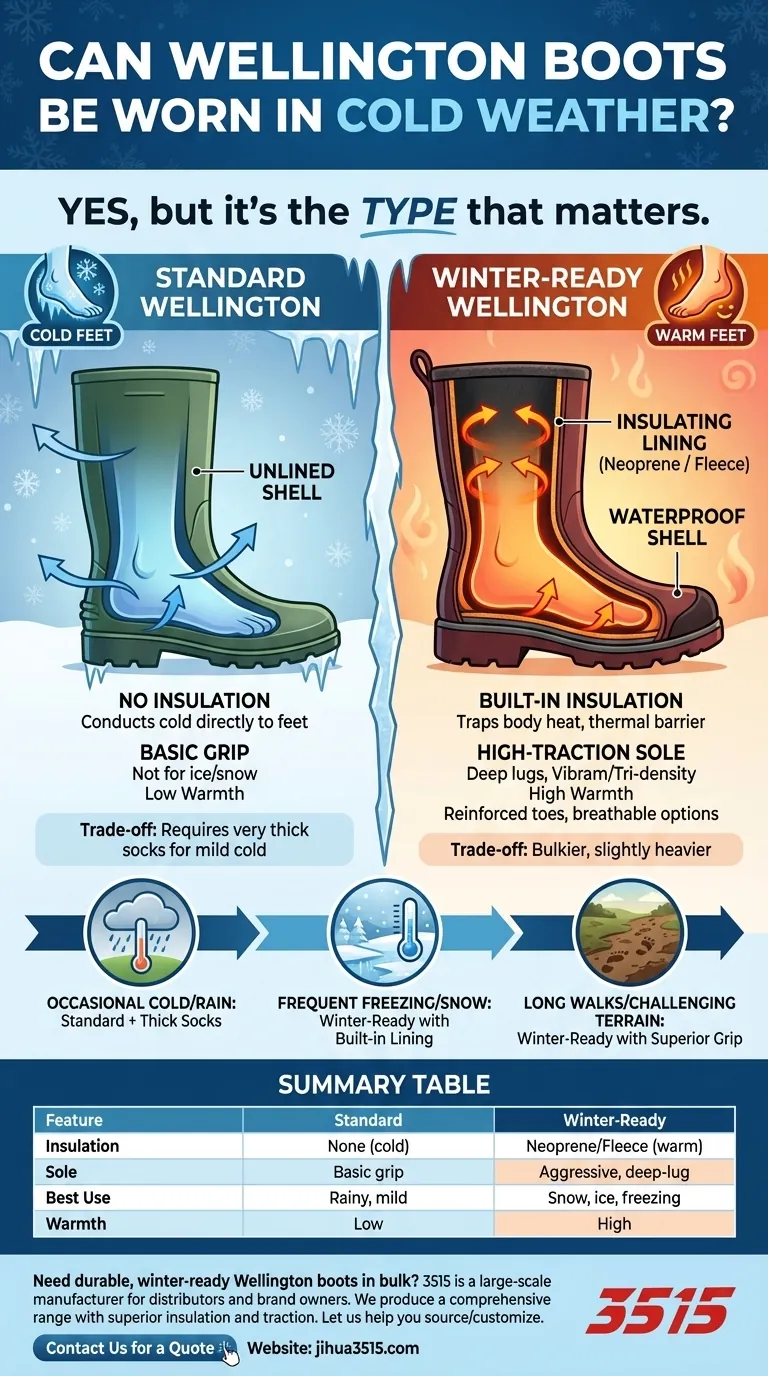
Yes, but it's the type of Wellington boot that truly matters. You can absolutely wear Wellingtons in cold weather, but only if they are specifically designed for it. A standard, unlined rubber boot will leave your feet cold, while a winter-specific Wellington with proper insulation will provide the warmth and safety you need.
The core difference lies in insulation. While all Wellingtons are waterproof, only those with built-in linings like neoprene or fleece are designed to retain heat and keep your feet warm in freezing temperatures.
What Defines a Winter-Ready Wellington?
A standard Wellington boot is simply a waterproof shell. The rubber itself offers no insulation and will conduct cold directly to your feet. A true winter Wellington is an engineered system designed for warmth, comfort, and safety.
The Critical Role of Insulation
The single most important feature is the lining. It traps a layer of air, warmed by your body heat, creating a thermal barrier against the cold ground and air.
Look for materials like neoprene, a synthetic rubber used in wetsuits that provides excellent insulation even when damp. Fleece-lined neoprene offers an even cozier and warmer experience for very cold conditions.
The Foundation: A High-Traction Sole
Cold weather often means ice, snow, and slippery mud. A basic wellie sole is not designed for these hazards.
Winter models feature deep, aggressive lugs for grip. Look for boots with super-grippy Vibram soles or tri-density soles, which are specifically engineered to provide superior traction and stability on treacherous surfaces.
The Supporting Features
Beyond the main components, small details enhance performance. Reinforced toes add durability, and some advanced models feature breathable linings that help manage moisture from sweat, which can otherwise make your feet feel cold and damp.
Understanding the Trade-offs
Choosing the right boot means understanding its limitations. Not all Wellingtons are created equal, and using the wrong one can lead to discomfort and risk.
Standard Wellies are Not Winter Boots
It's crucial to recognize that a basic, unlined Wellington boot (like a standard Hunter model) is not designed for cold weather. Without an insulating liner or extremely thick wool socks, the rubber will quickly make your feet cold. They offer waterproofing, but not warmth.
Adding Your Own Insulation
You can improve the cold-weather performance of a standard wellie by adding thick wool socks or removable thermal insoles. However, this is only a solution for mild cold, not for freezing temperatures or prolonged exposure to snow.
Bulk vs. Warmth
A fully insulated winter Wellington will naturally be bulkier and slightly heavier than its unlined counterpart. This is the trade-off for superior warmth and a more robust, grippy sole.
Making the Right Choice for Your Goal
Select your boot based on its intended use to ensure you get the performance you need without compromise.
- If your primary focus is occasional cold, rainy days: A standard Wellington paired with thick wool socks and a thermal insole is a versatile and sufficient solution.
- If your primary focus is frequent use in snow or freezing temperatures: Invest in a dedicated winter Wellington with a built-in neoprene or fleece lining and a high-traction sole for warmth and safety.
- If your primary focus is long walks on challenging, muddy terrain: Prioritize a boot with a superior, all-terrain sole like Vibram, ensuring it also has the insulation required for the temperature.
By understanding the difference between simple waterproof protection and true winter performance, you can confidently keep your feet warm and dry in any condition.
Summary Table:
| Feature | Standard Wellington | Winter-Ready Wellington |
|---|---|---|
| Insulation | None (cold) | Neoprene or Fleece Lining (warm) |
| Sole | Basic grip | Aggressive, deep-lug sole (e.g., Vibram) |
| Best Use | Rainy days, mild weather | Snow, ice, freezing temperatures |
| Warmth Level | Low (requires thick socks) | High (built-in thermal barrier) |
Need durable, winter-ready Wellington boots in bulk?
As a large-scale manufacturer, 3515 produces a comprehensive range of insulated footwear for distributors, brand owners, and bulk clients. Our production capabilities encompass all types of cold-weather boots designed with superior insulation and traction. Let us help you source or customize the perfect winter Wellingtons for your market.
Contact us today for a quote!
Visual Guide
Related Products
- Durable Waterproof Rain Boots | Custom Manufacturer for Wholesale & Brands
- Durable Goodyear Welt Leather Work Boots for Wholesale & Private Label
- Wholesale Durable Leather Work Boots | 8-Inch Goodyear Welt Manufacturer
- High-Traction Suede Tactical Boots Wholesale & Custom Manufacturing
- Premium Wholesale Tactical Style Safety Shoes Boots with Quick Lacing
People Also Ask
- What are the main materials for waterproof rain boots? Choose the Right Material for Durability & Comfort
- What is the overall recommendation for choosing rain boot materials? A Guide to Rubber vs. PVC
- How does boot height affect waterproofing? Choose the Right Height for Ultimate Protection
- Why are rain boots more flexible and comfortable than snow boots? The Key Differences Explained
- What are the best types of shoes for different gardening conditions? Find Your Perfect Match.



















