
Yes, Wellington boots can be customized to a significant degree, moving far beyond simple color choices. Many manufacturers and specialized bootmakers offer options that allow you to tailor the boot's fit, materials, and functional features to your specific requirements.
Customization transforms the Wellington boot from a generic, off-the-shelf product into a purpose-built tool. The key is to understand that these options range from selecting standard features to commissioning a truly bespoke fit for professional or orthopedic needs.
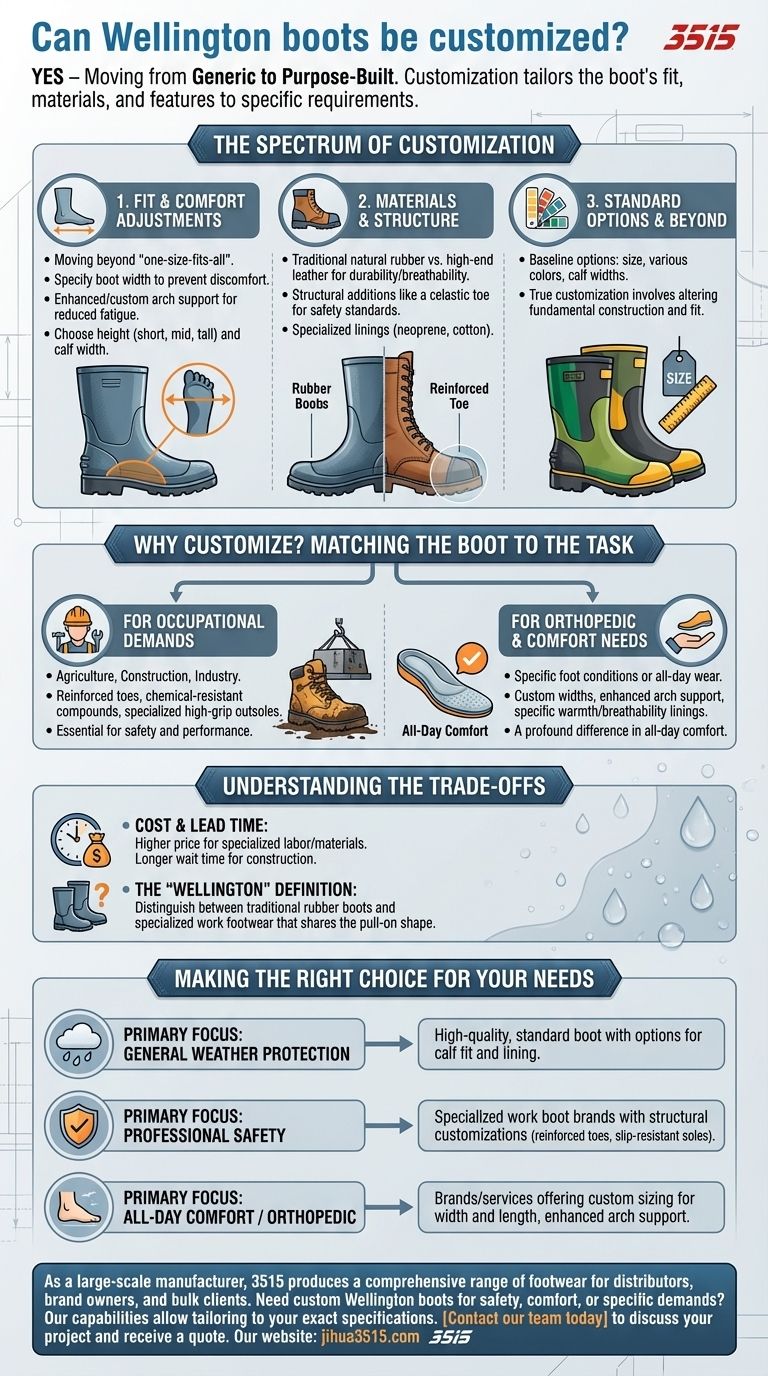
The Spectrum of Wellington Customization
True customization involves altering the fundamental construction and fit of the boot. This process can be broken down into several key areas where you can make specific choices.
Standard Options: Beyond Size and Color
Most high-quality brands provide a baseline of options. This includes selecting boot height (short, mid, tall), various colors, and often different calf widths to accommodate a wider range of body types.
Performance and Fit Adjustments
This is where customization delivers the most significant value for comfort and utility.
You can often specify the boot width, moving beyond a standard "one-size-fits-all" model. This is critical for preventing discomfort and blisters during long periods of wear.
Another key area is arch support. Some makers allow you to request enhanced or custom-molded insoles to provide better support for your specific foot shape, reducing fatigue.
Material and Structural Choices
While traditional Wellingtons are made of natural rubber, some high-end work boots in the "Wellington style" may be crafted from different types of leather, offering a different balance of durability and breathability.
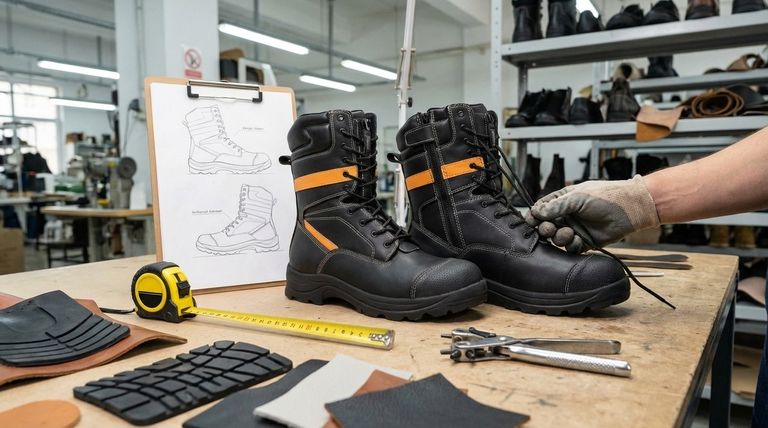
For demanding environments, you can add structural features. A celastic toe (a type of hardened composite) can be added for protection, creating a safety boot that meets specific occupational standards.
Why Customize? Matching the Boot to the Task
The decision to customize a Wellington boot is driven by a need that an off-the-shelf product cannot meet. The goal is to align the boot's features with its intended purpose.
For Occupational Demands
Professionals in agriculture, construction, or industrial settings require more than just waterproofing. Customizations like reinforced toes, chemical-resistant rubber compounds, or specialized outsoles for superior grip are often essential for safety and performance.
For Orthopedic and Comfort Needs
For individuals with specific foot conditions or those who wear their boots all day, a perfect fit is non-negotiable. Custom widths, enhanced arch support, and specific linings (e.g., neoprene for warmth vs. cotton for breathability) can make a profound difference in all-day comfort.
Understanding the Trade-offs
While customization offers clear benefits, it's important to be aware of the practical considerations and potential limitations.
Cost and Lead Time
Customized or bespoke boots will almost always be more expensive than standard models. The price reflects the specialized labor and materials involved. Be prepared for a longer wait time, as the boots need to be constructed to your specifications.
The "Wellington" Definition
It is important to distinguish between a traditional rubber Wellington and a "Wellington-style" work boot. As you add features like leather uppers or safety toes, you may be moving into a category of specialized work footwear that shares the classic pull-on shape but serves a different function than a classic rain boot.
Making the Right Choice for Your Needs
To decide on the right level of customization, first define your primary goal for the boots.
- If your primary focus is general weather protection: A high-quality, standard boot with options for calf fit and lining will likely meet your needs perfectly.
- If your primary focus is professional safety: Seek out specialized work boot brands that explicitly offer structural customizations like reinforced toes and slip-resistant soles.
- If your primary focus is all-day comfort or orthopedic support: Prioritize brands or services that offer custom sizing for width and length, along with options for enhanced arch support.
By understanding the available options, you can acquire a boot that is no longer a compromise but a precise solution built for your purpose.
Summary Table:
| Customization Area | Available Options | Key Benefit |
|---|---|---|
| Fit & Comfort | Width sizing, arch support, boot height | Reduces fatigue, prevents blisters |
| Materials | Natural rubber, leather, specialized linings | Enhances durability, breathability, or warmth |
| Safety Features | Celastic safety toe, slip-resistant soles | Meets occupational safety standards |
As a large-scale manufacturer, 3515 produces a comprehensive range of footwear for distributors, brand owners, and bulk clients.
Do you need Wellington boots customized for safety, comfort, or specific occupational demands? Our production capabilities encompass all types of shoes and boots, allowing us to tailor fit, materials, and features to your exact specifications.
Contact our team today to discuss your custom Wellington boot project and receive a personalized quote.
Visual Guide
Related Products
- Durable Waterproof Rain Boots | Custom Manufacturer for Wholesale & Brands
- Durable Goodyear Welt Leather Work Boots for Wholesale & Private Label
- Wholesale Durable Leather Work Boots | 8-Inch Goodyear Welt Manufacturer
- High-Traction Suede Tactical Boots Wholesale & Custom Manufacturing
- Premium Wholesale Tactical Style Safety Shoes Boots with Quick Lacing
People Also Ask
- What are the main materials for waterproof rain boots? Choose the Right Material for Durability & Comfort
- What is the overall recommendation for choosing rain boot materials? A Guide to Rubber vs. PVC
- How does boot height affect waterproofing? Choose the Right Height for Ultimate Protection
- Why are rain boots more flexible and comfortable than snow boots? The Key Differences Explained
- What are the best types of shoes for different gardening conditions? Find Your Perfect Match.



















