
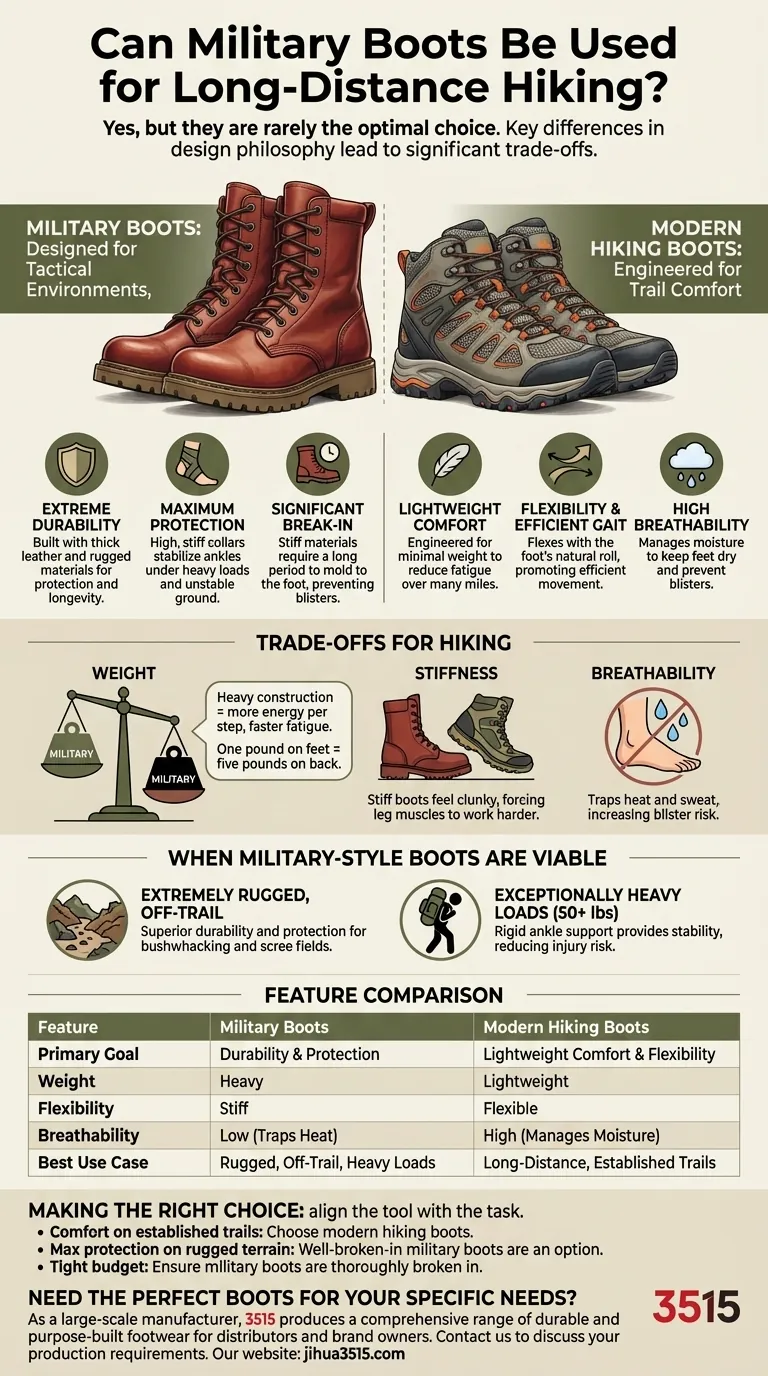
Yes, you can use military boots for long-distance hiking, but they are rarely the optimal choice. While they offer exceptional durability and ankle support, they were designed for tactical environments, not for the specific biomechanics of covering long distances on a trail. Their significant weight and stiffness can lead to premature fatigue and discomfort compared to modern, dedicated hiking footwear.
The core issue is a mismatch in design philosophy. Military boots prioritize durability and protection above all else, while modern hiking boots are engineered for lightweight comfort and flexibility to minimize fatigue over many miles.
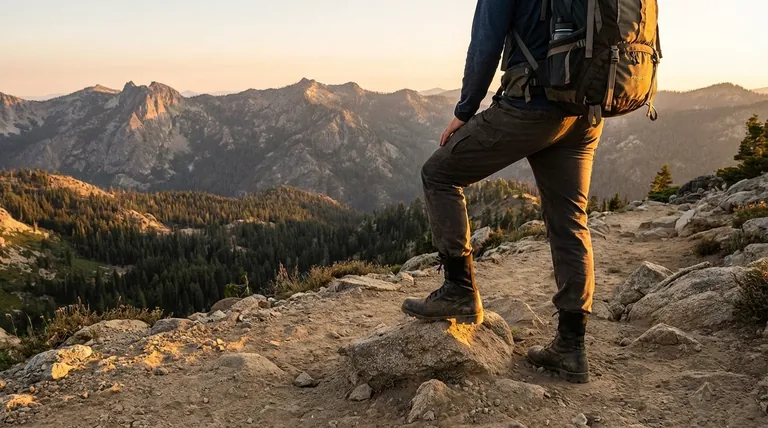
The Original Purpose: Why Military Boots Are Built Differently
To understand their performance on the trail, we must first understand their intended purpose. Military boots are tools designed for the battlefield, where conditions are unpredictable and demanding.
Designed for Durability, Not Distance
Military boots are constructed with thick leather and rugged materials to withstand extreme abuse, from rocky terrain to urban environments. This focus on longevity and protection means other factors, like weight and flexibility, are secondary.
Prioritizing Protection and Ankle Support
A key feature is exceptional ankle support. The high, stiff collars are designed to prevent twists and sprains when soldiers are carrying heavy loads (rucking) or navigating highly unstable ground. This stability is a primary design driver.
The Critical "Break-In" Period
Because of their stiff, full-grain leather construction, military boots demand a significant break-in period. This process allows the leather to mold to your foot, preventing the severe blisters and hot spots that would otherwise occur.
Understanding the Trade-offs for Hiking
Using a tool for a purpose it wasn't designed for always involves compromises. For hiking, the trade-offs of using military boots are significant and directly impact comfort and performance.
Weight and Fatigue
The most immediate drawback is weight. A common rule of thumb is that one pound on your feet is equivalent to carrying five pounds on your back. The heavy construction of military boots requires more energy with every step, leading to faster fatigue over a long day of hiking.
Stiffness vs. Flexibility
Modern hiking boots are engineered to flex with the natural roll of your foot, promoting an efficient gait. Many military boots are far stiffer, which can feel clunky and unnatural on a trail, forcing your leg muscles to work harder to compensate.
Breathability and Moisture Management
Durability often comes at the cost of breathability. The thick leather and waterproof membranes common in military boots trap heat and sweat. On a long hike, moisture is the primary cause of blisters and other foot-related issues.
When Military-Style Boots Might Be a Viable Choice
Despite the drawbacks, there are specific scenarios where the unique strengths of a military boot can be an asset.
For Extremely Rugged, Off-Trail Terrain
If your hike involves significant bushwhacking, scree fields, or navigating areas with no established trail, the superior durability and ankle protection can be a distinct advantage over lighter footwear.
When Carrying Exceptionally Heavy Loads
For those carrying very heavy packs (e.g., 50+ lbs), the rigid ankle support of a military boot can provide a welcome sense of stability and reduce the risk of injury, even at the cost of extra weight.
Making the Right Choice for Your Hike
Ultimately, your decision should be based on your specific goal and the conditions you expect to face.
- If your primary focus is comfort over long distances on established trails: Choose a dedicated, lightweight hiking boot or trail runner.
- If your primary focus is maximum ankle support and durability for rugged, off-trail conditions: A well-broken-in military boot can be a viable, though heavy, option.
- If you are on a tight budget and already own a pair: Ensure they are thoroughly broken in and test them on shorter hikes before committing to a long-distance trek.
Choosing the right footwear is about aligning the tool with the task to ensure your journey is defined by the experience, not by your feet.
Summary Table:
| Feature | Military Boots | Modern Hiking Boots |
|---|---|---|
| Primary Design Goal | Durability & Protection | Lightweight Comfort & Flexibility |
| Weight | Heavy | Lightweight |
| Flexibility | Stiff | Flexible, promotes natural gait |
| Breathability | Often low (traps heat/sweat) | High (manages moisture) |
| Best Use Case | Rugged, off-trail, heavy loads | Long-distance, established trails |
Need the Perfect Boots for Your Specific Needs?
As a large-scale manufacturer, 3515 produces a comprehensive range of durable and purpose-built footwear for distributors, brand owners, and bulk clients. Whether you need the rugged protection of a military-style boot or the lightweight comfort of a modern hiker, our production capabilities encompass all types of shoes and boots.
Let us help you equip your customers with the right tool for the task. Contact our team today to discuss your production requirements.
Visual Guide
Related Products
- Durable Military Combat Boots with Water Drainage for Wholesale & OEM
- High-Traction Suede Tactical Boots Wholesale & Custom Manufacturing
- Durable High-Ankle Tactical Boots for Wholesale & Custom Manufacturing
- Durable Mid-Cut Tactical Boots for Wholesale & Private Label
- Wholesale Waterproof Tactical Boots Custom Suede & High-Traction Soles
People Also Ask
- Why must gait validation for military applications be conducted in combat boots? Ensure Data Accuracy for Soldiers
- What are the common types of combat boots? Find the Right Boot for Your Mission
- What factors should be considered when choosing military boots for hiking? Durability vs. Weight for Your Terrain
- What are the key considerations when choosing military boots? Prioritize Compliance, Environment & Fit
- How should the midfoot and heel fit in military boots? Achieve a Snug, Secure Fit for Blister Prevention



















