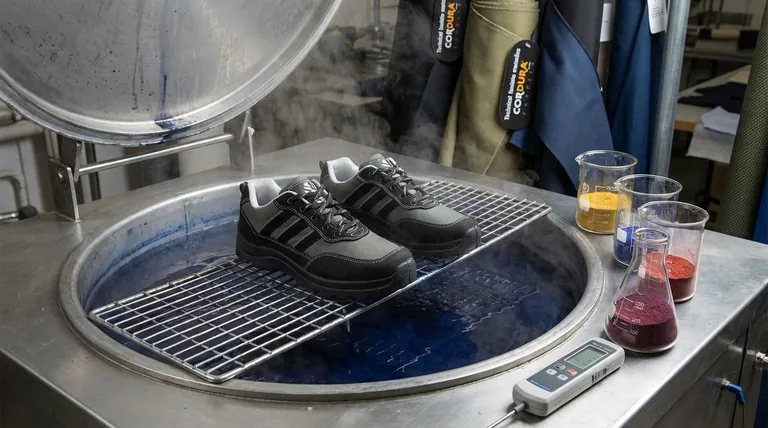
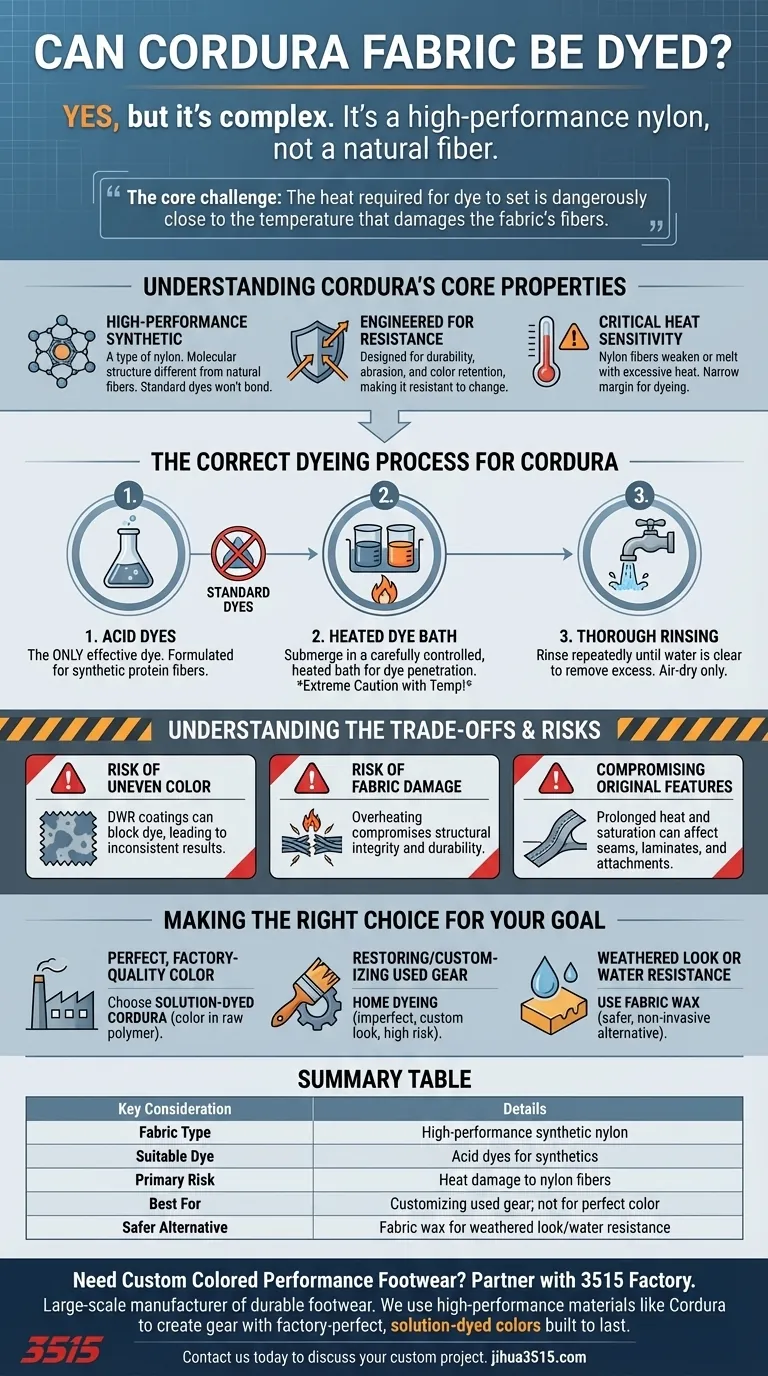
Yes, Cordura fabric can be dyed, but it requires a specialized approach due to its synthetic nature. Unlike natural fibers, Cordura is a type of high-performance nylon that will not accept standard dyes. The correct method involves using acid dyes specifically formulated for synthetics and a carefully controlled heated dye bath.
The core challenge of dyeing Cordura lies in a fundamental conflict: the heat required for the dye to set is very close to the temperature that can permanently damage the fabric's nylon fibers.
Understanding Cordura's Core Properties
To understand why dyeing Cordura is so specific, you must first understand the material itself. It is not a simple textile; it is an engineered fabric designed for extreme performance.
A High-Performance Synthetic
Cordura is a synthetic fabric, a type of nylon. Its molecular structure is fundamentally different from natural fibers like cotton or wool. Standard dyes cannot chemically bond with these synthetic polymers, rendering them ineffective.
Engineered for Resistance
The primary attributes of Cordura are its exceptional durability and resistance to abrasion, tearing, and fading. The fabric is explicitly designed to hold its color and withstand environmental stress, which inherently makes it resistant to the very changes you are trying to introduce with a new dye.
A Critical Sensitivity to Heat
While durable against abrasion, Cordura's nylon fibers are sensitive to high heat. As noted when ironing, excessive temperatures can cause the fibers to shrink, weaken, or even melt. This creates a significant challenge, as the most effective dyes for nylon require heat to set properly.
The Correct Dyeing Process for Cordura
Attempting to dye Cordura with the wrong materials or process will fail and may ruin your item. The correct method is precise and requires careful attention.
The Right Tool: Acid Dyes
The only effective dyes for materials like Cordura are acid dyes. These are formulated to bond with synthetic protein fibers like nylon. Using a standard all-purpose dye will only stain the surface and will wash out quickly, resulting in a faded, splotchy appearance.
The Heated Dye Bath Method
The standard process involves dissolving the acid dye in a water bath and heating it to a specific temperature. The Cordura item is then fully submerged and agitated in this heated bath for a period of time to allow the dye to penetrate and bond with the nylon fibers.
The Importance of Rinsing
After the dye bath, a thorough rinsing process is critical. You must rinse the fabric repeatedly until the water runs clear to remove any excess, unbonded dye. The item should then be air-dried, as a machine dryer's high heat could damage the material.
Understanding the Trade-offs and Risks
Dyeing Cordura is a high-risk modification. Before you begin, you must accept the potential for imperfect results or permanent damage.
Risk of Uneven Color
Many pieces of gear made from Cordura have durable water repellent (DWR) coatings or other chemical finishes. These coatings can block the dye from absorbing evenly, leading to a splotchy or inconsistent final color.
Risk of Fabric Damage
This is the most significant risk. The window between the temperature needed to set the dye and the temperature that damages nylon is very narrow. Overheating the fabric can compromise its structural integrity, reducing the very durability and strength for which Cordura is known.
Compromising Original Features
The dyeing process, which involves prolonged heat and water saturation, can impact other features of the item. It may affect seam tape, laminates, or other materials attached to the Cordura fabric.
Making the Right Choice for Your Goal
Before proceeding, clarify your objective. The right approach depends entirely on what you want to achieve.
- If your primary focus is a perfect, factory-quality color: Purchase gear made from solution-dyed Cordura, where the color is added to the raw polymer before it is even woven.
- If your primary focus is restoring or customizing used gear: Home dyeing is a possibility, but test on a hidden area first and be prepared for an imperfect, "custom" look rather than a uniform finish.
- If your primary focus is improving water resistance or achieving a weathered aesthetic: Consider using a fabric wax designed for synthetic gear as a safer, less invasive alternative to dyeing.
Ultimately, understanding Cordura's fundamental properties is the key to successfully and safely modifying your high-performance gear.
Summary Table:
| Key Consideration | Details |
|---|---|
| Fabric Type | High-performance synthetic nylon |
| Suitable Dye | Acid dyes for synthetics |
| Primary Risk | Heat damage to nylon fibers |
| Best For | Customizing used gear; not for perfect, uniform color |
| Safer Alternative | Fabric wax for a weathered look or improved water resistance |
Need Custom Colored Performance Footwear? Partner with 3515 Factory.
As a large-scale manufacturer, we produce a comprehensive range of durable footwear and boots for distributors, brand owners, and bulk clients. Our production capabilities include working with high-performance materials like Cordura to create gear with factory-perfect, solution-dyed colors that are built to last.
Let us handle the complexities of material science and manufacturing. Contact us today to discuss your custom footwear project and benefit from our expertise in bulk production.
Visual Guide
Related Products
- Lightweight Breathable Sneakers with Wet-Traction Grip for Wholesale & Private Label
- Wholesale Durable Safety Boots Manufacturer Customizable Steel Toe Work Boots
- Durable High-Ankle Tactical Boots Wholesale Manufacturer for Custom & Bulk Orders
- Wholesale Durable Camouflage Canvas Shoes with High-Traction Cleated Rubber Sole
- Lightweight Breathable Training Shoes for Wholesale & Custom OEM Manufacturing
People Also Ask
- Why are breathable sneakers necessary for tropical commuting? Stay Cool and Dry in High Humidity
- What role do lightweight training shoes play in urban traffic? Boost Agility and Reaction for Safer City Navigation
- How do lightweight shoes provide support? The Science of Efficient Cushioning & Stability
- What are the style advantages of lightweight shoes? Sleek, Versatile & Modern Comfort
- How do lightweight shoes contribute to healthier feet? Reduce Fatigue & Prevent Foot Problems