
Yes, in most cases, combat boots can be repaired. The ability to fix them is a key feature of well-made footwear, but the success of a repair depends entirely on the type and severity of the damage. Common issues like worn-out soles, broken laces, or loose stitching are standard jobs for a skilled cobbler, while deep structural failures may signal the end of the boot's life.
The core principle of combat boot repair is simple: replaceable components like the outsole are designed for wear and can be fixed, but severe damage to the boot's core structure, particularly the upper, is often permanent.
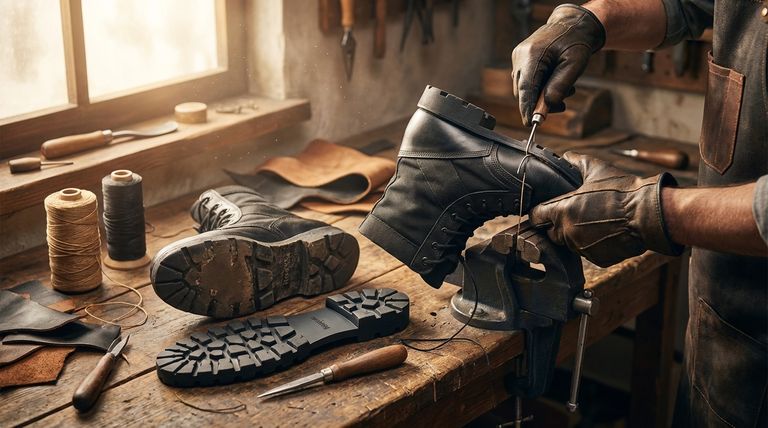
What Can Typically Be Repaired?
Most combat boots are designed with longevity and serviceability in mind. This means several key parts are accessible for professional repair or replacement, extending the boot's functional lifespan significantly.
Resoling the Outsole
This is the single most common and effective repair. The outsole is the rubber layer that contacts the ground and is meant to wear down with use. A professional cobbler can remove the old, worn-out sole and replace it with a new one, often restoring the boot's original grip and performance.
Stitching and Seams
The heavy-duty stitching that holds the boot together can sometimes fray or break, especially at flex points. A cobbler can re-stitch these seams to restore the boot's structural integrity before the problem worsens and causes panels to separate.
Hardware and Laces
This is the easiest fix. Broken eyelets, hooks, or worn-out laces are simple to replace. Addressing these minor issues promptly prevents further damage and ensures the boot remains secure on your foot.
When is a Boot Beyond Repair?
While resilient, combat boots have critical failure points. Damage to these specific areas can compromise the boot's safety and function, making replacement the only viable option.
Severe Damage to the Upper
The "upper" is the main body of the boot that covers your foot. Deep gashes, extensive cracking in leather, or large tears in fabric that go all the way through compromise the boot's structure and weather resistance. This type of damage is generally considered irreparable.
A Compromised Midsole
The midsole is the crucial layer between the outsole and your foot that provides cushioning and support. If this layer crumbles, cracks, or detaches from the upper, the fundamental structure of the boot has failed. This is extremely difficult and often impossible to fix correctly.
Failed Waterproof Liner
If your boots have an integrated waterproof liner (like Gore-Tex) and it gets punctured or torn, the boot will permanently lose its waterproofing in that area. While the boot remains wearable, this core feature cannot be repaired.
Understanding the Trade-offs
Deciding whether to repair or replace involves weighing cost, quality, and practicality. An objective assessment is necessary to make the right financial and functional choice.
The Cost-Benefit Analysis
A full resole by a quality cobbler can be expensive. You must weigh this cost against the price of a new pair. For premium, high-cost boots, a repair is almost always a smart investment. For less expensive boots, the cost of a major repair might be close to the price of a replacement.
The Skill of the Cobbler
Not all repair work is equal. A cheap or inexperienced repair can do more harm than good, potentially unbalancing the boot or failing prematurely. Always seek out a reputable cobbler with proven experience working on rugged, heavy-duty footwear.
Making the Right Call for Your Boots
Use the condition of your boots to guide your decision.
- If your primary focus is longevity for high-quality boots: A professional resole and proactive stitch repair are excellent investments to maximize their lifespan.
- If your boot has worn soles or minor seam splits: These are standard repairs that will restore function at a reasonable cost.
- If your boot's upper is deeply cracked, torn, or the internal structure feels like it's crumbling: It is safer and more practical to invest in a new pair.
Ultimately, understanding the difference between surface wear and structural failure is key to maintaining your footwear.
Summary Table:
| Repairable Damage | Typically NOT Repairable |
|---|---|
| Worn-out outsoles | Severe damage to the upper (deep gashes, large tears) |
| Broken or frayed stitching | Compromised midsole (crumbling, cracking) |
| Damaged hardware & laces | Failed waterproof liner (punctures) |
As a large-scale manufacturer, 3515 produces a comprehensive range of durable footwear for distributors, brand owners, and bulk clients. Our production capabilities encompass all types of boots built for longevity. If you need reliable, high-quality combat boots designed to withstand wear and tear, contact our experts today to discuss your requirements and discover how we can support your business.
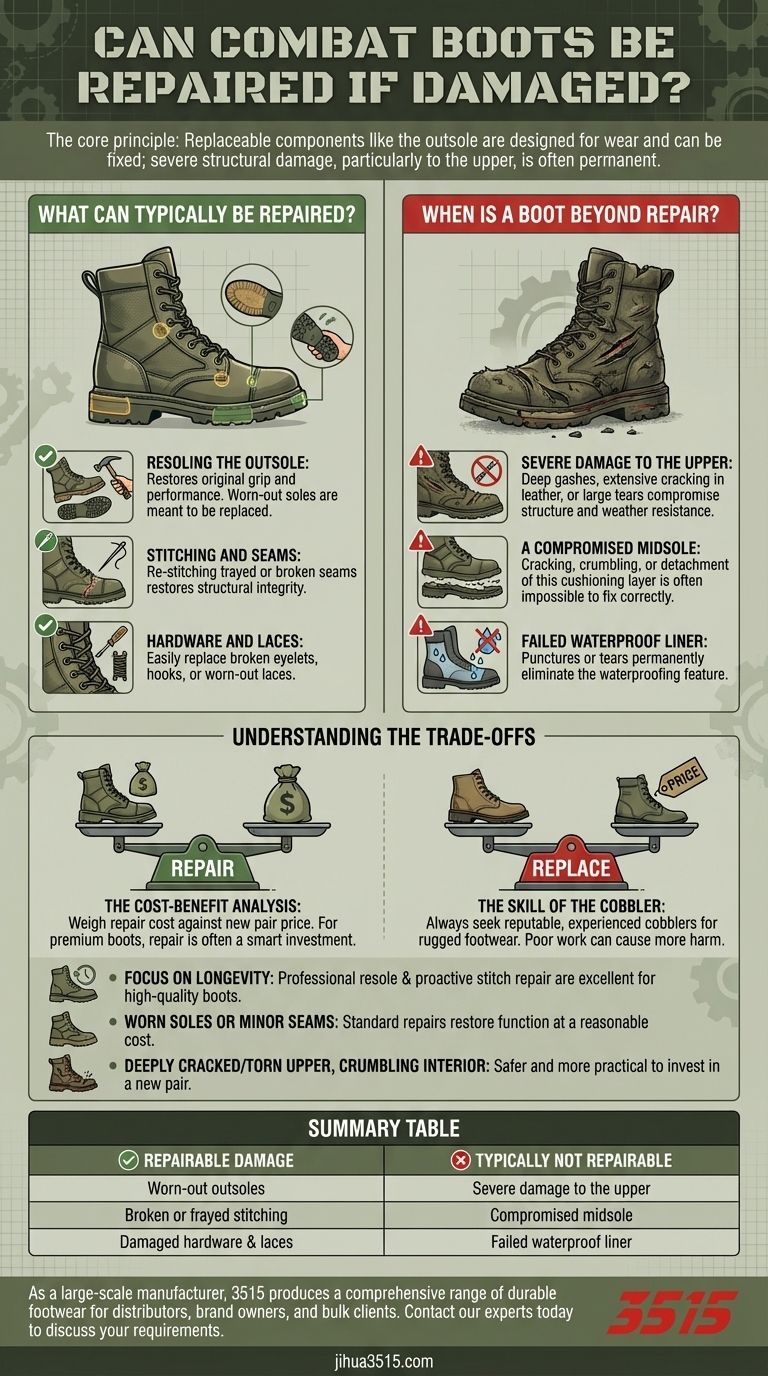
Visual Guide
Related Products
- Durable Military Combat Boots with Water Drainage for Wholesale & OEM
- Durable Leather Tactical Boots Wholesale & Custom Manufacturing for Brands
- High-Traction Suede Tactical Boots Wholesale & Custom Manufacturing
- Wholesale Lightweight Tactical Boots Custom Manufacturer for Desert & Combat Use
- Durable Mid-Cut Tactical Boots for Wholesale & Private Label
People Also Ask
- Why must gait validation for military applications be conducted in combat boots? Ensure Data Accuracy for Soldiers
- What are the common types of combat boots? Find the Right Boot for Your Mission
- What factors should be considered when choosing military boots for hiking? Durability vs. Weight for Your Terrain
- What are the key considerations when choosing military boots? Prioritize Compliance, Environment & Fit
- How should the midfoot and heel fit in military boots? Achieve a Snug, Secure Fit for Blister Prevention

















