
The evolution of the combat boot is a story of function-driven design, transforming from simple leather footwear into highly specialized, technologically advanced equipment. Initially serving as basic protection, boots were fundamentally reshaped by the demands of World War II and later adapted with modern materials for new combat environments like deserts and jungles.
The history of the combat boot is not about fashion; it is a direct response to the changing needs of the soldier. Every significant change—from reinforced ankle support to new material compositions—was driven by the urgent need for better protection, durability, and mobility in harsh and varied combat zones.
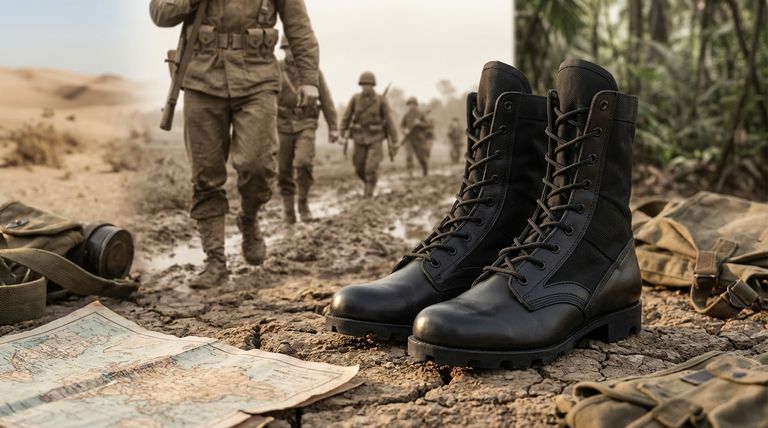
From Ancient Armies to Modern Warfare
The core purpose of the combat boot has remained constant: protect the soldier's feet. However, the methods for achieving that protection have evolved dramatically in response to new technologies and new types of warfare.
The Earliest Designs
The concept began with ancient armies like the Romans, who used tall, hobnailed sandals for durability and traction on long marches. These early designs established the foundation of rugged military footwear.
The All-Leather Era
For centuries, the standard was a simple, all-leather boot. By World War II, U.S. and European boots were primarily designed for the brutal conditions of trench warfare, prioritizing durability above all else.
World War II: The Birth of Specialization
The Second World War was a critical turning point. For the first time, boots were designed for specific roles, most notably the "jump boots" used by paratroopers.
These boots featured taller shafts and reinforced toe caps. This was a direct solution to a specific problem: providing crucial ankle support and protection from the severe impact of parachute landings.
The Shift to Modern Materials and Environments
After WWII, the nature of conflict changed, and so did the environments where soldiers fought. This forced a fundamental rethinking of the traditional all-leather combat boot.
New Terrains, New Demands
The single, heavy-duty design proved ill-suited for every climate. A boot designed for European mud was a liability in a hot, wet jungle or a dry, sandy desert.
The Introduction of Mixed Materials
In the latter half of the 20th century, designs began incorporating new materials. The move toward a blend of leather, suede, and nylon allowed for boots that were more breathable, lighter, and better suited for specific environments.
The Modern Desert Boot
The most visible modern evolution came in the 2000s with the widespread adoption of tan-colored desert combat boots. These boots were specifically engineered for modern warfare in arid regions, offering versatility and better performance in the heat.
The Technological Leap
Today's boots incorporate advanced features that were unavailable to previous generations. Modern combat footwear often includes specialized technology for waterproofing, insulation, and enhanced traction, making it a piece of high-performance equipment.
Understanding the Trade-offs
Choosing the right materials and design for a combat boot always involves balancing competing priorities. There is no single "perfect" boot, only the best boot for a specific mission.
Protection vs. Agility
The classic, heavy, full-grain leather boot offers maximum durability and foot protection. However, this toughness comes at the cost of weight, breathability, and flexibility, which can slow a soldier down.
Durability vs. Environment
Modern composite boots using nylon and suede are significantly lighter and more breathable, making them ideal for hot climates or missions requiring speed. The trade-off is that they may not offer the same level of raw, long-term durability as their all-leather predecessors.
Making the Right Choice for Your Goal
Understanding the functional drivers behind the combat boot's evolution helps clarify its purpose, whether for historical context, practical use, or cultural appreciation.
- If your primary focus is historical accuracy: Recognize that World War II was the catalyst for specialized, role-specific boot design, moving beyond a one-size-fits-all approach.
- If your primary focus is modern performance: Understand that the shift to mixed materials like nylon was driven by the need for boots adapted to specific environmental challenges, such as heat and moisture.
- If your primary focus is core function: Remember that every design change, from reinforced toes to rugged soles, has always prioritized soldier protection and stability above all else.
Ultimately, the history of the combat boot is a direct reflection of the changing face of warfare itself, with each stitch and sole engineered to give soldiers a critical advantage.
Summary Table:
| Era | Key Features | Primary Driver |
|---|---|---|
| Ancient / Early | Leather, hobnailed soles | Basic foot protection on long marches |
| WWII | Reinforced ankle support, taller shafts (e.g., jump boots) | Role specialization, impact protection |
| Modern | Mixed materials (leather, nylon, suede), waterproofing, specialized soles | Adaptation to specific environments (desert, jungle) |
Need high-performance tactical or combat boots for your market?
As a large-scale manufacturer, 3515 produces a comprehensive range of footwear for distributors, brand owners, and bulk clients. Our production capabilities encompass all types of military, tactical, and duty boots, engineered with the latest materials and technologies for durability, comfort, and mission-specific performance.
Contact us today to discuss your requirements and get a custom quote.
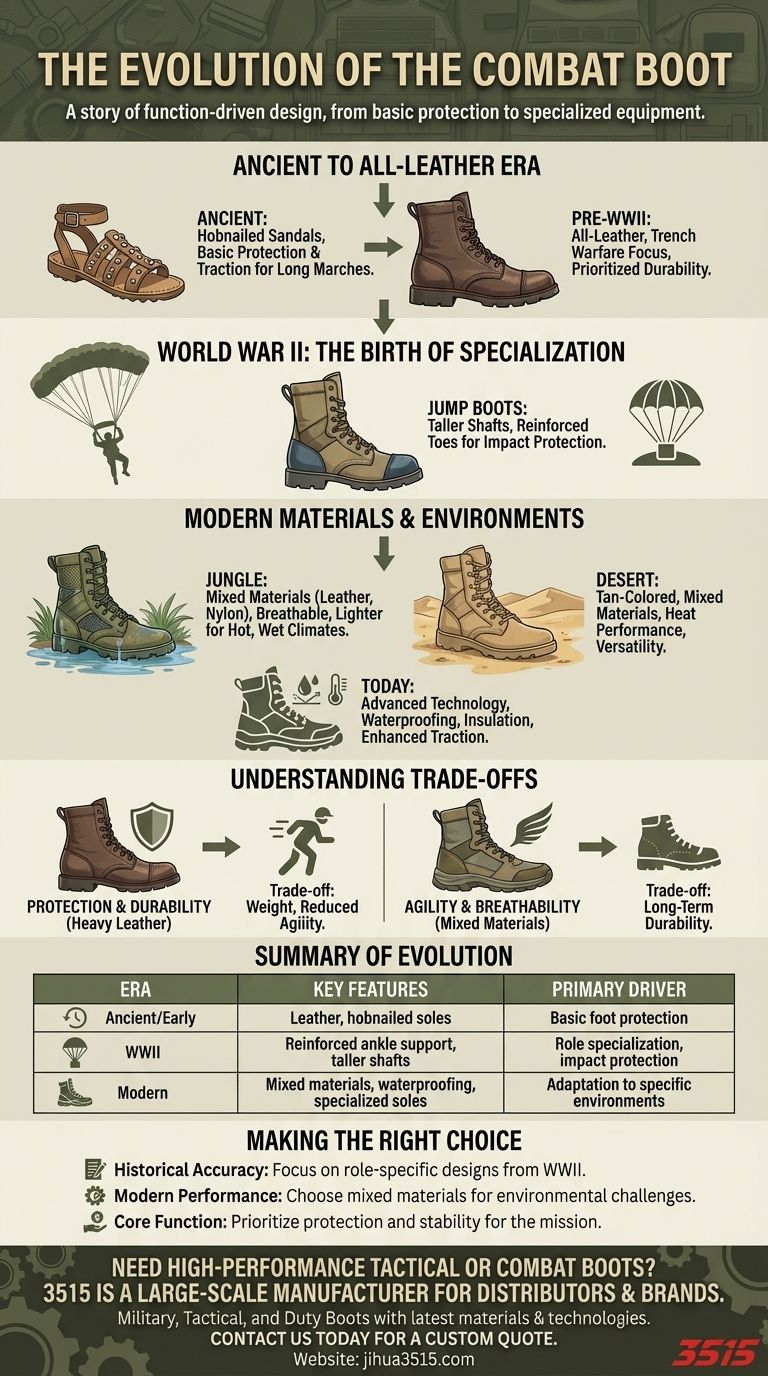
Visual Guide
Related Products
- Durable Military Combat Boots with Water Drainage for Wholesale & OEM
- High-Traction Suede Tactical Boots Wholesale & Custom Manufacturing
- Durable Leather Tactical Boots Wholesale & Custom Manufacturing for Brands
- Wholesale Lightweight Tactical Boots Custom Manufacturer for Desert & Combat Use
- Durable Mid-Cut Tactical Boots for Wholesale & Private Label
People Also Ask
- Why must gait validation for military applications be conducted in combat boots? Ensure Data Accuracy for Soldiers
- What are the common types of combat boots? Find the Right Boot for Your Mission
- What factors should be considered when choosing military boots for hiking? Durability vs. Weight for Your Terrain
- What are the key considerations when choosing military boots? Prioritize Compliance, Environment & Fit
- How should the midfoot and heel fit in military boots? Achieve a Snug, Secure Fit for Blister Prevention

















