
Generally speaking, standard Wellington boots are not suitable for long-distance walking. While they excel at waterproofing, they typically lack the anatomical support, shock absorption, and secure fit required for extended treks, making hiking boots the superior option for mileage.
The Core Insight: Wellington boots are situational tools designed for deep mud and standing water, not distance. Attempting to use them for long hikes often results in foot fatigue and instability because the rubber construction prioritizes impermeability over biomechanical support.
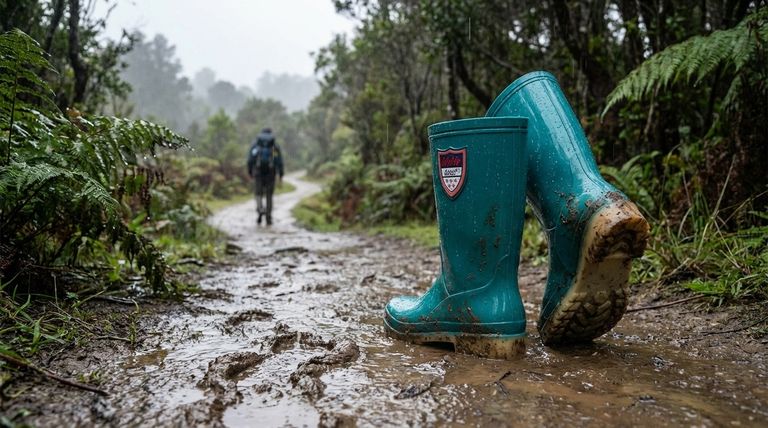
The Structural Limitations of Rubber Footwear
Lack of Ankle and Arch Support
Most Wellington boots are constructed from a flexible, unstructured rubber shell. Unlike walking boots, they do not provide the rigid ankle stability necessary to protect your joints on uneven terrain.
This lack of support forces your foot and lower leg muscles to work harder to maintain balance. Over long distances, this leads to accelerated muscle fatigue and potential injury.
The Problem of Fit and Friction
Walking boots are designed to be tightened and laced to secure the foot, preventing movement. Wellington boots are slip-on by design, leaving a gap around the ankle and heel.
Because rubber and similar materials have minimal stretch and do not "break in" like leather hiking boots, your heel is likely to lift and rub with every step. Over several miles, this friction almost guarantees blisters.
"Chamolux" and Lining Nuances
Some premium boots use Chamolux rubber, which is more supple, and feature linings made of neoprene or wool.
While references suggest these linings can eventually conform to your proportions, the outer rubber shell will maintain its original shape. You cannot rely on the boot stretching to accommodate foot swelling during a long hike.
The Exception: Technical Wellies
The Role of Vibram Soles
Not all Wellies are created equal. High-end models equipped with super-sturdy Vibram soles can be suitable for longer walks on flatter ground.
These specific soles provide all-terrain grip and superior traction, bridging the gap between a standard rain boot and a hiking boot. They are effective for leisure activities where deep mud is the primary challenge, rather than steep elevation or rocky paths.
Understanding the Trade-offs
Breathability vs. Waterproofing
The defining feature of a Wellington boot is its total seal against water. However, this same seal prevents moisture (sweat) from escaping.
On a long walk, your feet will perspire. In a rubber boot, that moisture remains trapped, softening the skin and dramatically increasing the likelihood of friction blisters and fungal issues.
Weight and Agility
Rubber boots are heavy. Lifting that extra weight thousands of times over a long distance requires significantly more energy than wearing lightweight, flexible walking boots.
Terrain Suitability
Wellington boots are ideal for deep mud, floods, and farm fields where the mess would rise above the laces of a hiking boot.
However, on rocky, technical, or uneven ground, they are a liability. They lack the precision and stability required to navigate rough trails safely.
Making the Right Choice for Your Goal
To ensure comfort and safety, match your footwear to the specific demands of your environment.
- If your primary focus is walking long distances or hiking: Choose walking boots; they provide the necessary arch support, ankle stability, and breathability to prevent injury and fatigue.
- If your primary focus is deep mud, floods, or heavy snow: Choose Wellington boots; their seamless waterproof design is the only way to keep feet dry in standing water or slush.
- If your primary focus is casual walking on flat, wet terrain: Consider premium Wellies with Vibram soles, which offer a compromise of better traction and durability for shorter durations.
Select footwear based on the terrain you must cross, not just the weather you expect to face.
Summary Table:
| Footwear Type | Best For | Key Limitation for Long Walks |
|---|---|---|
| Standard Wellington Boots | Deep mud, standing water, farm fields | Lack of ankle/arch support; poor fit causes blisters |
| Premium Wellies (Vibram Soles) | Casual walks on flat, wet terrain | Heavy, non-breathable, limited stability on uneven ground |
| Walking/Hiking Boots | Long-distance hiking, rocky/uneven trails | Not fully waterproof in deep water or slush |
Need durable, purpose-built footwear for your specific environment?
As a large-scale manufacturer, 3515 produces a comprehensive range of footwear for distributors, brand owners, and bulk clients. Whether you require high-traction Wellington boots for muddy conditions or supportive hiking boots for long treks, our production capabilities cover all types of shoes and boots tailored to your needs.
Contact us today to discuss your requirements and benefit from our expertise in functional footwear design. Get in touch now!
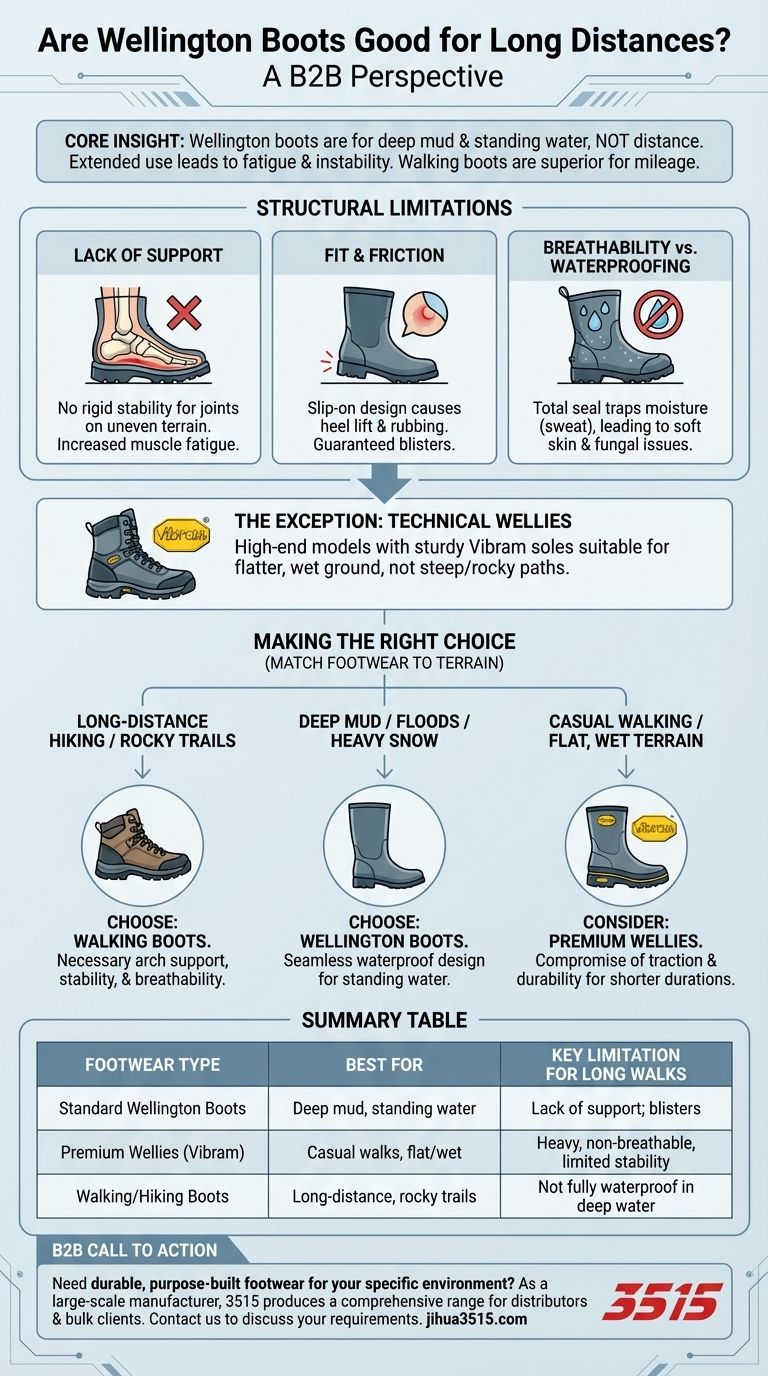
Visual Guide
Related Products
- Durable Waterproof Rain Boots | Custom Manufacturer for Wholesale & Brands
- Durable Goodyear Welt Leather Work Boots for Wholesale & Private Label
- Wholesale Durable Leather Work Boots | 8-Inch Goodyear Welt Manufacturer
- High-Traction Suede Tactical Boots Wholesale & Custom Manufacturing
- Premium Wholesale Tactical Style Safety Shoes Boots with Quick Lacing
People Also Ask
- What are the main materials for waterproof rain boots? Choose the Right Material for Durability & Comfort
- What is the overall recommendation for choosing rain boot materials? A Guide to Rubber vs. PVC
- How does boot height affect waterproofing? Choose the Right Height for Ultimate Protection
- Why are rain boots more flexible and comfortable than snow boots? The Key Differences Explained
- What are the best types of shoes for different gardening conditions? Find Your Perfect Match.



















