
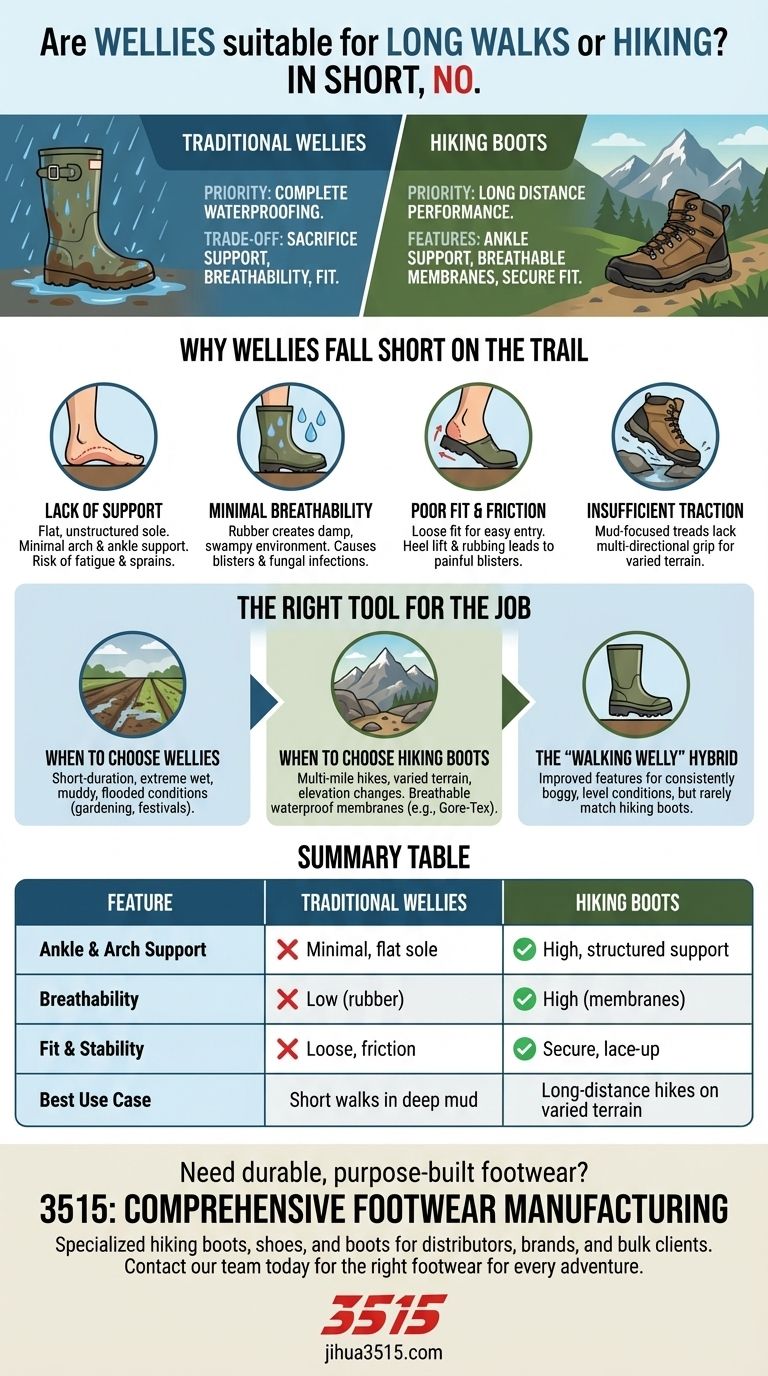
In short, no. Traditional wellington boots are generally unsuitable for long walks or serious hiking due to a fundamental lack of support, breathability, and proper fit. While they excel at keeping your feet dry in extremely wet or muddy conditions, using them for extended distances often leads to discomfort, blisters, and potential injury.
The core issue is a trade-off: Wellies prioritize complete waterproofing above all else, sacrificing the essential ergonomic features—like ankle support, breathability, and a secure fit—that define proper walking and hiking footwear.
Why Traditional Wellies Fall Short on the Trail
Understanding the design limitations of a standard welly makes it clear why they are not built for mileage. Their primary purpose is to create an impermeable barrier against water, not to support the complex mechanics of your foot over thousands of steps.
Lack of Ankle and Arch Support
A classic welly is essentially a rubber shell with a flat, unstructured sole. This design offers virtually no arch support, which can lead to foot fatigue and strain on your ligaments over long distances. The loose shaft also fails to provide any meaningful ankle support, increasing the risk of twists and sprains on uneven terrain.
Minimal Breathability
Rubber is not a breathable material. As you walk and your feet naturally heat up and sweat, that moisture has nowhere to go. This creates a damp, swampy environment inside the boot, which is a primary cause of painful friction blisters and can lead to fungal infections.
Poor Fit and Friction
Wellies are designed to be pulled on and off easily, which means they have a necessarily loose fit around the heel and leg. During a long walk, this looseness allows your foot to slide and your heel to lift with every step, creating constant rubbing and a high likelihood of blisters.
Insufficient Traction for Varied Terrain
While many wellies have treads designed for mud, they often lack the sophisticated, multi-directional lugs found on hiking boots. This can result in poor grip on other common trail surfaces like wet rocks, loose gravel, or steep, grassy slopes.
The Right Tool for the Job: Wellies vs. Hiking Boots
The choice between wellies and dedicated hiking footwear comes down to prioritizing the right features for your specific activity. Each is an excellent tool, but for very different jobs.
When to Choose Wellies
Wellington boots remain the undisputed champion for short-duration activities in extremely wet, muddy, or flooded conditions. They are ideal for gardening, farming, stream crossings, or attending a rainy outdoor festival. In these scenarios, total waterproofing is the most critical need.
When to Choose Hiking Boots
For any walk covering more than a mile or two, especially over varied or challenging terrain, a proper waterproof hiking boot is the superior choice. Modern hiking boots use breathable waterproof membranes (like Gore-Tex) that keep water out while allowing sweat to escape.
The Rise of the "Walking Welly"
Some manufacturers now produce hybrid "walking wellies." These feature improvements like cushioned insoles, better arch support, more aggressive outsoles, and snugger fits. While a significant step up from a standard welly, they still rarely match the all-around performance and support of a lace-up hiking boot.
Making the Right Choice for Your Goal
To avoid discomfort and stay safe, match your footwear directly to your objective.
- If your primary focus is a short, casual walk on flat, muddy ground (e.g., a dog walk in a park): A standard welly is a perfectly acceptable and practical choice.
- If your primary focus is a multi-mile hike with changes in elevation or terrain: A waterproof hiking boot is the essential and safer option for support and comfort.
- If your primary focus is working outdoors or walking frequently in consistently boggy, level conditions: A specialized "walking welly" with enhanced support features offers a good hybrid solution.
Ultimately, choosing the right footwear is about ensuring your adventure is enjoyable and safe, not a lesson in pain and blisters.
Summary Table:
| Feature | Traditional Wellies | Hiking Boots |
|---|---|---|
| Ankle & Arch Support | Minimal, flat sole | High, structured support |
| Breathability | Low (rubber material) | High (breathable membranes) |
| Fit & Stability | Loose, causes friction | Secure, lace-up design |
| Best Use Case | Short walks in deep mud/wet conditions | Long-distance hikes on varied terrain |
Need durable, purpose-built footwear for your customers?
As a large-scale manufacturer, 3515 produces a comprehensive range of footwear for distributors, brand owners, and bulk clients. Our production capabilities encompass all types of shoes and boots, including specialized hiking boots with superior support and breathability. Let us help you provide the right footwear for every adventure—contact our team today to discuss your needs!
Visual Guide
Related Products
- Durable Waterproof Rain Boots | Custom Manufacturer for Wholesale & Brands
- Durable Goodyear Welt Leather Work Boots for Wholesale & Private Label
- Wholesale Durable Leather Work Boots | 8-Inch Goodyear Welt Manufacturer
- Premium Wholesale Tactical Style Safety Shoes Boots with Quick Lacing
- Durable Leather Tactical Boots Wholesale & Custom Manufacturing for Brands
People Also Ask
- What are the main materials for waterproof rain boots? Choose the Right Material for Durability & Comfort
- What is the overall recommendation for choosing rain boot materials? A Guide to Rubber vs. PVC
- How does boot height affect waterproofing? Choose the Right Height for Ultimate Protection
- Why are rain boots more flexible and comfortable than snow boots? The Key Differences Explained
- What are the best types of shoes for different gardening conditions? Find Your Perfect Match.



















