
Yes, absolutely. Modern skate shoe technology has successfully bridged the gap between cupsole support and boardfeel. While vulcanized shoes were once the undisputed king of boardfeel, many brands now engineer cupsole models with thinner profiles and flexible constructions specifically designed to give you a direct connection to your board.
The old assumption that you must sacrifice boardfeel for cupsole durability is no longer true. Through advanced design and materials, today's cupsole shoes can offer a highly responsive feel that rivals many vulcanized options while still providing superior impact protection.
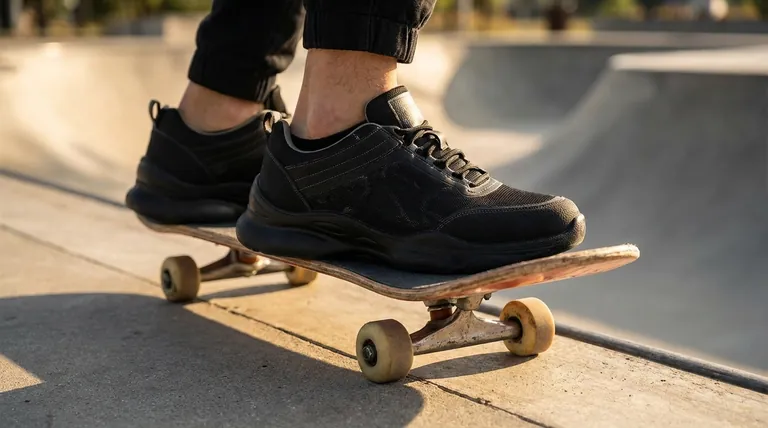
The Core Difference: Construction Defines Feel
To understand how a cupsole can have good boardfeel, you first need to understand the fundamental difference in how skate shoes are made. The construction method is the primary factor that dictates durability, flexibility, and feel.
Understanding Vulcanized Soles (Vulc)
A vulcanized shoe is made by attaching the outsole to the upper using a strip of rubber "foxing" tape. The entire shoe is then heated in an oven, a process which cures the rubber, making it soft and pliable.
This process results in a shoe that is incredibly flexible and feels broken-in right out of the box. The primary benefit is unmatched boardfeel, as the thin, pliable sole transmits every detail of the board directly to your feet.
Understanding Cupsole Soles
A cupsole is different. The sole is a single, pre-molded piece of rubber (often polyurethane) shaped like a "cup" that the upper sits inside. It is then both glued and stitched to the upper.
This two-part construction is inherently more durable and supportive. The thicker, more structured sole provides significantly better impact absorption, protecting your heels and joints from harsh landings. The traditional trade-off, however, was a stiffer, less sensitive feel.
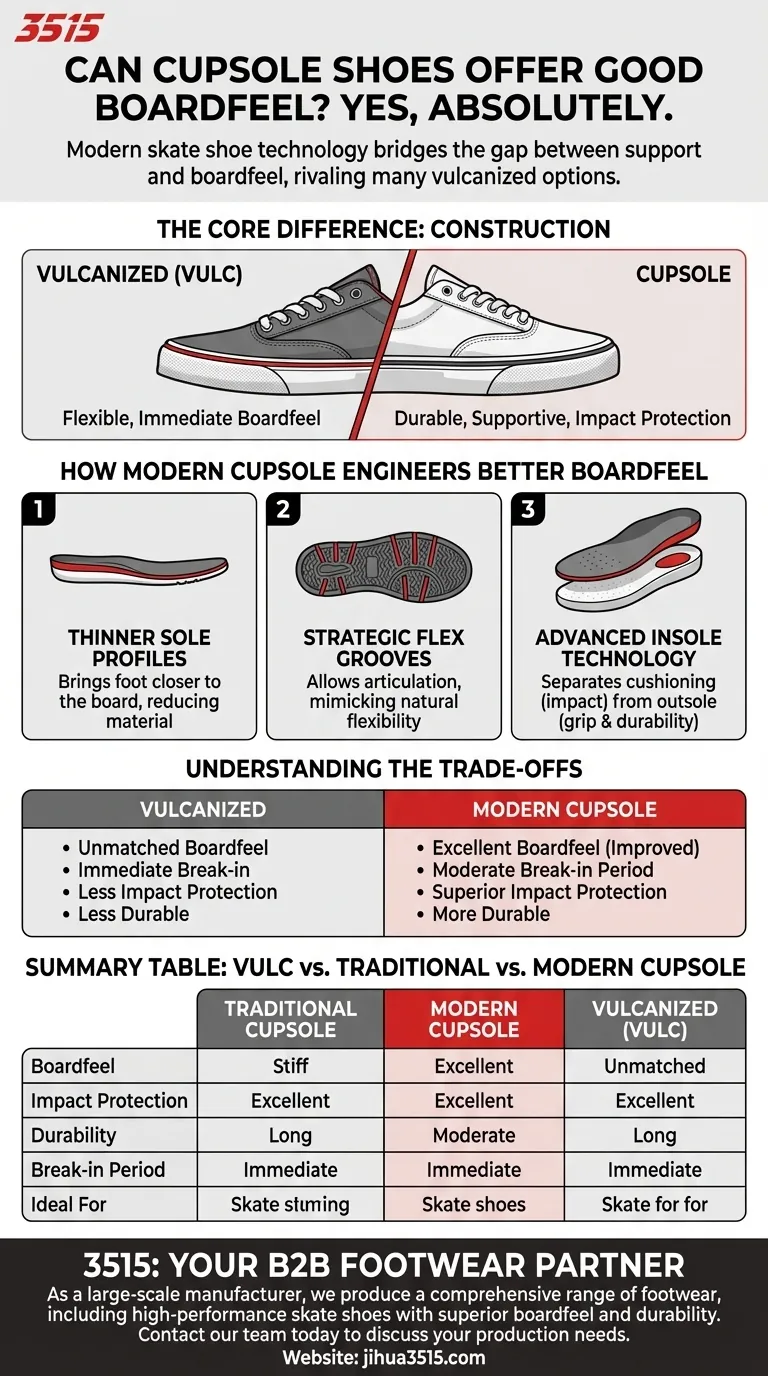
How Modern Cupsoles Engineer Better Boardfeel
Skate shoe brands recognized the need for a shoe that could protect a skater's feet without feeling like a brick. They achieved this through several key design innovations.
Thinner Sole Profiles
The most direct way to improve boardfeel is to bring the foot closer to the board. Many modern cupsoles feature significantly thinner rubber outsoles than their predecessors, reducing the material between you and the deck.
Strategic Flex Grooves
The tread on a modern cupsole isn't just for grip. Engineers incorporate deep, strategically placed flex grooves into the outsole pattern. These grooves allow the otherwise sturdy sole to bend and articulate with your foot, mimicking the natural flexibility of a vulc.
Advanced Insole Technology
One of the biggest breakthroughs is separating the cushioning from the outsole structure. Brands now use high-tech drop-in insoles made from advanced foam or polyurethane to handle impact absorption.
This allows the actual rubber cupsole to be made thinner and more flexible, focusing solely on grip and durability, while the insole provides the cushioning. The result is protection and boardfeel working in tandem.
Understanding the Trade-offs
Even with modern technology, no shoe is without its compromises. It's crucial to understand the realities of the designs.
The Break-in Period
A high-tech cupsole will almost always have a slightly longer break-in period than a vulcanized shoe. The stitched construction and more robust materials simply require more time to soften up and conform to your foot.
The Boardfeel Ceiling
While a modern cupsole can have excellent boardfeel, it will rarely feel identical to the most minimalist vulcanized shoe. The fundamental construction method creates a different sensation, which some skaters may always prefer.
Support and Durability
Conversely, a vulcanized shoe will never offer the same level of impact protection or structural support as a well-designed cupsole. The single-wrap construction is simply less robust against the repeated, high-impact abuse of skateboarding.
Making the Right Choice for Your Skating
The choice between a vulcanized shoe and a modern cupsole comes down to your priorities and skating style.
- If your primary focus is impact protection and durability: A modern cupsole is the ideal choice, giving you the support needed for skating gaps and stairs without making you feel disconnected from your board.
- If your primary focus is technical control and immediate boardfeel: You may still prefer a classic vulcanized shoe, but a thin, flexible cupsole is a strong contender, especially if you want your shoes to last longer.
- If you want a versatile, all-around shoe: Look for a hybrid cupsole design that emphasizes a thin outsole, deep flex grooves, and a high-quality drop-in insole to get the best of both worlds.
By understanding the technology, you can confidently choose a shoe that delivers the precise balance of protection and control you need.
Summary Table:
| Feature | Traditional Cupsole | Modern Cupsole |
|---|---|---|
| Boardfeel | Stiff, less responsive | Excellent, highly responsive |
| Impact Protection | Excellent | Excellent |
| Durability | Excellent | Excellent |
| Break-in Period | Long | Moderate |
| Ideal For | Gaps, stairs, durability | All-around skating, technical control |
As a large-scale manufacturer, 3515 produces a comprehensive range of footwear for distributors, brand owners, and bulk clients. Our production capabilities encompass all types of shoes and boots, including high-performance skate shoes engineered for superior boardfeel and durability. Let us help you source or develop the perfect skate footwear for your market. Contact our team today to discuss your production needs.
Visual Guide
Related Products
- Durable Rubber Sole Outdoor Shoes Wholesale & Custom Manufacturing
- Premium Suede Sport Safety Shoes for Wholesale & Bulk Orders
- Wholesale Breathable Training Shoes Custom Athletic Footwear Manufacturer
- Wholesale Durable & Breathable Training Shoes for Custom Brands
- Lightweight Breathable Training Shoes for Wholesale & Custom OEM Manufacturing
People Also Ask
- What is the function of the sole in outdoor shoes? Find the Perfect Grip and Support
- What role do outdoor shoes and sneakers play in navigating external terrains? Engineered Stability for Every Surface
- How is AI utilized in the design of outdoor and safety footwear? Harnessing Big Data for Market-Driven Shoe Innovation
- Why is durability important when selecting outdoor shoes? A Guide to Safety & Long-Term Value
- What are the key components of outdoor shoes that affect comfort and sturdiness? A Guide to Durable, High-Performance Footwear












